
ANZAC DAY: The next generation
ANZAC DAY: ‘It was an adventure’
ANZAC DAY: Story of an Aussie hero
PHOTOS: Anzac Day around the region
GUARDIAN journalist EMMA MANSER investigates the connection between a small Victorian town and the site of one of the Great War’s most famous battles.


IT IS 30 years since Robinvale and Villers-Bretonneux were declared twin towns, and 100 years since the beginning of World War I, but the connection with the local district remains apparent in the French village.
The relationship was established in the mid-1980s, and stems from a WWI connection.
Lieutenant George Robin Cuttle — the son of Robinvale’s founding family — an airman in WWI who fought in battles to liberate Villers-Bretonneux from German possession.
He was killed in May 1918 when his plane went down over Caix, approximately 10km from Villers-Bretonneux.
“The [Australian] war memorial at Villers-Bretonneux, it is a massive thing, but it is only big because of the number of inhabitants…”
But it wasn’t until 1923 that his family was able to locate the wreckage of his plane in a field in Caix.
Kyalite publican and former Robinvale local, Ken Barnes recently travelled with his wife Vicki to Villers-Bretonneux and saw first-hand the connection with the local district.
Both have parents who served, cementing their connection with Australia’s war time history.
Mr Barnes said travelling through the area, the futility of war had become very apparent.
As a site of significant battles in WWI, there are many war memorials throughout the area.
“The [Australian] war memorial at Villers-Bretonneux, it is a massive thing, but it is only big because of the number of inhabitants,” he said, adding that even now wreaths were laid at the graves of loved ones.
“So many soldiers disappeared in the heat of battle — heading out in the morning and never came back.”
For the soldiers, conditions were brutal — the temperature ranges between 0°C and 20°C throughout the year.
Mr Barnes said when they had visited recently, the air had been bitterly cold.
Australian troops played a pivotal role in regaining control of Villers-Bretonneux from the German forces, and was the area where the first battle between tank forces took place.
On April 24, 1918, following 20 days of conflict, Villers-Bretonneux fell to the Germans — but this victory was short-lived.
That night, Australian troops launched a counter-attack successfully reclaiming the area.
“So many soldiers disappeared in the heat of battle — heading out in the morning and never came back…”
Even once the war ended, a relationship with Australia continued, with Victorian school children raising money to rebuild the school in Villers-Bretonneux.
The town centre of Robinvale — Caix Square — pays tribute to Lt Cuttle. Similarly in Villers-Bretonneux, the village centre is called Robinvale Square.
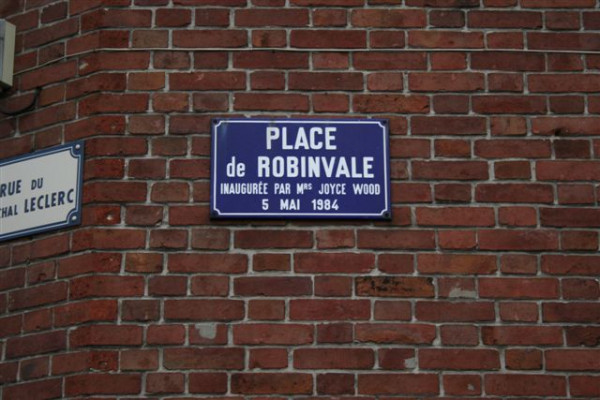
Streets have also been named after Australian places, including Place de Robinvale and Rue de Melbourne.
Pick up a copy of Friday’s special Anzac Day 2014 commemorative edition of The Guardian.