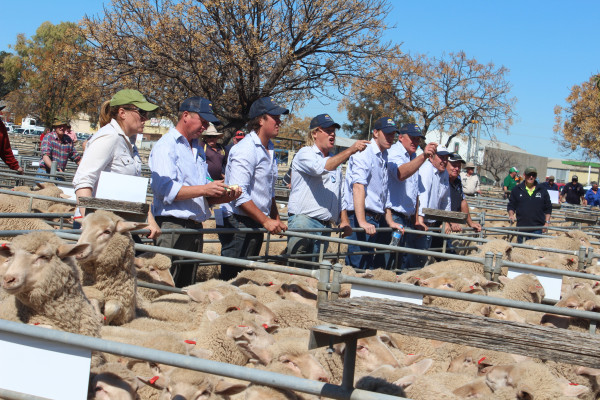
THE Swan Hill Regional Livestock Exchange sprung into action on Friday, with the first spring sale seeing about 12,000 sheep yarded.
A large crowd of buyers and sellers gathered in the saleyards for the special sale, with stock coming from producers across the local area and beyond — including Broken Hill, Ivanhoe, Moulamein, Balranald and Kyalite.
Crossbreed lambs fetched between $70 and $114, while young ewes netted $100 to $158.
Wether lambs paid between $60 and $82, while the sale of aged ewes saw prices between $60 and $75.
A majority of the sheep sold will be used for restocking, while others will be used for meat.
BR&C auctioneer John Sawyer said the sale had opened strongly, with a good turnout of buyers.

“It was a good sale, probably a good opportunity to buy, wether lambs and crossbreed lambs sold very well,” Mr Sawyer said.
“Ewes were probably about on the money, but I thought wethers and crossbreeds would be $5 to $10 dearer.”
Meanwhile, 2892 cattle passed through the gates at the saleyards on Thursday’s fortnightly prime cattle sale — the highest numbers seen in about 18 months.
About 2000 came from local producers and BR&C livestock agent Joe O’Reilly said the high numbers had been influenced by the drought in Queensland, with the time of year also playing a role.
“The dry in the north — and it is just that time of year for the spring sell off,” he said.
“We are going fortnightly now and the numbers keep on coming.
“This time of year the cattle are good so the buyers come to buy them because they yield very well and get good quality.
“[The numbers] have been building, we have been trying to work on it, getting more buyers here and it is turning into a pretty popular spot.”
He said most will go locally, with some to be transported to Bacchus Marsh and into South Australia.
“[Prices] are probably a little bit slower today — probably five or 10 cents cheaper than a fortnight ago, but there have been similar numbers everywhere else,” he said.
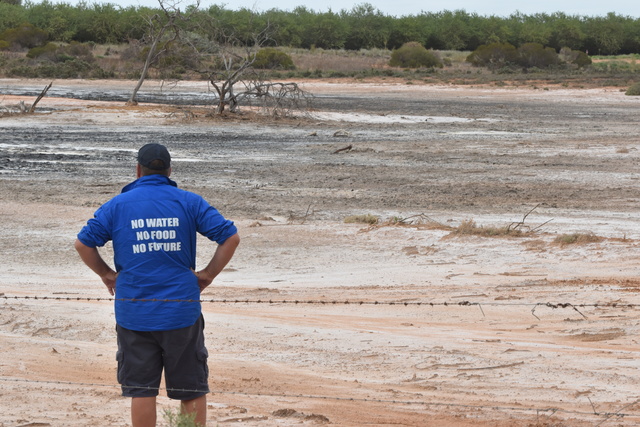
He added that producers in Queensland were facing tough conditions, with the effects of the drought coming through in the figures.
“They tell me there are only 43 per cent of the tags for the newborn calves going out this year [in Queensland] compared to last year,” Mr O’Reilly said.