ENDANGERED native species will be closely monitored in and around the Cristal Mining project due to begin later this year outside Balranald.
Cristal Mining’s proposed Atlas-Campaspe mineral sands mine will be located about 90km from Balranald, with the company last week given approval for the
$200 million project.
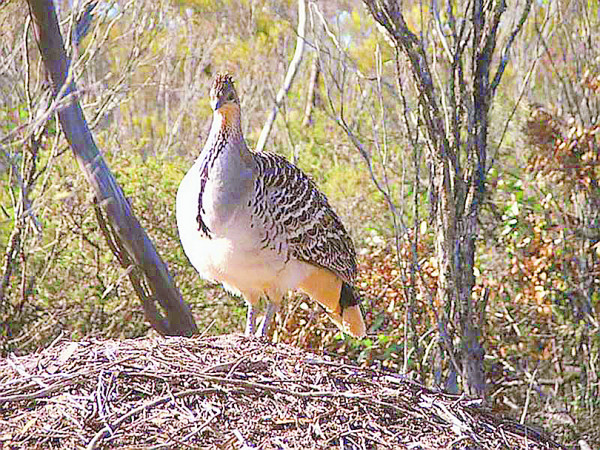
But it also shares the area with the habitat of a number of threatened native species, including the iconic malleefowl.
The birds are in danger of being struck by vehicles passing through the mining site.
A number of restrictions have been placed on Cristal Mining in the construction and operation of the mine, including avoiding habitat areas and driving at speeds of 50km per hour.
According to the National Malleefowl Recovery Team, much of the best habitat for malleefowl across Australia has already been cleared or has been modified by grazing sheep, cattle, rabbits and goats.
Predation and bushfires have also caused severe loss of habitat, with the species listed as endangered in New South Wales and vulnerable throughout Australia.
Cristal Mining will be expected to report any incidents where malleefowl are struck by a vehicle and will be restricted to clearing land only at certain times of the year when the birds are not nesting.
Cristal Mining resource development manager Ray Roberts said the company was cooperating with the Department of Environment to complete a biodiversity management plan ahead of construction at the site.
“Part of the conditions of federal approval — as with many other conditions — were those in place to ensure biodiversity was protected at the site,” Mr Roberts said.
Mr Roberts said they would implement signage and speed limits throughout the site.
“And if we do have two hits [between a malleefowl and vehicle] within a 12 month period we have to notify them and in that case we would be required to make changes to ensure it won’t continue,” he said.
Corbens, a species of long-eared bat, are also a concern for environmental experts.
“Corbens are another species where [the department] made quite an issue about, because in clearing the area we cannot disturb the bat,” Mr Roberts said.
“We have put nesting boxes in and around the area to ensure their protection.”
Environmental experts will be consulted throughout the six month project to establish those regulations needed to protect native species, with the biodiversity management plan eventually approved by the Minister for Environment.
Mr Roberts said it was “not an insignificant amount” that was being invested in species protection.
“There’s a significant number of threatened species that are around, but they’re covered by the large vegetation area offset that’s there to ensure that none of the native communities are affected.”