Home » 2017 » ‘I haven’t bought a new item of clothing all year’

‘I haven’t bought a new item of clothing all year’

FASHION is a fickle thing.

New trends come and go every few months and every media outlet, from TV to Facebook, pressures people to buy the latest look — or face expulsion from society.

This leads to a high turnover of clothing, which in turn creates vast amounts of waste as people get rid of perfectly wearable clothes to make room in their wardrobes for newer, more fashionable items.

It is estimated that 80 to 100 million kilograms of textile waste is collected by Australian charitable recyclers through bins and donations every year. 

While 60 percent of this material is recirculated through charity shops and 15 percent can be reprocessed into functional textiles, up to 25 percent of this waste is sent to landfill. 

To try and reduce my fashion environmental footprint, and to save some money, I decided that 2015 would be the year that I would not buy any new clothes and only shop in op shops.

So far, shopping in op shops has been fun and very rewarding. 

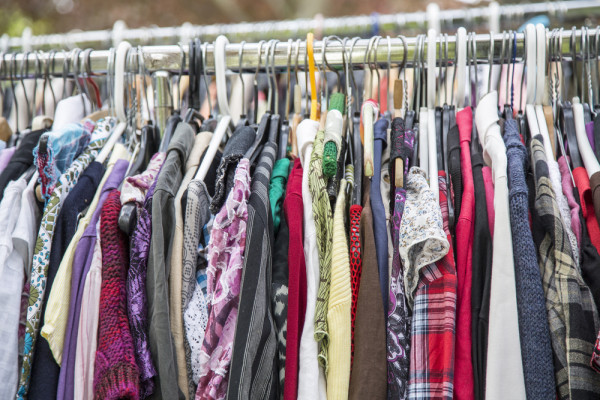
The so called ‘fashion staples’ of a blazer, black pants, and a white shirt are easy to find and you can usually find some expensive brands among the cheaper items. 

I am regularly amazed that people have chosen to donate such good quality items when there are still years of wear in them. 

Everything else that I have found whilst hunting through the clothing racks is a bonus. So far my purchases have included a pleated midi-skirt I bought for $5, just before the midi fashion kicked in, and the green Zara top I’d had my eye on but hadn’t been able to justify the $60 price tag for $3. All of them have been as good as new.

Stopping clothes from going to landfill isn’t the only way that buying from op shops is reducing waste. 

Often clothes shipped from overseas are individually wrapped in plastic bags, boxed up and these boxes are then wrapped in more plastic. The clothes are unwrapped before being displayed in the shop with the majority of the packaging going straight to landfill. 

There is also an ethical dilemma around purchasing new clothes. 

The majority of clothes sold in Australia are produced in third world countries where pay, working conditions and environmental impacts of production are often secondary to the pursuit of profit. 

Some clothing companies are beginning to trace their supply line to ensure that there is no exploitation, however these companies are an exception rather than the rule and so the environmental and social impact of clothing production is largely unknown. 

With more than 3000 op shops across the country it isn’t difficult to pop into one before going to a normal clothes retailer to see whether they have the item of clothing you are looking for. 

It will be a fraction of the price of buying the item new and saves waste from going to landfill.

Digital Editions


  • Events planned in the region this week

    Events planned in the region this week

    TODAY Afternoon: Craft fun at Swan Hill Regional Library. Get creative these school holidays with a fun-filled free craft session. Suitable for school-aged children. Call…

More News

  • Cooler reprieve

    Cooler reprieve

    TRAINS services have resumed on the Swan Hill and Bendigo lines after around-the-clock repairs to fire-damaged infrastructure between Bendigo and Castlemaine. The welcome public transport relief came as cooler conditions…

  • Donate to save lives

    Donate to save lives

    SWAN Hill residents are being urged to roll up their sleeves and give blood as Australian Red Cross Lifeblood’s mobile donor centre prepares to roll into town, with dozens of…

  • A summer of making

    A summer of making

    THE Art Gallery of Swan Hill has been bustling with activities to keep curious and creative children occupied during the school holidays. Tuesday’s clay Murray cod making session was fully…

  • Heat illness risks rise

    Heat illness risks rise

    SUMMER has been slow to arrive, but health experts warn there are still many hot days ahead, bringing increased risks of heat related illness across Australia. Each year, hot weather…

  • Protect against bites

    Protect against bites

    PEOPLE across southern New South Wales are being urged to protect themselves from mosquito bites following a probable case of Japanese encephalitis and the detection of the virus in sentinel…

  • True Movement Gains Ground Among Elite Teams as Broncos Step Forward

    True Movement Gains Ground Among Elite Teams as Broncos Step Forward

    Entry into elite performance environments tends to move slowly, shaped by habit and guarded routines. True Movement™ entered those spaces through a different route. The system developed from founder Erin…

  • Collection under the hammer

    Collection under the hammer

    AN eclectic curation of vintage and antique Australian pastoral machinery and memorabilia will go to auction on 1 February. Yvon Smythe and her late partner, Neil O’Callaghan, began the Manangatang…

  • Calls flow for royal commission

    Calls flow for royal commission

    AUSTRALIA needs a royal commission into water management in 2026, according to Murray MP Helen Dalton, who says politicians are “destroying” the nation’s waterways and communities. Ms Dalton urged every…

  • Tractor tragedy sparks concern

    Tractor tragedy sparks concern

    A FARMER has become the first workplace fatality for 2026 after being entangled in a tractor wheel, prompting renewed calls for farmers to stay vigilant around machinery. The death comes…

  • China driving Aussie almond demand

    China driving Aussie almond demand

    DEMAND for Australian almonds remains strong despite easing from last season’s record highs, according to the Almond Board of Australia. The industry’s October sales position report, released in December, shows…