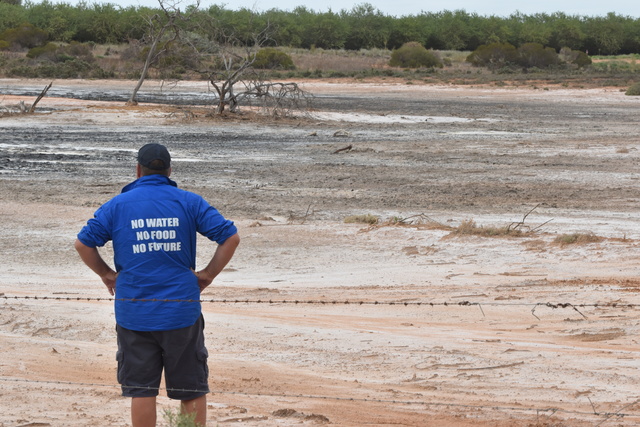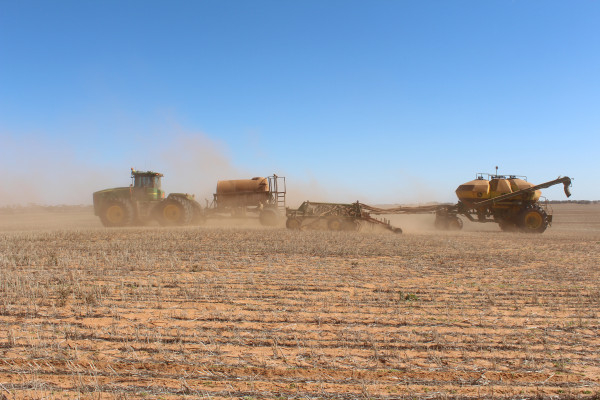
GROWERS in the Swan Hill region should prepare for drier conditions than normal during the second half of the year, as the Bureau of Meteorology officially declared an El Niño has been forecast.
The El Niño, a climate pattern associated with the cyclical behaviour of the Pacific Ocean, is often linked to greater likelihood of drought conditions in south-eastern Australia.
The telltale signs of the start of an El Niño seasonal pattern have been observed all across the Pacific.
The CSIRO’s principal research scientist for marine and atmospheric research, Dr Peter McIntosh, said though the signs indicated local farmers should expect dry conditions later in the year, the climate was still quite complex with an element of randomness.
“I don’t think there’s any need for panic but I think it would be wise to prepare for slightly less rainfall later in this season,” Dr McIntosh said.
Indeed, 17 of the 26 El Niño cycles forecast since 1900 have resulted in widespread drought, a predictive success rate of approximately 65 percent.
In any case, Dr McIntosh said growers could still expect wet conditions over the next month or two, as other climate forces were expected to dominate before the El Niño kicked into gear.
“The forecast for the next month or so is actually that we’ll get a bit more rainfall than normal in south-eastern Australia, which seems to be contradictory to there being an El Niño, but it isn’t actually,” he said.
“It’s because the Indian Ocean is winning at the moment, the El Niño hasn’t actually kicked in.”
Victorian Farmers Federation Grains Group president and Quambatook grower Brett Hosking said the forecast reinforced what most local growers were already assuming.

“We haven’t got a lot of moisture to be working with already, and haven’t had a particularly wet start, so I would imagine most growers would have it in the back of their minds that this would be a season to be a little bit conservative with rotations and to be prepared that the season may not be one of the better ones,” Mr Hosking said.
“The El Niño forecast from [the Bureau] is probably confirmation of that planning that the growers are already doing.”
Mr Hosking agreed with Dr McIntosh that growers should consider the balance of probability when managing their crops.
“History tells us that an El Nino in our area doesn’t always result in a disastrous season, but the odds are that it is a season to be a little bit cautious and conservative with decision-making,” he said.