“QUITE colossal” financial losses are being incurred in patient transport costs and a decrease in presentations to the emergency department (ED) at Swan Hill District Health.
This is despite claims from the Department of Health and Human Services (DHHS) that Swan Hill receives a “higher rate… [with] the cost of transport taken into account”.
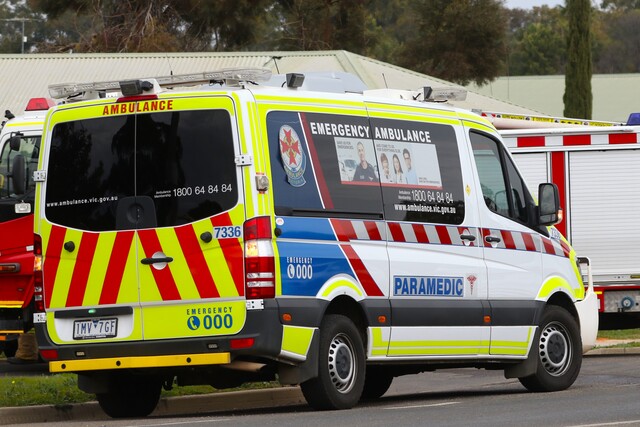
For several years patient transport costs have been a sticking point for the hospital, which must send patients with complex needs, like intensive care, to be treated in Bendigo or Melbourne.
In the 2012-13 financial year, this transport alone — which may be by air or road — cost the hospital $1.304 million, slightly increasing to $1.367 million in 2013-14.
“It is not a new problem, it is ongoing, and certainly we will be making representation to the department,” CEO Ted Rayment said.
“They are reviewing the funding model, particularly in light of our isolation and impacts on places like Swan Hill… which is good news, but we haven’t got a result on it yet.
“We are not asking for anything that others don’t have we are just asking for our isolation to be taken into account.”
Although recent changes made to the transport funding model were hoped to ease the financial pressure, they didn’t go as far as hoped.
DHHS senior media advisor Ian Haberfield said the department was aware of issues surrounding transport costs, particularly at remote services.
“The Department of Health and Human Services annually reviews funding mechanisms and health service costs, including the cost of transporting patients, to determine if improvements can be made,” he said.
“Swan Hill District Health currently receives a higher rate than large regional and metropolitan services for all admissions, and the cost of transport has been taken into account.”
The ED is another area where funding is tight.
This is due to a drop in the number of patients presenting to the ED, which in turn decreases the funding provided by government.
Between 2009-10 and 2013-14, the number of patients dropped by 5000, from 17,621 to 12,613.
Mr Rayment said this could be attributed to an increase in general practitioner services available to the public, with people choosing to attend GP clinics rather than the ED.
“In ensuring people are going to the right place, the impact is less money for the hospital to run its services,” Mr Rayment said.
“But we would always aim to keep people well and out of the hospital… we would always put the patient first and if the funding suffers then so be it, it just means the funding model needs to be changed.”
DHHS’s funding policy for 2015-16 are currently being finalised.
For more on this story, grab a copy of Wednesday’s Guardian (June 17).