
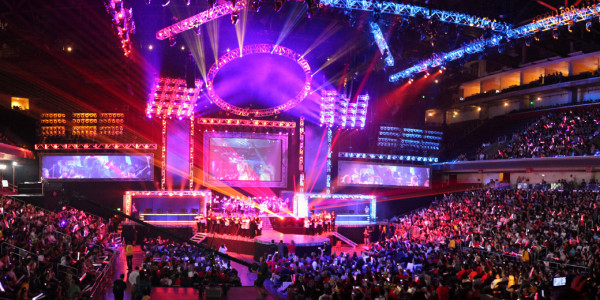
AS a mother of a 15-year-old son who spends a good portion of his free time gaming I have been guilty of questioning the value of the hobby.
What I learned about gaming, and in particular eSport was an eye-opener.
Electronic Sport, or eSport, has been around for some time now, but it is only in the past five years that it has developed into a hugely popular spectator sport. In 2000 there were 10 organised gaming events and this has exploded to 260 in 2015. The competitions focus largely on team events that require skill, strategy, problem solving and speed at the controls.
In 2015, 71 million people had watched a gaming contest either live, online or via pay TV.
The fascinating aspect of the events is the professional nature of them with the biggest contents offering over $1 million in prize money.
According to Wikipedia the most popular team games for contests are League of Legends, StarCraft II, Counter-Strike and Dota 2.
These games pit teams against each other in mental battles involving teamwork and group strategy.
There is much conjecture over whether gaming is actually a sport.
Some argue that the careful planning, precise timing, and skillful execution required ought to be what classifies an activity as sport. Physical exertion and outdoor playing areas are not required by all traditional or non-traditional sports.
Other examples of this include chess, motor racing and darts.
For more on this story, pick up a copy of today’s (Monday, January 3) The Guardian…












![[READER COMPETITION] – Win tickets to see Sara Storer – Mystic Park Hotel on 22nd March](https://theguardian.com.au/wp-content/uploads/2026/03/Sara-storer.png)