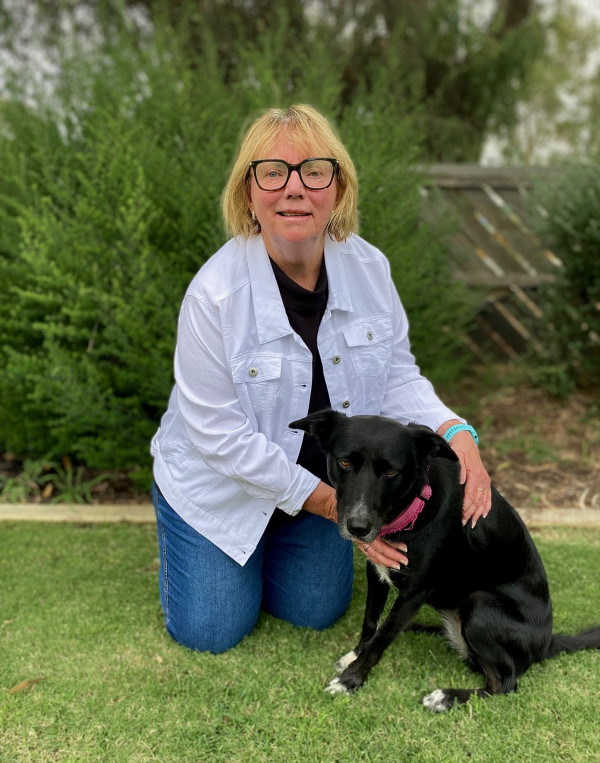
FOR Heather Green, the journey to understanding her own body has been a slow unravelling.
The signs of Parkinson’s disease crept into her life almost imperceptibly over the span of a decade.
“Probably the first symptom I had was my sense of smell reduced,” Heather said.
“It didn’t go completely, but it was noticeably reduced.
“I didn’t think much of it; I felt fine.”
Yet, as time went on, more subtle changes started to take hold – her left arm stopped swinging when she walked, a curious yet easily dismissed symptom at first.
“Mum, why isn’t your arm swinging?” her children would ask.
She tried to ignore it, convinced that holding the leash during walks with the dog was simply a reason for her arm’s stillness.
But deep down, Heather knew something was wrong.
It wasn’t until she began struggling with basic daily tasks – like putting on jeans or fastening her seatbelt – that she finally sought help.
“I had to really consciously try hard to tell my arm what to do,” Heather said.
“It didn’t do it automatically anymore.”
Such were the symptoms, her physiotherapist urged her to get referred by her doctor for further tests.
“I think he knew what it was, but he wasn’t going to diagnose me in the physio’s office,” Heather said.
After many visits to doctors and eventually a neurologist two years ago, Heather’s long-suspected diagnosis was confirmed: Parkinson’s disease.
“It was a bad moment, but also a relief,” Heather said.
“At least now I knew what I was dealing with.”
The gradual progression of Parkinson’s has been a profound challenge, not just physically but emotionally.
“Even now, having a shower and getting dressed takes longer than it used to,” she said.
“All those little movements – drying my hair, putting on clothes – take so much more energy than they used to. It’s frustrating.”
But Heather has learned to adapt.
A 10-minute shower? That’s a thing of the past. Now, she plans for longer stretches of time to manage these tasks, a constant reminder of the condition that’s quietly altering her life.
Yet despite these struggles, Heather remains determined to live as normal a life as possible.
“I still go for walks, I still go to the gym. I swim, I box, I try dancing,” she said with a laugh. “I can’t do the dancing, but I try.”
Exercise has become a vital part of Heather’s daily routine, a tool recommended by Parkinson’s experts to slow the progression of the disease.
“Exercise won’t cure me, but it helps reduce the speed of my decline,” she said. “It keeps me going.”
Heather’s resilience is evident in her ability to find humour in the daily trials, to find joy in the simplest moments with her family and her beloved dog.
“They’re my comfort,” she said.
“They’re the best part of my day.”
Yet, as her condition evolves, Heather faces the reality of needing to adjust her goals.
“I’ve started making a to-do list, not just for the things I want to achieve now, but for what I want to do before this disease progresses further,” she said.
“But it’s not just about that. I want to live fully right now, not just for later.”
One of the most unexpected aspects of Heather’s journey has been the support she’s found within her local Parkinson’s community.
What started as a personal battle has evolved into an opportunity to advocate for others facing similar struggles.
“The local support group has been incredible,” Heather said.
“Russell Wardle, who started the group, is still actively involved and has been amazing.
“We don’t get a lot of people actively involved, but when we hold events or seminars, we see the community come together.”
The group’s efforts have raised awareness and provided resources for those navigating the complexities of Parkinson’s.
Heather has become an active participant, not only helping run events but also raising awareness.
“There’s so much people don’t know about Parkinson’s,” she said.
“People think it’s just about shaking, but there’s so much more to it – motor issues, cognitive decline, depression, anxiety.
“It’s important to share those other symptoms, the ones that are less visible but just as challenging.”
April is Parkinson’s Awareness Month, and Heather is passionate about spreading the word.
“It’s a chance to educate people about what Parkinson’s really is and how it affects so many people,” she said.
“It’s about living with the disease, finding ways to cope, and most importantly, not giving up.”
Heather knows that her journey with Parkinson’s will continue to be a challenging one, but she’s determined to face it head-on.
“I try not to think too far ahead,” she said.
“If I did, I think I’d suffer from depression.
“I live in the present as much as I can, and that keeps me going.”
Her advice to those who may be facing similar symptoms is not to ignore the signs.
“Go to your doctor, talk to a physio, get checked out,” she urged.
“There’s help, there’s medication, and you don’t have to face it alone.”
Heather proves that even in the face of adversity, it’s possible to find joy, community, and the courage to live in the moment.
People are encouraged to gather at Riverside Park at 10am on Sunday, April 27 for the annual A Walk in the Park in support of Parkinson’s Awareness Month. Entry is free.
Fast facts:
• Young Onset Parkinson’s makes up 10 to 20 per cent of all people living with Parkinson’s. They are diagnosed in their 20s to 50s.
• Parkinson’s is the fastest growing neurological condition in the world with 10 million currently affected, according to the World Health Organisation.
• Parkinson’s incidence rates increases 4 per cent per year, impacting on our economy and healthcare systems at a cost of more than $10 billion each year.
• Parkinson’s is the second most common neurological disease in Australia after dementia.
• There are more than 150,000 people living with Parkinson’s in Australia. Fifty Australians are diagnosed every day.
• There are more than 1100 Australians under 65 who develop young onset each year.
Source: Parkinson’s Australia