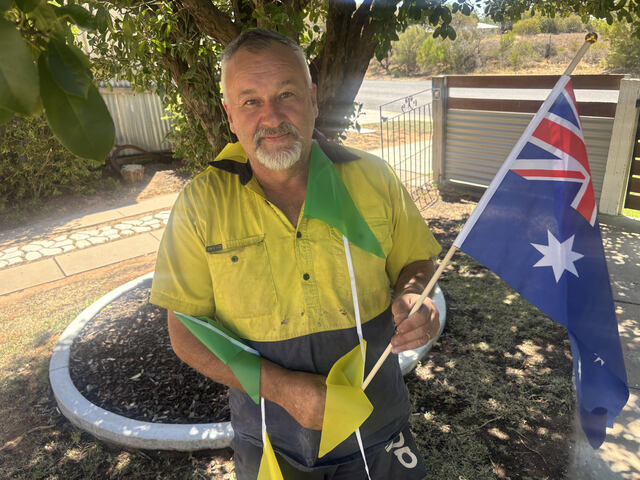
WOORINEN stone fruit farmer Peta Thornton is on the path toward completely electrifying her operation, and with some inspiration from over the Tasman Sea, she feels change is closer than ever.
“There are so many opportunities in the horticulture sector to improve productivity and enable other revenue streams in power generation through electrification,” she said.
“The potential of energy independence for our community is huge and can benefit everyone if we do it right.
“Electrification in orchards is just around the corner and in some places already happening, and with significant rooftop solar across farms and households, the next step is installing batteries to maximise the benefits of the power we’re generating.”
New Zealand cherry farmer Mike Casey states his Central Otago orchard is the first fully electric operation in the country, and has documented his implementation since 2019 to inspire other farmers at home and abroad to consider their options.
The so-called Electric Cherries farm relies on 21 electric machines, including the first electric tractor in the Southern Hemisphere, a refitted 1990s Hilux ute and golf cart, and electric frost fans, largely powered by his onsite solar farm and battery microgrid.
While Mr Casey does not shy away from the realities that face farmers in repeating what he has done, nor the trial and error that he has undertaken as an industry leader, he remains enthusiastic about the end goal of an increasingly energy independent agricultural industry in Australia and New Zealand.
“Some farmers can get irritated at the idea that the government wants farmers to carry the entire country in renewable energy supply, but we already do carry our countries by supplying food, and we have a financial interest to create our own electricity,” he said.
“Farmers’ role in leading electrification cannot be ignored despite the challenges that we have ahead of us, but we can work together to electrify everything.
“By owning the infrastructure and fitting it to your operation, farmers can even the playing field with big energy companies and lower their energy costs.
“Through our microgrid we have incredible power resilience, and instead of paying an annual $50,000 diesel bill, we have managed to create a $40,000 revenue stream, supplying 25 homes with our excess power.”
The potential to diversify income streams and improve productivity is an attractive prospect for Mrs Thornton.
“Our orchard is already on an electrification journey and we have been following Mike’s journey, so it has been great to see some of his data and what is still to come,” she said.
“With significant rooftop solar already installed in many farms and the increased adoption of battery storage, along with how fast electric machinery technology is developing, there is so much for us to explore – especially in the summer fruit industry.
“The electric tractor, in my mind, is just around the corner and will be a real game changer for our farm.”
As a grower in a tight knit community, Mrs Thornton is also eager for the potential for microgrids to lower the upfront costs and make the most of summer solar power generation.
“Microgrids can have huge benefits in the horticulture industry for smaller enterprises to expand their energy production, exploit the full potential and ensure we’re getting the best value for our small district,” she said.
“We use all of our energy in summer on irrigation pumping and cool storage, and in winter it gets wasted, so a microgrid to send that extra energy into would benefit us and our community a lot more.”
As seen with the feed in tariffs – the payment for excess electricity from rooftop solar fed into the grid – Mrs Thornton said there is opportunity for governments to provide incentives for farms to electrify.
“Incentives make a big difference in people being able to electrify, because capital and profitability are not easy to come by, and don’t always marry up with opportunity, so any little benefits or incentives can open up that possibility to seize the moment,” she said.
“Higher feed in prices and other benefits particularly for agriculture enterprises could make a huge difference to rural communities.
“It’s a shame there aren’t more incentives for lower income households to start their renewable and electrification journey.”
The market is already charging ahead with the implementation of renewable energy, supporting businesses to adopt the infrastructure on their rooftops and land to feed into the grid.
“Energy providers are already developing behind the metre energy generation projects, which partner with landholders to develop renewable energy infrastructure on their land and absorb those upfront costs to sell the energy back to the landholder for below market price,” Mrs Thornton said.
“It’s a big opportunity for farmers with land but limited capital to get the benefits of renewable energy and a stable and contractual power purchase agreement for a long period.
“Large energy companies have a massive part to play in the energy transition and huge ground to make up in the next decade, so it’s cool to see them looking to different models to implement these projects and increase renewable energy assets.”
To learn more about the Electric Cherries, go to forestlodge.nz.