MEMBER for Murray Plains Peter Walsh says there is “no fairness or equity” with the expanded fire services levy, which now incorporates more emergency service agencies in Victoria.
“It is not an emergency services tax, it is actually a tax to fund the bureaucracy of this state,” Mr Walsh said during debate on the new Emergency Services and Volunteers Fund in Parliament last week.
“The Member for Malvern, the former treasurer, who was there when this levy was brought in, actually explained it very well: that previously the fire service was funded by a levy on the insurance industry.
“Only those that actually took out property insurance paid for the CFA and the MFB.
“So what was brought in was a system where all property owners paid, and that was about fairness and equity.
“If you actually look at the amount of money that is being raised over the forwards, there is going to be $2 billion in additional money raised.”
From July 1, 2025, the Fire Services Property Levy will be replaced by the ESVF.
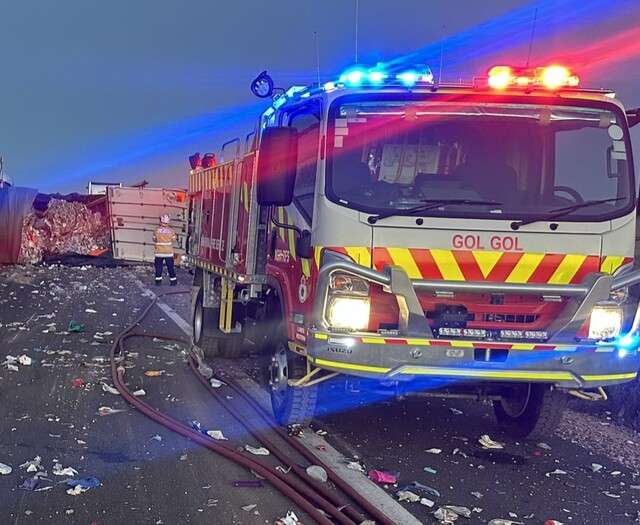
It will help support a broader range of emergency services and for the first time include VICSES, Triple Zero Victoria, the State Control Centre, Forest Fire Management Victoria and Emergency Recovery Victoria, as well as the Country Fire Authority and Fire Rescue Victoria.
Active volunteers and life members won’t have to pay the ESVF on their primary place of residence (such as a house or farm).
“There is a lot being said from the other side of the house about how $250 million of that is going to go to the CFA and the SES for trucks and equipment and buildings,” Mr Walsh said.
“That leaves $1.7 million unaccounted for as to what is going to happen into the future. It is going to go and fund core government businesses? It is going to fund Triple Zero Victoria? It is going to fund the State Control Centre? It is going to fund Emergency Recovery Victoria?
“If you talked to the people of Rochester after the floods, they would wonder why Emergency Recovery Victoria would be funded at all, let alone out of this particular levy.
“It is also going to fund Emergency Management Victoria. The people of Rochester would say the same thing about that organisation, because they were absolutely useless through the floods and afterwards.
“It is going to fund the emergency alert program to send out SMS messages to Victorians. Why isn’t that core government business? Why do we have to have a new tax to actually pay for that? It is going to fund the emergency management operational communications program – core government business.
“Why do we need a great big new tax to fund that?
“It is going to fund Forest Fire Management Victoria. Why do we need a new tax to fund Forest Fire Management Victoria? That is a core business of government, not another new tax.”
Mr Walsh said this was just a tax to fund the “bloated bureaucracy of the government”.
Minister for Emergency Services Vicki Ward said this was a “significant reform that strengthens the way we fund and support this state’s emergency services”.
“I also ask the Opposition, why they want to block a $250 million investment in our emergency services,” she said.
“Which property do they not want to see defended? Which emergency organisations do they not want to see an increase in appliances, training or equipment for?
“We are … replacing it with the ESVF to ensure that a broader range of emergency services are funded in a way that reflects their increasing workload.
“The demand on our emergency services is growing. It is growing each and every year, and to pretend that it is not, to pretend that every Victorian does not have a role to play in supporting our emergency services, is not only short-sighted, it is delusional.
“We are also introducing an exemption for eligible CFA and VICSES volunteers and enabling the release of the $250 million support package.”
Ms Ward said this was a “step in the right direction” towards sustainable funding for VICSES.
“Units rely on volunteers to turn out, to train, and to fundraise – this levy should lessen that need, assist with critical asset programs, and give our members more time to train, and more time with their families,” she said in Parliament.