THERE are 1.2 million Australians with communication disability.
Speech pathologists, like the team from Swan Hill District Health, know that good communication creates better communities.
“In Australia today, communication disability remains largely invisible,” speech pathology department manager Jenelle Hutchinson said.
“Unseen and out of sight.”
The coronavirus pandemic has highlighted the challenges faced by Australians with communication disability.
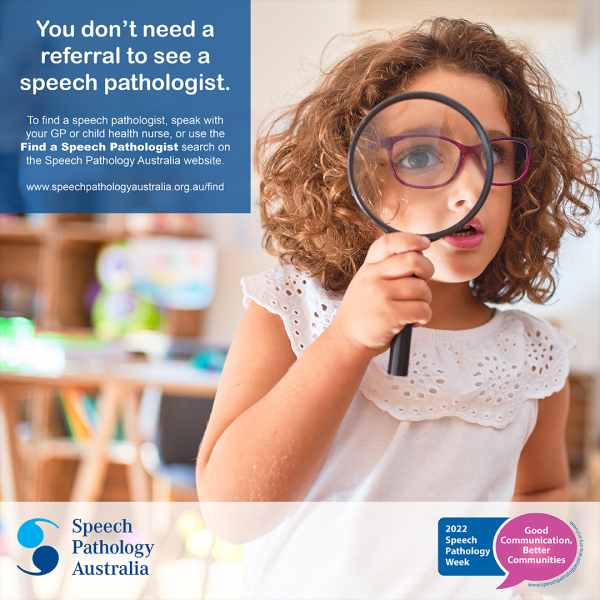
That’s why during Speech Pathology Week, from August 21-27, Ms Hutchinson is highlighting the week’s theme: Good Communication, Better Communities.
“Communication is a basic human right,” Ms Hutchinson said.
“It is fundamental to a person’s ability to participate fully in the social, educational, economic and sporting aspects of our community.
“Many Australians with communication disability cannot maximise educational, health and social outcomes, without the intervention of a speech pathologist.”
Only 38 per cent of Australians with communication disability are participating in the workforce, compared to 80 per cent of people without communication disability.
People with communication disability are also less likely to have a non-school qualification (42 per cent), than those without communication disability (61 per cent).
“Communication, by definition, involves at least two people. It is important that everyone understands that communication is more than speech,” Ms Hutchinson said.
“Australians with communication difficulties communicate with others using a variety of ways, including sign language, electronic speech devices, or word-based or picture-based communication boards or books.
“Technology is playing a growing and vital role in keeping Australians with communication difficulties engaged with their family, friends and those in the Swan Hill community.
“Greater public dialogue about communication disabilities broadens awareness and helps create more informed and empathetic communities.”
The Australian Bureau of Statistics data shows that 1.2 million Australians have communication disability.
Communication disability affects a person’s ability to understand and be understood by others.
Contact the speech pathologist team at SHDH on 5033 9390. For information about Speech Pathology Week, visit www.speechpathologyaustralia.org.au/week.
Facts about communication disability:
· Levels of limitation range from mild to profound and can be temporary or last a lifetime.
· Children and older people make up the majority of people with communication disability.
· Children are more likely to have profound/severe communication disability than older people.
· People with communication disability were less likely to have a non-school qualification (42 per cent) than people without communication disability (61 per cent).
· Thirty-eight per cent of people with communication disability are participating in the labour force compared with 80 per cent of people without communication disability.
· One in seven people with communication disability need formal assistance with communication.
· Half of all people who need formal assistance with communication have an unmet need for this assistance.
· Three in five people who have an unmet need for formal assistance with communication were children.
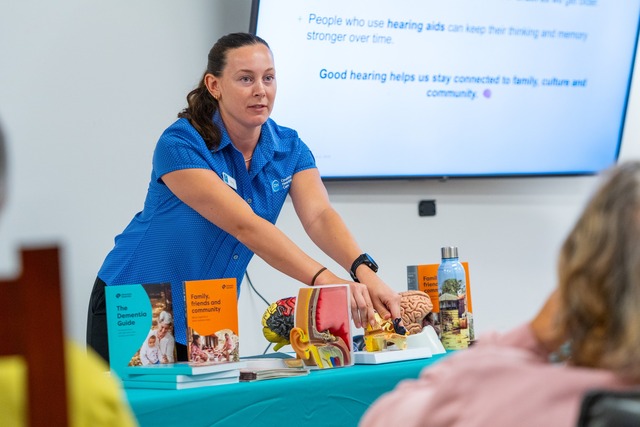
Staff profile: Jenelle Hutchinson
When did you start working at SHDH and why did you choose a career in healthcare?
I started as speech pathology manager at SHDH in December last year, but moved to Swan Hill just over nine years ago.
I chose a career in health care because of the flexibility and variety in terms of caseload and areas to work in.
In health care, you can find a job anywhere in Australia, as well as being able to work in a huge range of areas such as paediatrics, adults, as well as specialist services.
What do you love most about your job?
The variety that comes with each day. At SHDH, the speech pathology department works across a range of different areas, so each day is always different to the last.
I also love working in a team environment and am lucky to be part of such a wonderful group of clinicians within the speech pathology department at SHDH.
What do you find most challenging?
The variety. Which is also my favourite part of the job, but is also a challenge as we need to have such a broad range of clinical skills and knowledge to spread across the entire age spectrum.
What would you like to see happen in the future at SHDH?
I am looking forward to seeing the new ED redevelopment and continuing to work towards expanding the speech pathology department and attracting allied health professionals to regional areas.