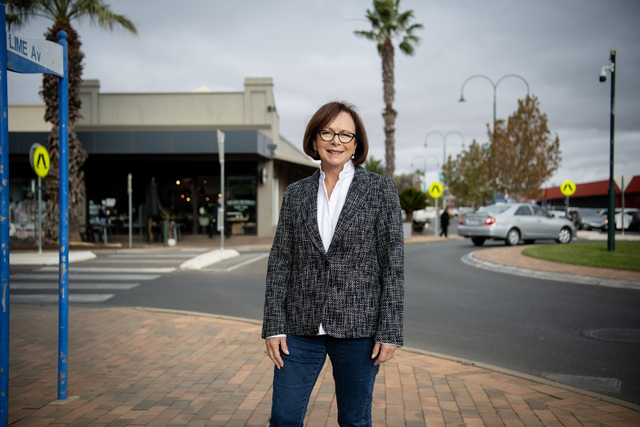
MEMBER for Mallee Anne Webster says Labor has doubled down on its regional doctor distribution “disaster” as they again changed the Distribution Priority Areas last week.
Dr Webster said city patients could see a doctor relatively quickly and close to home, compared to the regions.
“Mallee constituents have to wait weeks if not months, and at times travel for two-hour round trips, to see a doctor,” she said.
“We have a dire maldistribution of the doctor workforce and this week Labor have made that worse, not better.
“I reject the government’s claim that this announcement is a ‘no losers’ approach.
“When you keep shifting the goalposts in favour of metropolitan communities, of course you can claim there’s no losers when regional Australians are abandoned outside the playing area.
“In 2022, the incoming Labor Government changed the distribution priority areas (DPA) to include Modified Monash Model (MMM) 2 regions, which captured most of the larger metropolitan areas of Australia.
“Labor’s 2022 policy saw the number of doctors leaving regional Australia increase 56 per cent in the first six months.”
Dr Webster said last week’s inclusion of swathes of the Gold Coast, Sunshine Coast and Mount Barker in Adelaide “further illustrates that Labor does not care one bit about rural, regional and remote Australians”.
“I hope Labor shifting Hopetoun in Mallee from ‘rural town’ to ‘remote’ will help their local doctor shortage – but changes like these illustrate that the MMM is broken,” she said.
The Federal Government’s Working Better for Medicare Review recommended moving away from MMM to the department moving “to progressively use the GP catchment area as the prime building block to establish DPA status.”
Under the MMM classification system, locations are classified into one of seven categories according to Census data, from ‘metropolitan’ to ‘regional’, ‘rural’ to ‘very remote’, with the value of Medicare payments and aged care supports increasing the more remote an area gets.
The classification also has implications for workforce recruitment, with non-metropolitan areas automatically granted the ability to recruit from a wider pool of doctors than city areas, under what is known as DPA status.
To provide Medicare services, overseas-educated doctors must spend their first 10 years practising medicine outside of major cities and metropolitan areas, which means regional and rural communities with DPA status can draw from a wider pool of doctors.
Federal Health Minister Mark Butler said classifications were reviewed periodically as new data was released.
“This update incorporates the latest Census data, which was paused while an independent review into the classification system was underway,” he said.
“As the government works through its response to the independent review, the Albanese Government has approved a ‘no losers’ update to the MMM and DPA classifications, in line with the latest Census and workforce data from the Department of Health and Aged Care.
“This will see 34 communities unlock greater support from Medicare, while ensuring no community receives less support.
“Seventeen locations will soon be classified as more remote and will receive larger bulk billing incentives.”
Mr Butler said Australians faced a choice at this election.
“Labor will continue the strongest workforce recovery in memory, with more doctors and nurses than ever before and the largest GP training program in Australian history,” he said.
“Labor is delivering more bulk billing, more doctors and more urgent care clinics.”