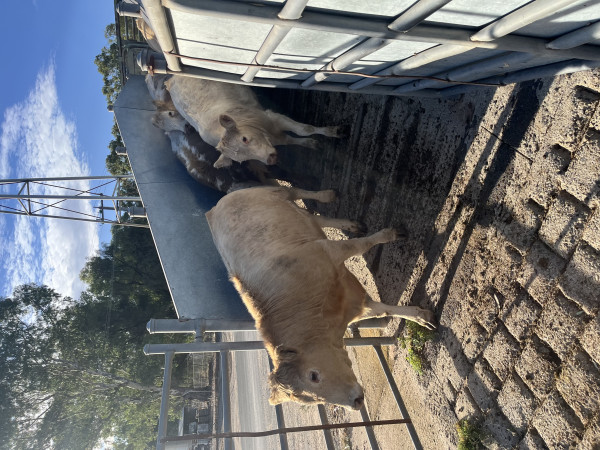
THE future of the Swan Hill saleyards remains uncertain, following the release of a strategic review which reveals it has been operating at a financial loss for many years.
Swan Hill Rural City Council recently conducted a comprehensive independent strategic review of the Swan Hill Regional Livestock Exchange (SHRLE) to identify key challenges and opportunities for the facility moving forward.
Having serviced the region since 1938, the livestock exchange has been a pillar of the region for more than 80 years, with regular cattle and sheep sales.
However, an analysis of the financial position reveals the facility has incurred financial losses, totalling more than $837,000, for the past four years, and a loss of more than $323,000 in the 23/24 financial year.
SHRCC director of infrastructure Leah Johnston said the review had identified significant changes within the sector in recent years, along with increased marketing options which included online auctions and direct sales to both feedlots and abattoirs.
She said there had also been a shift in the consolidation of saleyards and privatisation within the industry over the last 20 years.
While there were 300 saleyards in 1949, by 2000 that number had dropped to 125 saleyards.
“Currently there are less than 100 commercial saleyards operating regularly and it’s projected there will be less than 50 regional sites by 2030,” Ms Johnston said.
Projections indicate that a yearly throughput of 100,000 cattle or 500,000 sheep was required for the facility to remain viable, however Ms Johnston said there was “no apparent pathway for this to occur,” without subsidisation.
In the last financial year 12,762 cattle and 89,146 sheep went through the facility, increasing from the previous year where 8,802 cattle and 97,187 sheep passed through the exchange.
The review also explores a range of potential future options, including leasing the facility to a third party, repurposing the site for alternative uses, or transitioning to a different operational model.
Mayor Stuart King said the stock exchange had played a vital role within Swan Hill’s agricultural community, supporting local farmers, agents, and businesses.
“As the livestock industry continues to evolve, so too must our approach to ensuring a sustainable and viable future for the exchange,” Cr King said.
“Together, we can plan for a sustainable future for the site that balances economic, social, and environmental considerations.”
Council is now seeking community feedback in relation to the strategic review.
“Council recognises the social and economic importance of the SHRLE and is committed to ensuring any future decisions align with community needs and industry sustainability,” Cr King said.
However, Ms Johnston said the nature of the review was likely to cause community concern but stressed no future decisions had been made.
“This is the first step in understanding the feasibility of the yards and to be fully transparent,” she said, adding feedback would help guide Council in making informed decisions which supported the community and broader agricultural industry.
Community feedback will close on April 16.