The team from the Barapa Land & Water Council have been very busy of late continuing to rejuvenate local land and pass on Indigenous knowledge about caring for Country.
Recent projects have included revegetation of areas like Lake Yando near Canary Island, and conducting cultural burns.
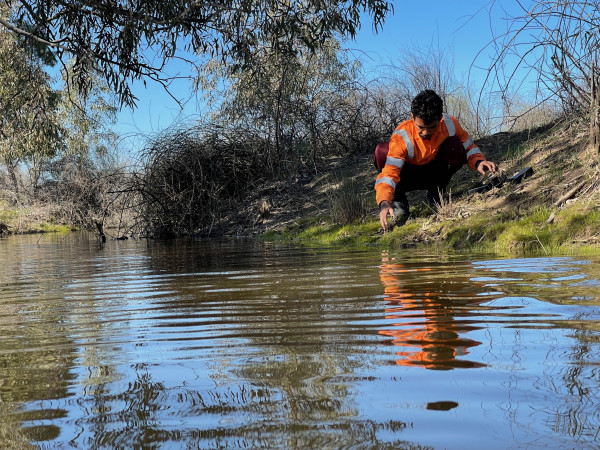
On-ground team leader Liam Piacentini explained that a recent planting job involved planting more than 8000 plants with 15 to 20 species traditionally used for food and fibre.
The team of workers helped to give the natural setting a makeover with these ground and aquatic species, restoring the creek in the process.
The group has identified cultural burns as one of their key focuses recently, especially given the disastrous bushfires of 2019 and 2020.
One such burn was a recent trip by the team to Mystic Park and as Mr Piacentini explained, there is a lot of work that goes into the process.
“First you have to find the area, and then there needs to be a cultural check,” Mr Piacentini said.
“There are a lot of registered sites to look for – like scar trees, oven mounds, burial sites and artefacts.
“The general rule of thumb is that only one per cent of these culturally significant sites are even registered.”
Scar trees show where First Nations peoples removed bark to produce bowls, coolamons – carrying vessels or canoes.
Mr Piacentini said oven mounds are another common site with round bulges visible above the landscape, with cooked clay balls often seen alongside.
Following cultural checks, there are ecological and biodiversity checks carried out by DELWP before the Barapa team maps the areas, monitors the significant sites and manually prepares the work.
After the final approval from DELWP the burn can take place after which the area will be monitored.
“The technique is like a mosaic burn, so you’re not burning the whole area but different patches so there are burnt and unburnt areas,” Mr Piacentini said.
The group explain that the use of this traditional knowledge is a way of “protecting assets, preparing for fire season, supporting the revegetation of damaged areas and encouraging native growth”.
The Aboriginal owned and operated Barapa Land & Water Council team aspire to bring people on Country, and pass knowledge down to younger Indigenous people through the Elders, and to have their work benefit everyone in the community.
The team have worked with towns, on Crown and government lands, and on public and private projects – even engaging farmers and private landowners in conjunction with government agencies.
They have worked around the region servicing Barapa Barapa Country, which extends from the Gunbower Forest down the Murray River towards Swan Hill, and includes Kerang and Koondrook.
Recent work sites have included McDonald Swamp, Reedy Lake, Pyramid Creek and the Loddon River.