THE wine industry has recorded a modest rebound in 2025.
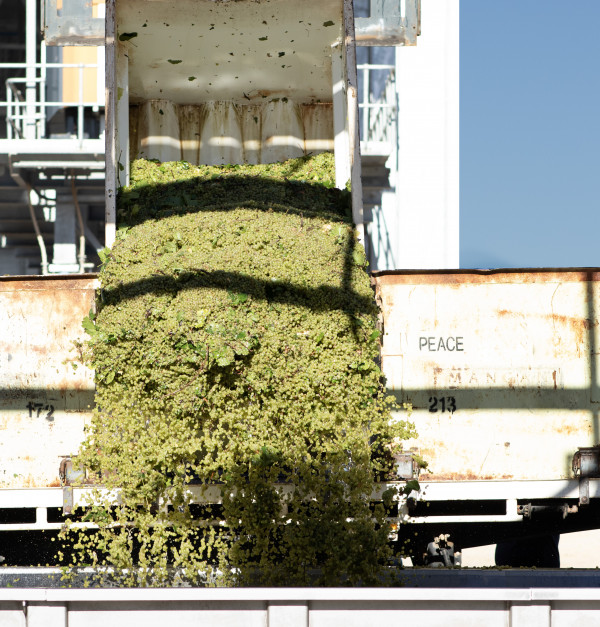
The national winegrape crush was estimated at 1.57 million tonnes – up 160,000 tonnes or 11 per cent from 2024 – according to the National Vintage Report 2025 released this week by Wine Australia.
However, the total remains 140,000 tonnes below the 10-year average of 1.71 million tonnes.
Wine Australia’s manager of market insights Peter Bailey said the smaller-than-average crush reflects a mix of seasonal and strategic factors, most notably a continued global decline in wine demand prompting shifts in the Australian sector.
“The 2025 crush equates to around 1.1 billion litres of wine, which is in line with current sales of Australian wine on domestic and export markets,” Mr Bailey said.
The year-on-year increase was primarily driven by a 20 per cent rise in red grape varieties, while white varieties were up just 2 per cent.
Despite these gains, the crush for both red and white varieties remained below their respective 10-year averages.
“The crush of red grapes is still estimated to be the third-smallest in more than a decade – the past two years being the smallest – and was 9 per cent below its 10-year average, while the crush of white grapes was 8 per cent below,” Mr Bailey said.
He also warned that the sharp rise in red grape production could worsen the sector’s existing challenges with red wine oversupply.
“The significant increase in red varieties this year could exacerbate the challenges facing the sector in terms of excess stocks of red wine, and might further reduce demand for these varieties next vintage,” Mr Bailey said.
The estimated total value of the 2025 winegrape crush rose to $1.13 billion – up $136 million or 14 per cent on 2024.
However, while average purchase values rose in warm inland regions for both red and white grapes, they fell in cool and temperate regions.
Mr Bailey highlighted ongoing economic challenges, particularly in warm inland areas.
“Despite the increases, the average purchase values for warm inland reds in the past two years were the lowest in over a decade, and for many growers would not be sufficient for production to be economically viable,” he said.
He stressed that the sector must take co-ordinated action.
“Conditions are not likely to improve for red grapes until there is a significant reduction in the supply base. The wine sector needs to continue to work together to bring supply and demand back into balance at a profitable price point for growers and winemakers,” Mr Bailey said.
Local winegrape grower Andrew Peace Wines recorded a mixed 2025 harvest.
It posted 16,494 tonnes of Chardonnay and 12,964 tonnes of Shiraz.
Shiraz returns to top spot as Chardonnay falters
SHIRAZ reclaimed its position as Australia’s number one winegrape variety, rising 23 per cent year-on-year.
Chardonnay, impacted by significant frosts across multiple regions, dropped to second place with a 13 per cent decrease.
Other major varieties showed strong performance, with Cabernet Sauvignon, Pinot Noir, Pinot Gris/Grigio and Sauvignon Blanc all posting double-digit growth.
In a notable shift, Pinot Gris/Grigio surpassed Merlot for the first time to become the fifth most-crushed variety, giving white grapes three spots in the top five for the first time.
Still, only three of the top 10 varieties – Pinot Gris/Grigio, Sauvignon Blanc, and Pinot Noir – had a larger crush in 2025 than they did a decade ago.
South Australia remained Australia’s largest contributor to the national crush, accounting for 48 per cent. While this was 8 per cent higher than its very low 2024 crush, it remained 13 per cent below SA’s 10-year average.
New South Wales followed with 33 per cent of the total crush and recorded the largest year-on-year growth – 24 per cent – bringing it back in line with its 10-year average.
Victoria was the third-largest contributor, but its crush declined by 1 per cent compared to 2024 and was 13 per cent below the 10-year average.
Meanwhile, Western Australia, Tasmania, and Queensland all posted year-on-year increases. Tasmania, in particular, achieved a record crush for the second consecutive year.