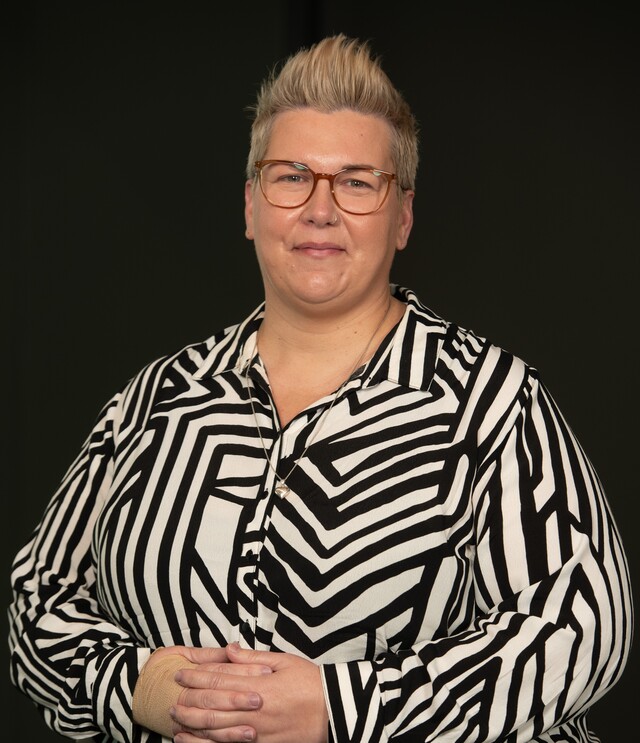
MARALYN Toppinen and Wendy Blair are among the many Australian women whose lives were shaped by military service.
Their stories reflect the pride and personal costs that came with it.
Ms Toppinen met her husband, Laurie, while serving in the Women’s Royal Australian Army Corps (WRAAC).
“He was a soldier posted near my unit,” she said.
“We met one night at a party in Sydney.”
Ms Toppinen and Laurie were both corporals, but in those days, married women weren’t allowed to serve.
“I had to discharge to get married,” she said.
“We tied the knot soon after.”
They settled down to start a family but the Vietnam War changed everything.
With a five-month-old in tow and pregnant with their second, Ms Toppinen watched her husband deploy.
“That was tough,” she told The Guardian on the eve of Anzac Day.
“I came back home for support while he was away.”
When Laurie returned, he was a changed husband and father.
“I always say I had two husbands; the one who left, and the one who came back,” she said.
“Anybody who’s been in a theatre of war never comes back the same.
“If it doesn’t affect you, I don’t think you’re human.”
After retiring, the couple moved to Queensland, but distance from family eventually brought them home.
Not long after their return home, Ms Toppinen was diagnosed with breast cancer.
While she was undergoing treatment in Bendigo, Laurie began to mention ongoing mouth pain.
When they returned from Bendigo they sought medical advice.
Laurie passed away from cancer in September 2019, just six months after she completed her recovery.
Five years later she began serving as secretary at the Swan Hill RSL.
“It keeps me busy, especially around Anzac Day,” Ms Toppinen said.
“Organising the service alongside Viv (president) has been a learning curve, but a meaningful one.”
Ms Toppinen said she loved the life the WRAAC provided.
“If the women’s army still existed, I’d go back in a heartbeat,” she said.
“I felt a deep sense of purpose.
“The camaraderie; we were well looked after, you can’t buy that kind of bond.”
Women’s Emergency Signalling Corps officer Wendy Blair agreed.
“It was, it felt like being part of an exclusive club,” Wendy said.
Ms Blair said working in signals was “a top-secret environment, transmitting political and military communications”.
“We were called teleprinter operators, you had to be fast and precise.”
Raised in rural South Australia, Ms Blair was overwhelmed at first but found her feet and took pride in her job.
“It wasn’t just a job,” she said. “It mattered.”
She said it’s important now more than ever to keep these stories alive.
“We’re losing our World War II veterans,” Ms Blair said.
“It’s important to carry their stories forward.
“If you don’t ask questions while people are still here, the stories die with them.”
Ms Blair and Ms Toppinen connect regularly with fellow female veterans.
“It’s like we’ve known each other all our lives, even if we didn’t serve together,” Ms Toppinen said.
“We always joke about how good we looked in uniform, but there’s pride in that.
“It meant something.”
Ms Blair said her grandfather, Francis Allen (Frank), also served.
Frank first served on the battlefields of France before becoming a prison guard at Mount Gambier during WWII.
He never spoke a bad word about the German prisoners of war.
“To him, they were just men doing their job,” she said.
“He was a hairdresser before the war.
“Frank would often cut the hair of the German soldiers at the prison.
“There was still respect, even among enemies.”
Service shaped both women’s lives, but Ms Toppinen said it came at a cost.
“Vietnam did damage,” she said.
“Laurie would tell the funny stories, but the nightmares stayed hidden.
“People who were really in it don’t talk much.
“It’s in the quiet moments you see the toll.”
Ms Blair’s and Ms Toppinen’s voices are a powerful reminder ahead of our national day of remembrance, that broadly commemorates all Australians and New Zealanders who served and died in all wars, conflicts, and peacekeeping operations.
“If they don’t hear it from those of us still here, it’ll be gone forever,” Ms Toppinen said.
“History is still living, if we choose to keep it alive.”