PATIENTS at Swan Hill District Health have been assured care won’t be compromised by the establishment of Local Health Service Networks.
As part of the Victorian Government initiative, SHDH has been grouped into a network with other health services in the Mallee.
Health Minister Mary-Anne Thomas said the networks were grouped together by geographic regions and would support improved co-operation between local services.
“This will ensure doctors and specialists are available to care for patients closer to where they live, deliver clearer pathways in and out of hospital, and support better waitlist management across a region,” Ms Thomas said.
The Loddon Mallee network comprised Bendigo Health, Boort District Health, Cohuna District Hospital, Dhelkaya Health, Echuca Regional Health, Heathcote Health, Inglewood and Districts Health Service, Kerang District Health, Mallee Track Health and Community Service, Mildura Base Public Hospital, Robinvale District Health Services, Rochester & Elmore District Health Service and Swan Hill District Health.
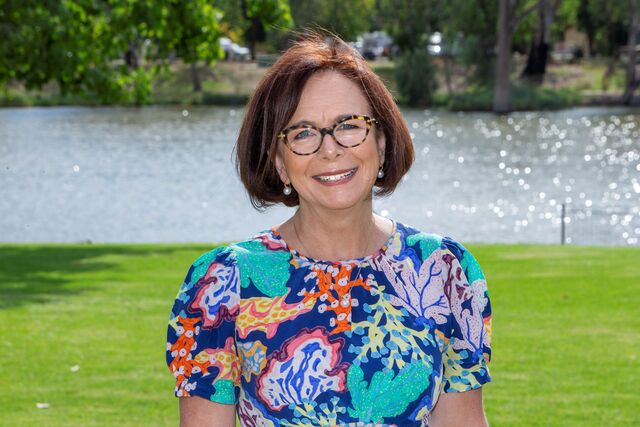
SHDH acting chief executive Chloe Keogh said “care will continue in the way it currently is”.
“There won’t be any changes in our services, but we are looking to strengthen and tighten our connections with all of our neighbouring health services through the Mallee in this partnership model,” she said.
“It’s all to do with governance, and the way they we can create efficiencies by working together.
“For patients, the idea behind it is that patients get care as close to home as possible, and that continues.
“We might be able to work closely with another health service to ensure that our patients don’t have to travel down to Melbourne for that service, that we could get it done a little bit closer to home if Swan Hill can’t deliver it.”
Ms Keogh said patient flow in high-level care situations generally went to Mildura, but was often determined by Ambulance Victoria.
“Transferring someone out who’s unwell, we don’t say this is where you’re going,” she said.
“So it’s not absolutely unheard of that we might transfer a patient to Ballarat, to Goulburn Valley or to Mildura.
“It is basically going to be on where the care can be provided, and then if the reverse happens where somebody has a procedure in Melbourne, they might be sent to Bendigo or they might come back here, and then we may send them, you know, to their local community hospital to get that step-down care.”
Ms Keogh said health services in the Mallee were “well known” for connectedness.
“The health services have got a good, established relationship already,” she said.
“This is just really formalising it, and I think it’s about creating efficiencies in how we do business.
“So there’s some equipment, for example, that we order, that Kerang and Boort would also order, and then if it goes out of date, we have to throw it out.
“So there’s some efficiencies that can be done in saying, we’ll circulate it through.
“We’ll circulate that so Swan Hill can use it, or Mildura could use it.
“So there’s a lot of waste in that, just because we’ve always got to provide something that’s in date to do a procedure for a patient locally.
“We also do it with medicines … if you’ve got medicines that are quite rare, you don’t use them very often but when you need them, it’s lifesaving type of stuff.
“If you know that it’s expensive and it’s about to go out of date, then you try to rotate it around to someone else and see if you get it used, rather than throwing it out.
“It’s some real practical efficiencies like that.”
The government said the final groups were determined following “extensive consultation with health services” – with consideration given to population growth, community need, clinical capability and distance between services.
“The governance of each health service, including its board and CEO, unique identity and connection to their community, will remain unchanged,” the government statement said.
“Health services will come together to discuss the priorities and arrangements for their network, focusing on four key priority areas – access and flow, workforce, clinical governance, and sustainability – before networks commence operation on July 1.
“Within each priority, it is expected networks will work toward possible initiatives to improve referral pathways, attract new workforce and retain existing staff, and share support services and back-office functions to reduce unnecessary duplication.”
The Victorian Healthcare Association welcomed the announcement.
Chief executive Leigh Clarke said the networks would establish a structure for the state’s health-care system over the coming decade to provide regionalised care.
“We look forward to working closely with the government and the sector over the coming months, identifying opportunities around network responsibilities such as regionalised workforces that meet the health-care needs of Victorian communities,” she said.
However, Nationals Member for Murray Plains Peter Walsh said the government had “begun dismantling the independence of local health services”.
“If you don’t think Premier Jacinta Allan wants to merge our health systems into a centralised model, with all decisions made elsewhere, why the hell would you have Mildura in the same district as Bendigo – they are more than 400km apart for heaven’s sake,” he said.
“That’s so obviously ridiculous … just as it is ridiculous to assume any of the major health hubs in my electorate will be better off with the big decisions being made in Bendigo, initially, but let’s not kid ourselves, this control is all moving to Melbourne.
“Yes, this is merger by stealth.
“We should all be on red alert.”