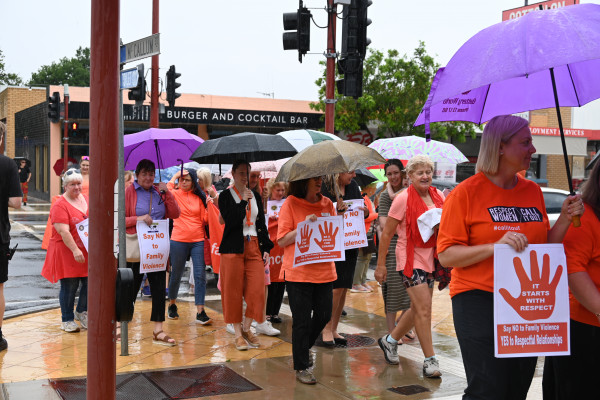
THE community launched 16 Days of Activism with a Walk Against Family Violence on Monday to demonstrate a shared commitment to end family violence.
The campaign aims to promote conversations and education about the many forms that family violence takes and the support available to victim survivors.
Orange Door program manager Peta Reid said while she did not doubt that rates of family violence were increasing, so were community conversations that reduced shame and stigma for victim survivors.
“It is no secret that we live in a community with high rates of family violence, sometimes reaching the highest rates in Victoria,” she said.
“There have been 3942 victim survivors, children affected by family violence and perpetrators reported in the past 12 months in the Mallee region local government areas, 2500 of whom were victim survivors and children.
“That is 2153 more than this time last year.
“We’re trying to get our support teams into our smaller communities because family violence doesn’t discriminate, and we need to give all people the opportunity to come forward.”
Mallee Domestic Violence Service (MDVS) chief executive Leigh Rhode said not being able to identify coercive control as family violence prevented people from reaching out for support.
“We need to learn more about coercive control as a community, as family and friends and as allies to name it as family violence, because it is often a prelude to physical violence,” she said.
“People often think family violence is about murder, broken bones or bruises – and it is – but it can also occur in many subtle ways,” she said.
“Financial control, isolation, gaslighting, tracking using their phones or car, this quiet controlling behaviour is coercive control that people don’t usually recognise as family violence and won’t report until or unless there are broken bones.
“The 16 Days of Activism is a chance to raise awareness and make services like ours known to the community so people know where they can go.”
MDVS provides services in prevention, early intervention, crisis response and healing response in the Mildura, Swan Hill, Buloke and Gannawarra local government areas, working closely with other organisations.
“We will provide support to victim survivors no matter where they are,” Ms Rhode said.
“We run a sort of virtual team through our connections with the Orange Door hub in Swan Hill, with MASP (Mallee Accommodation & Support Program), who provide some of the child support services, local police, Mallee Family Care and the local hospital, to form a really strong joined up community facing up to the issue.
“When people leave a family violence situation, that is when the violence escalates, so it’s really important to have a safety plan in place.”
Ms Rhode said that listening to and believing people who came forward was very important.
“If someone discloses family violence to you, tell them you’re here to help, they have a right to feel and be safe,” she said.
“Those responses in the first instance are so important.
“You have to feel safe reaching out for support, so a friend can offer to make the call to services from their house or phone and help them access Orange Door, the police, health service providers or MDVS.”
For Connect Family Law lawyer Michelle Oates, communities have to be brave to address family violence.
“It’s about not backing away because it’s an uncomfortable conversation, calling out bad behaviour when you see it, holding perpetrators responsible and giving perpetrators support to change their behaviour,” she said.
“The whole community needs to participate in breaking that cycle, and particularly in the Mallee region that means that sporting bodies need to be completely across family violence and setting expectations of behaviour.
“It’s a strong community connection and it’s a place we can have a really strong impact, to have that consistency of messaging that it is not the victim’s fault, that violence is never OK, and there will be consequences for violent behaviour.”
Including children in the conversation is important too, as Ms Oates identified that almost every child protection matter at Connect Family Law had elements of family violence.
“Really helping our next generation understand what is and isn’t OK and working at the end of prevention will create that generational change to break the cycle of abuse,” she said.
“Some of the work in schools is fabulous but they need to have a refocus and have that clear messaging that this is how we love someone, this is respectful behaviour and having that conversation with both genders together, so there is that consistent expectation.”
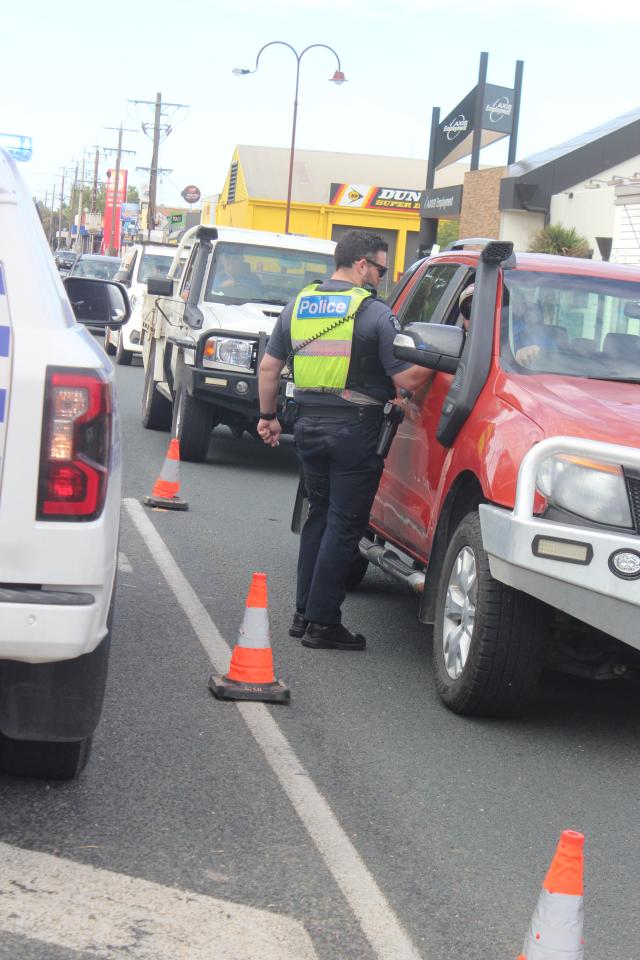
Swan Hill police Acting Inspector Brian Hansen said police now provided more avenues for victim survivors to report family violence and more training for officers to align with changing legislature.
“Victims can have the police come to them so they don’t have to be confronted with going to the department to report, and they can talk to plain-clothed officers,” he said.
“We provide victim support right from reporting right through the court process and after, so they don’t have to be alone when they go to court to get intervention orders and we can refer people on to Orange Door and MDVS.
“These measures appear to be producing a little bit of comfort in the community now that we have become a lot more proactive, and we see that in the increase in our reporting rates.”
With the inclusion of coercive control within family violence legislation, police are trained to assess the presence of those behaviours.
“Quite often the victims are not aware they are victims because of the subtle nature of coercive control, so police become aware of it through discussions and disclosure with victims to then go through the proper procedures,” Acting Insp Hansen said.
“It’s really pleasing to see the growing support for the 16 Days of Activism, with more organisations and more of the community getting involved because the more we create awareness the better we can address the issue.”
Police are seeing a reduction in repeat offenders in Swan Hill.
“Our Family Violence Investigation Unit have specific management plans for people who are identified as repeat offenders, and we offer them services for behavioural change, and it would appear from the data that it might be working,” Acting Insp Hansen said.
“Offender behaviours don’t change without support and intervention.”
People who need urgent help because of sexual assault, domestic or family violence should call 000.
If this story raised concerns for yourself or someone you know, support services are available through The Orange Door at 1800 290 943 or Mallee Sexual Assault Unit and Domestic Violence Service at 5025 5400.