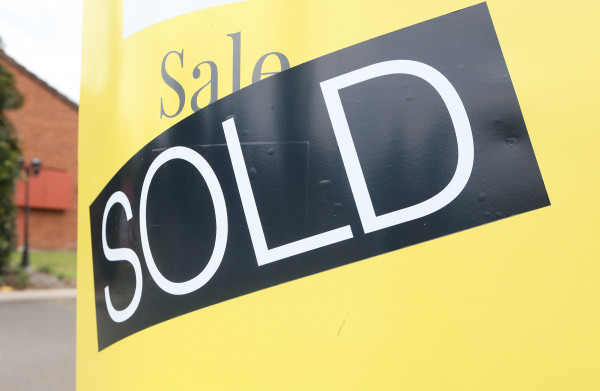
HOME prices in the state’s north west dropped slightly in September, bucking the statewide regional trend.
The PropTrack Home Price Index report found home prices in regional Victoria fell 0.02 per cent over the month to be 1.32 per cent lower year-on-year, the greatest annual decline of any regional market.
In the north west region, home prices fell 1.47 per cent in the past quarter.
LJ Hooker Swan Hill principal John Monahan believed prices had stabilised over the last 12 months with just a slight upward trend.
“Short-term variation on a small data set is not necessarily accurate and, of course, north west Victoria is a far larger area than just Swan Hill, so the statistics are not particularly accurate to our specific market,” he said.
“Housing supply is very tight with very little stock in several price ranges and segments
“Whilst there has been a tightening of supply, there has also been a decline in buyer numbers from those heady days of 2022, so the market forces are reasonably well-balanced, albeit at a smaller critical mass than previously.”
Mr Monahan said all segments had fewer active buyers than the recent market boom.
“Certainly first-home buyers are less active than they were,” he said.
“There continues to be non-local enquiry across many market segments as it appears Swan Hill is favourably regarded as an attractive investment market, particularly with Melbourne buyers.
“Unquestionably, the cost-of-living issue is influencing the property market, however I do anticipate a significant uptick in market activity once the first interest rate drop is announced – there is pent-up demand sitting under the surface and that will mature as soon as there is confirmation of the direction on the price of money.”
Despite the data, Colin Balcam, of Graeme Hayes Real Estate, said he hadn’t noticed any significant reduction in price.
“Some of the excitement has moved out of the market,” Mr Balcam said. “This will sought out agents that may have over-priced listings to get stock and will now be forced to give accurate appraisals.”
Mr Balcam agreed supply had been an ongoing issue for the past two to three years and would remain so, but didn’t foresee any price hikes next year.
“With the lack of rentals and the high price of rental properties in Swan Hill, buyers can afford to buy low-end properties to break the rent cycle if they chose to, and first-home buyers are still out there in force,” he said.
“Buyers just need to rein in their spending, with their choice of vehicles, holidays, phones and accessories, eating out, clothes, fast foods.
“Work out a saving plan and stick to it.
“Priorities are something that people are ignoring … shelter is of utmost importance and always will be.
“I don’t think that one quarter of one percentage point this year will flood the market with buyers.”
PropTrack senior economist Eleanor Creagh said growth had slowed, with buyers enjoying more choice.
“Housing demand remains resilient, defying affordability constraints with prices lifting across much of the country in September, albeit at a slower pace in most markets,” she said.
“The number of homes listed for sale has lifted providing more choice and slowing price growth.
“However, the pace of growth remains varied with differing supply and demand conditions driving diverse performance across the country.
“Though prices are rising, sustained high interest rates, cost-of-living pressures, weak consumer sentiment and affordability constraints are weighing.
“Buyers now have more properties to choose from, though uncertainty around the timing of interest rate cuts is likely also having an impact on the pace of growth.”
Ray White chief economist Nerida Conisbee said Victoria’s property market had hit a rough patch.
“The state that was previously setting the pace for the nation’s property development is now lagging behind, grappling with the consequences of what many are calling an overzealous tax regime,” she said.
“It wasn’t long ago that Victoria … was the place to be for property investors and developers.
“Last decade, Victoria accounted for the largest share of homes being built. This building boom transformed the cityscape and provided much-needed housing for a growing population.
“Fast forward to today, and the picture couldn’t be more different. Both Melbourne and regional Victoria now hold the dubious honour of being the slowest property markets in Australia. The vibrancy that once defined Victoria’s real estate sector has dimmed.”