SWAN Hill Council will prepare a report on the usefulness of aerial heat mapping for cooling interventions, such as tree planting.
Councillor Jacquie Kelly told last month’s council meeting there was an “urgency to do this work before coming summers”.
“The Cool It project helps councils improve community resilience to increasing heat in regional Victoria,” she said.
“Funded by the Department of Environment, Land, Water and Planning (DELWP), the project was a partnership between the Central Victorian Greenhouse Alliance and eight partner councils.
“The two main objectives of the project were to provide evidence and background information to inform better decision making for landscape-based cooling solutions, and to provide a proof of concept for a simplified methodology (using) existing and publicly available data, to determine areas where social vulnerability and heat exposure overlap, that other councils can also implement without the need to acquire expensive thermal imagery or other data sets.”
Cr Kelly moved that officers table a report to council on the project done by CVGA and the usefulness of such aerial mapping to Swan Hill Council’s planning for prioritising areas for cooling interventions.
It would inform tree planting programs (in both streets and parks), irrigation programs of open space, where to position shady walkways and cycle ways, where to prioritise water sensitive urban design for cooling and capital works, strategic planning and planning.
Cr Kelly referred to the community vision and council plan, which called for “reducing the impact of climate change on health and wellbeing” and supporting “initiatives to green priority areas within our municipality”.
She said the Cool It project used existing spatial data to determine
urban areas of nine councils that were socially vulnerable to heat impacts.
“Census data from 2016, Victorian Government data, open data and aerial imagery were used to identify parcels of urban areas where pop-ulations are most vulnerable to urban heat and heat waves, and prioritise those parcels of urban areas that are also exposed to more heat due to a combination of high pedestrian activity and hot urban surfaces,” Cr Kelly said.
“Given council resource constraints, it is critical that council can identify where to prioritise urban cooling interventions such as new tree plantings or permeable pavements.
“It is important that investments in heat mitigation maximise benefits to the most vulnerable sectors in the community in a cost-effective way.”
Cr Bill Moar said he couldn’t support the motion as it was “unbudgeted expenditure” and a “redundant report”.
“The new Local Government Act has actually superseded a lot of the work of the CVGA,” he said.
“There are mandatory requirements for us now … that’s why it’s in the council plan. It’s already being actioned; we are already planting trees.”
Cr Moar said it wasn’t “rocket science” to plant trees where there weren’t any.
“Our parks and gardens (team) does a great job in assessing where to plant trees and cool as many areas as they possibly can in recreational areas,” he said.
“I had a meeting yesterday with a couple of community groups who gave me a run-down of all the trees that these groups have planted over the years all around the town.
“It was them who planted them, it wasn’t council dictating, ‘You plant trees here, you plant trees there’.”
Cr Moar was concerned council would “disempower” the community if it supported the motion.
“If we go ahead and say we have to do this and got to do that … locals stopped planting trees around Lake Boga because it was going to ruin their vision,” he said.
“Another area they were planted too close together, so they had to pull them out so they would grow into healthy trees.
“Let’s work with our communities to get trees where the community want them.”
Cr Stuart King said council had to accept strategic work took time to achieve.
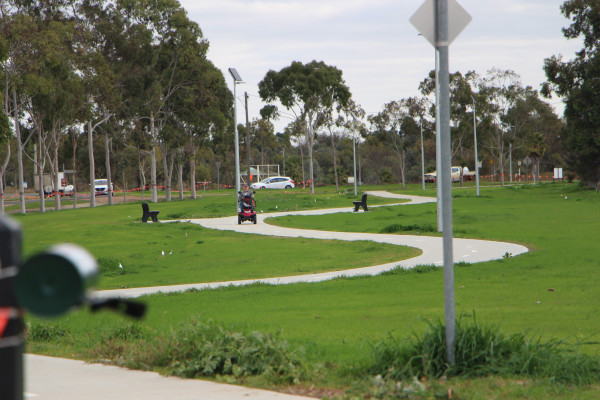
“I’d love to see walking and cycling tracks with trees everywhere along the old water channel through town, but this type of work takes time,” he said.
“We risk taking resources away from long-term strategic projects to short-term objectives that do nothing to enhance the long-term livability of the municipality.”
Cr Kelly said the motion was “far from a large vision project”.
“This is basic information to help communities and help staff,” she said.
“They are probably happy to be guided from mapping.
“We aren’t doing the project, just a report on whether it’s useless to us.
“We are a municipality in north-west Victoria – it is hot, it is going to be hotter.
“With electricity costs rising, people will be using so much more power to run air-conditioners in summer.
“We need to cool our city … we won’t be thanked by our community now if we are left behind.”