TESTING is under way at local schools as selected year levels take part in this year’s nationwide NAPLAN test.
Reading, writing, spelling, grammar, punctuation and numeracy will be assessed on a national scale across both primary and secondary settings, providing schools, government bodies and parents with an insight into whether or not students are reaching important educational outcomes.
NAPLAN testing was this year brought forward several months, while an online platform will replace the need for pens and pencils, with the exception of a Year 3 writing test.
Minister for Education Natalie Hutchins said the changes aimed to improve and modernise the test to provide better benchmarks.
Ms Hutchins said the new March date, moved from May, would “enable the crucial data to better support students and target assistance earlier in the year”.
New proficiency standards, with four levels of achievement, will be used to relay results of the data.
“Each child’s NAPLAN report will show how they’re tracking against their peers using four easy-to-understand standards,” Ms Hutchins said.
“The proficiency standards will give a more meaningful measure of how students are progressing at time of testing and will make it easier to identify and support students who may be falling behind.”
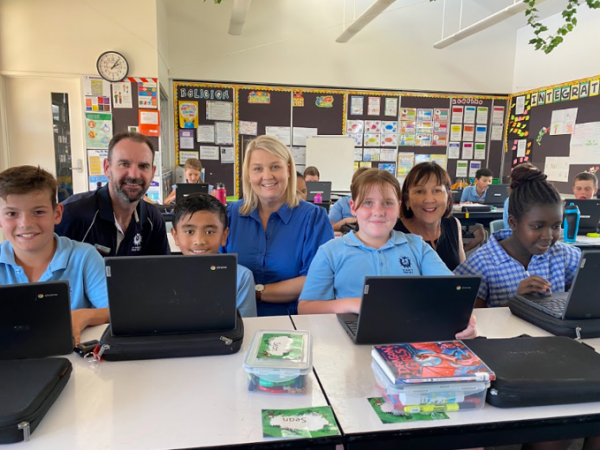
St Mary’s Primary School in Swan Hill was heading into this year’s testing with a favourable outlook, following the release of updated data on the My School website.
The Australian Curriculum Assessment and Reporting Authority provides data on attendance rates, NAPLAN results, student and teacher numbers, and demographics.
While student progress data for 2020-2022 is not available following the cancellation of NAPLAN in 2020 due to COVID-19, performance data relative to socio-educational advantage by school was released.
ACARA identified high-performing schools, with St Mary’s listed among those with this distinction.
Principal Kate Quin said the result was a wonderful achievement, which highlighted “regional schools can and do offer quality educational opportunities”.
The recognition reflected that students at St Mary’s Primary School performed significantly above other students nationally with similar socio-educational advantage.
“For our own school, it is a wonderful testimony of the commitment of all staff to the children at the school and their focus on explicit differentiated teaching, combined with partnerships and support from families with their child’s learning journey,” Ms Quin said.
“It is great to see the recognition of rural students and staff.”
Catholic Education Ballarat executive director Tom Sexton welcomed the achievement.
“To have St Mary’s Primary School recognised as an educational community that extends young people’s learning consistently over a three-year period relative to their socio-economic status is fantastic,” Mr Sexton said.
“Only a small number of schools are identified nationally and we are excited for the work of this community to be celebrated.”