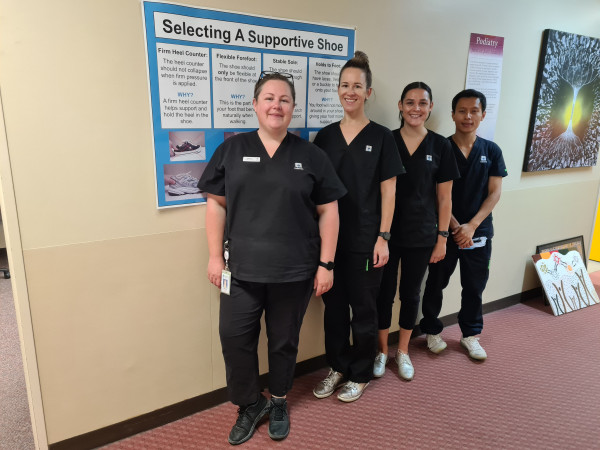
THE podiatry department at Swan Hill District Health want patients to be able to stand on their own two feet.
Manager Stacey Worsnop said their primary focus was to prevent foot wounds and amputations.
Podiatrists specialise in the study, diagnosis and medical and surgical treatment of many disorders if the foot, ankle and leg.
Ms Worsnop said there were a wide range of reasons to see a podiatrist, but some typical conditions included heel pain, bunions, ingrown toenails, tinea, corns and calluses.
“Some other examples of why someone may see a podiatrist include patients with diabetes or peripheral vascular disease, clinical diagnosis or history of foot or lower limb deformity, clinical diagnosis of falls, arthritis, soft tissue and muscular pathologies and circulatory diseases,” she said.
The podiatry department is involved in most areas of the hospital including acute and subacute wards, in Jacaranda and Logan Lodge.
They also see patients in the Allied Health Outpatients Clinic.
Ms Worsnop said podiatry services were available to people of all ages – from young infants to the elderly depending on their ailments – offering a range of services from the treatment of calluses to the treatment of bone and joint disorders.
“It is advised that all people with diabetes need their feet checked at least once a year,” she said.
“Do you or someone you care for have a chronic wound? Wounds that do not progress through the healing stages in a timely manner are considered chronic or hard to heal.
“Every year, more than 420,000 Australians suffer from a chronic wound.
“These wounds require a specific treatment regime provided by skilled professionals.
“We have experienced staff with a wealth of wound knowledge ready to assist the community with foot wounds.”
The department can also assist with leg wounds, by assessing if circulation is a factor affecting the healing process.
The team also provide daily wound care.
One morning a week, SHDH district nursing and podiatry conduct a clinic collaboratively, focusing on wound care and prevention of further skin breakdown.
This allows the teams to work together and develop wound care plans in conjunction with the client/their carer, as well referring to other health professionals.
Warning signs to be seen by a health professional in a timely manner include:
• Pain and heat
• Odour
• Excess fluid or weeping
• Slow healing (taking longer than a month, or keep returning)
The podiatry team also run a variety of different clinics out of the Allied Health Department:
• Wound clinics are available Monday to Thursday for wound care and monitoring.
• There is a joint podiatry and district nursing clinic on Wednesday mornings.
• Two afternoons per month there is a paediatrics clinic for children under 18.
• Mixed clinics run regularly for diabetics (for a foot check every year); management of nail conditions such as ingrown toenails, including surgery; assessment of lesions on the feet including pressure lesions such as corns and calluses; treatment and advice on self-management, and; when foot pain interferes with everyday life –for assessment, treatment and advice.*breakout*
How to book podiatry services
WHEN you first contact the podiatry department for an appointment, you will be asked to fill out a form with information about general health and foot problems.
Using this information, the podiatrist will assign a priority, which is based on government priority tools.
It is important that you give as much information as possible to enable the team to assign a correct category.
Reception staff will notify the patient when an appointment becomes available.
After the initial consultation, the podiatrist will advise you if they can provide you with ongoing care.
They do not cut nails of people with healthy feet.
Call 5033 9390.