Accept basin failings
IT was interesting to read the letter from Keith Pitt following his visit to the region this month.
Our communities appreciated the opportunity to meet with him for the first time, 12 months after he was appointed Water Minister.
I agree with much of what he is saying, especially the willingness of our communities to work cooperatively with governments on Basin Plan solutions.
That has, in fact, been the case for a long time.
The problem we have had is that governments and the MDBA have not been prepared to work collaboratively with us.
Let’s hope that changes, and is not just another hollow minister’s rhetoric.
Mr Pitt highlighted the importance of sticking to facts. Again, I agree.
So, following are some facts that Mr Pitt could take note of:
Fact 1: The Water Act on which the Murray-Darling Basin Plan is based is recognised as one of the worst pieces of legislation in Australia’s history.
It was poorly conceived and in parts is ambiguous. It needs to be amended.
Fact 2: From the start, the Basin Plan was supposed to be about the environment, but was largely about politics. As a result poor decisions have been made to the detriment of the Basin. This needs to be acknowledged and fixed.
Fact 3: The failings of the Basin Plan were evident early in its implementation, and many of these were highlighted in a comprehensive Senate Inquiry report in 2015.
Mr Pitt’s government has been unable or unwilling to adopt any of this inquiry’s 31 recommendations, and it would appear this is due to the fear of political ramifications in South Australia and loss of environmental votes in capital cities.
These, Mr Pitt, are indisputable facts.
If you genuinely want to work with our communities to, in your words “achieve positive and meaningful outcomes”, you should acknowledge the above facts so we can work together towards effective solutions.
Andrew Hateley
Finley, NSW
Let cops take on busts
A SIGNIFICANT seizure of illegal tobacco, valued at $89 million, was detected recently along the NSW/Victorian border.
Illegal tobacco makes its way into retail outlets, often posing as gift shops, who have the products hidden behind the counter, serving anyone who enters the store requesting their illegal “chop chop” or other product.
Genuine retailers selling legal cigarette products are significantly impacted by those who gain their income through the sale of illegal tobacco.
Most disturbing is the ongoing criminal activity generated from the profits of illegal tobacco.
Most people are unaware of the significant value of the illegal tobacco trade.
These stores can turnover tens of thousands of dollars per week, which often goes to organised crime rings and is funnelled into other criminal activity such as child sex trafficking.
This is not a victimless crime.
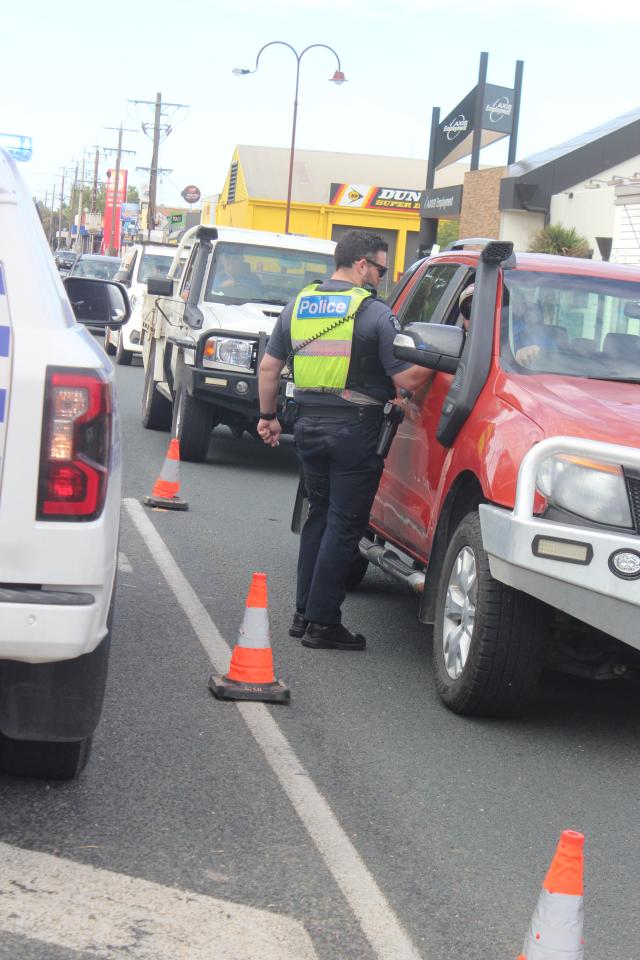
The response to illegal tobacco is a responsibility shared between local council health officers, VicPol, Federal Police and the ATO.
In our state legislation, local councils have remit over the search and seizure powers.
It is my firm view that it is inappropriate and unsafe for councils to play a role in responding to criminal activity.
This role should be alleviated from councils and it should be a shared responsibility of Victoria and Federal Police.
A licensing scheme, replicated in much the same way as liquor licensing is, could provide the regulatory means to identify and shut down illegal industries and interrupt supply.
An infringement scheme could provide a simple framework for immediately sanctioning illegal operators, upscaling each time a business becomes a recidivist offender to act as a deterrent.
Media reports over the past few years detail raids conducted throughout Victoria and the seizure of vast amounts of illegal tobacco [illegal tobacco crops worth an estimated $84 million were seized in the swan hill region earlier this month].
Unfortunately, though, this has had little effect on the businesses who trade in this product, who simply restock and reopen.
We need to address the culminating effects of these crimes and ensure cooperation between state and federal governments to combat this illegal activity.
Tania Maxwell MP
Legislative Council Member for Northern Victoria