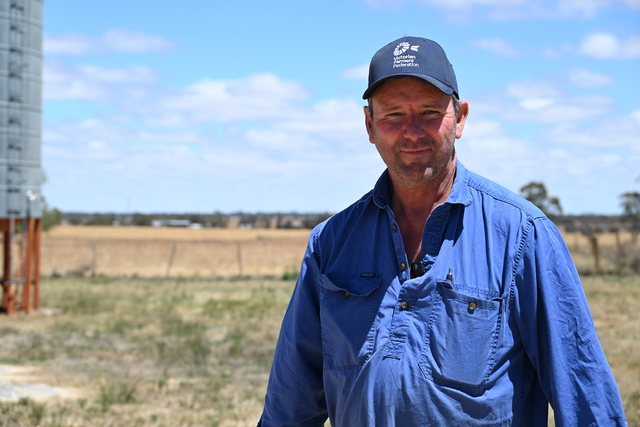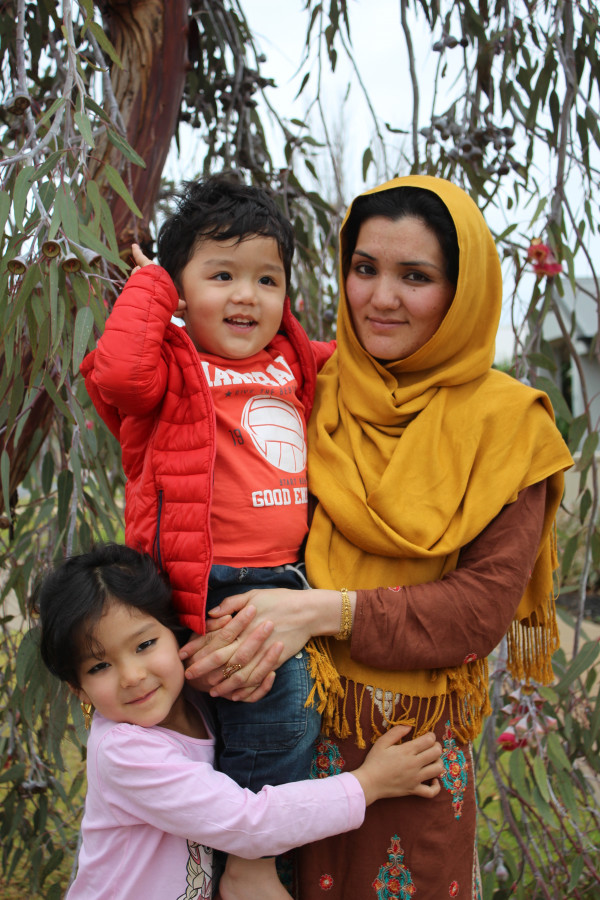
IN HONOUR of Refugee Week celebrations this week, The Guardian caught up with three local refugees to hear how they came to live in Swan Hill.
With a fifth of Swan Hill’s population born overseas, these are just three incredible stories of hundreds within the community.
HALIMA
Step inside Halima Hussain’s Tower Hill home and you’re instantly transported to her native Pakistan,
Plush rugs line the floors from wall-to-wall, and the lounge room is covered in cushions, in the custom of traditional Arabic seating.
Living in Swan Hill for nearly eight years, Halima and her family — husband Mirza and children Imran, Yasmine and Farhan — are all Australian citizens.
Just like Ismail, the Hussains are Hazara people who face almost certain persecution in Pakistan.
On a recent trip back to Quetta, they rarely ventured outside the safety of Halima’s family home.
Halima speaks warmly of the friends she has made in Swan Hill and the safety she feels as part of the community here.
“Pakistan is better than Afghanistan but Australia is better than Afghanistan,” Halima explains.
“I miss home but I am used to here. My husband is here and my children.
“It’s a better life. I’m happy here.”
ZALAIKHA

Zalaikha Jawadi is constantly amazed at the friendliness of strangers in Swan Hill.
“Our culture is different — Australian people are kinder than us,” Zalaikha laughs.
“In my country, in Iran, if the people don’t know each other they never say hello or hi.
“Here when you don’t know somebody you can say hi, hello, how are you.
“I like the people in Swan Hill because they are so friendly.”
Zalaikha hails from Afghanistan but spent all her life in neighbouring Iran and came out to Australia to join her husband in making a life in Swan Hill.
Zalaikha’s two sons even have a new set of grandparents, after the Jawadi’s became acquainted with their next door neighbours Jan and David Hackett, who are heavily involved in the refugee support group at Swan Hill Uniting Church.
Jan Hackett, a retired school teacher, has been instrumental in helping Iliya with his homework.
Last year Zalaikha completed her certificate of community services through Mallee Family Care and this year she is doing a beauty course, with the hopes that one day she might open her very own salon.
“Iran is a good place, but not for Afghani people,” she says.
“I don’t know what will happen in the future but I’d like to stay in Swan Hill.
“It’s a quiet city and I know everybody here.”
ISMAIL

After witnessing the murder of a Hazara man in his hometown Quetta in Pakistan, Syed Ismail Kazim fled, seeking asylum across the seas in Australia.
Hazaras, who are predominantly Shia Muslims, are increasingly in danger in turbulent Pakistan, where they are targeted by militant groups.
Leaving behind his wife and two small children Ismail paid people smugglers to travel via speedboat, taxi, aeroplane and fishing boat through Sri Lanka, Malaysia, Thailand and Indonesia, finally arriving in Christmas Island in 2013.
After a stint in a detention centre in Perth, Ismail moved to Melbourne before settling in Swan Hill.
“Many guys tell me to go to a [country] town. In a town, life is very good. No traffic, no travelling and people are lovely. At that time the situation was very bad for asylum seekers because the government policy was very strong,” Ismail recalls.
A nurse with 12 years experience in both the hospital sector and private practice, Ismail wants to put his skills to good use within the Swan Hill community but as part of the terms of his bridging visa, he is unable to work or study.
The family are in a state of limbo — Ismail can’t return to Pakistan for fear of his life, but they can’t come here until he has a more permanent visa.
Recently Ismail applied for a temporary protection visa application.
Processing can take months, and when that is approved he it will be many years before through a citizenship process before he is able to bring his family to Australia.
He whiles away his days waiting for the night, when he Skypes his family for hours, and while he maintains a happy demeanor, the pain at being apart from his family is palpable.
“Thanks to God because I’m here safe with lovely people here. I’m very happy, but sometimes I am scared about my family.”
For more on this compelling topic, pick up a copy of tomorrow’s Guardian (June 17).