STRONG westerly winds and cold temperatures are expected on Friday after a winter that has so far seen extreme conditions.
On Thursday a weather warning was issued to sheep graziers right across Victoria, in the south west, north central, northern country, Wimmera, Mallee, central, west and north-east and South Gippsland.
The warning said there was a high risk of losses of lambs and sheep exposed to those conditions.
The warnings follow extreme low temperatures in July that posed a threat to vulnerable livestock.
“There have been concerns about nutrition and lambs with this cold snap in the area,” Department of Environment and Primary Industries veterinary officer Dr Berwyn Squire said.
Dr Squire said there had been more warnings for graziers this year than she recalled in other years.
She has been called out to a number of properties to address hypothermic lambs.
“I’ve been hearing a lot more sheep grazier alert warnings than usual,” Dr Squire said.
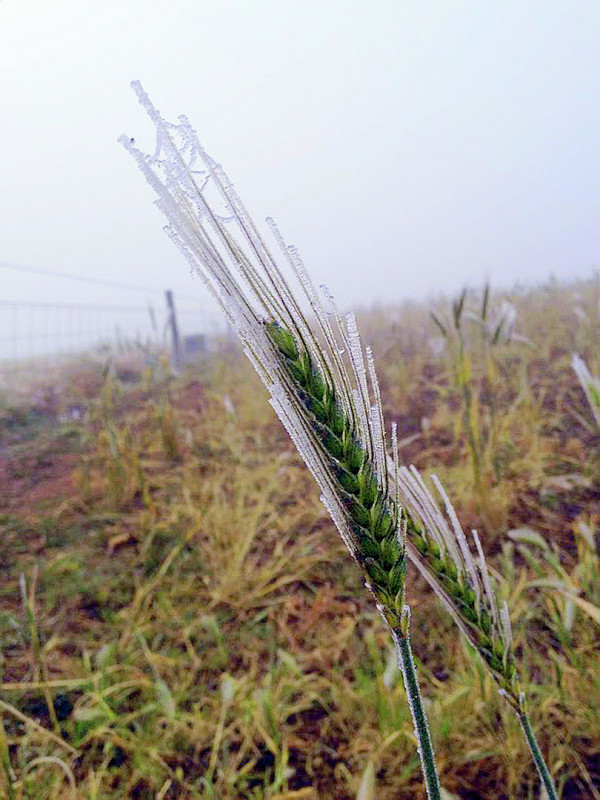
“I know the other day the fog didn’t lift until I got to Donald at about lunch-time, and there was ice on the barbed wire.
“On these little lambs the surface area on their body doesn’t warm up easily, so if it doesn’t warm up during the day they don’t warm up again at all,” she said.
But sheep grower Nic Harrison said if ewes were given plenty of feed the risk to lambs decreased significantly.
“If they go searching for feed they tend to lose their lambs, so if you can plan ahead that helps a great deal,” Mr Harrison said.
“The main thing is with this wild weather, if you’ve got good feed then the mothers are healthy and then they’ve got healthy lambs.”
Mr Harrison said growers were taking precautions against both wind and frost.
“On the cropping side [the wind’s] not good weather for spraying and it’s causing a lot more evaporation than usual,” he said.
Swan Hill AGRIvision agronomist Kent Wooding said recent frosts had been both a blessing and curse for growers.
“There’s a couple of positives out of that,” he said.
“It has slowed up some of the really advanced crops and it has slowed up the aphids,” Mr Wooding said.
Aphids have been threatening entire canola crops across the region.
“In some areas guys might have experienced some frost damage in advanced cereal crops and some of the initial flower buds of canola might have been pinched by the frost,” Mr Wooding said.
“In some cases the stem of the crop can freeze and restrict transfer of water and nutrients.”
Mr Wooding said that amid fierce conditions, grain growers were praying for a healthy dose of rain at this stage of the season.