WOMEN are being urged to put their health and themselves first as part of the Jean Hailes Women’s Health Week.
From September 5-11, the nation-wide campaign centres on improving women and girls’ health and helping us all to make healthier choices.
Every September, the week provides a reminder to set aside time for your health and wellbeing, to make an appointment for a health check, get active, join an event or connect with other women and know that you don’t have to do it alone.
Jean Hailes for Women’s Health is a national not-for-profit organisation dedicated to the health of all women.
The organisation was founded by pioneering medical practitioner Dr Jean Hailes, who established the nation’s first women’s health clinic dedicated to menopause.
In 2022, Jean Hailes now operates two clinics in Victoria, servicing all women’s health needs.
Each day this week, the Jean Hailes Women’s Health organisation has provided information and useful resources on a variety of important women’s health topics including health checks, menopause, pelvic floor health, mental health and wellbeing and staying active. Day one: health checks
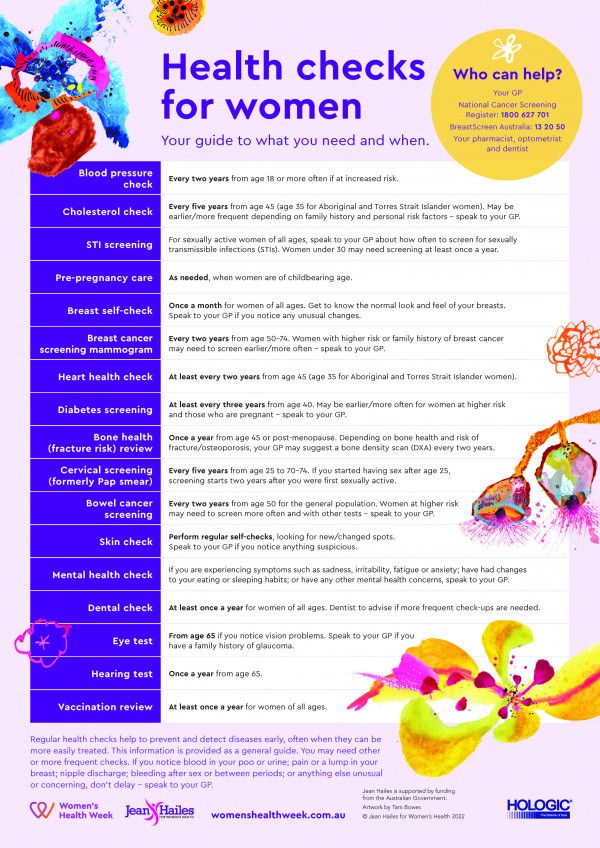
Women’s Health Week 2022 kicked off by taking the opportunity to remind the women in our community to get back on top of their health checks.
The past couple of years have flown by in a bit of a blur which means one in five women have missed a health check with their GP. Regular health checks help to prevent and detect diseases early, often when they are able to be more easily treated.
Day two: menopause
Day Two of Women’s Health Week 2022 provided us the chance to talk about menopause and navigating this particular stage of life.
The word menopause comes from the Greek words “menos” meaning month, and ‘pause” meaning to stop. Menopause is a women’s final menstrual period and is a normal change at the end of her reproductive age, meaning most women will reach menopause between the ages of 45-55, though the average for Australian women is 51-52 years.
There are currently no tests available to determine when menopause will occur, the best way to tell if you are close to menopause is to pay attention to the symptoms you may have: keep a record of your menstrual cycle and use your symptoms as a guide, if you’re experiencing symptoms such as hot flushes and erratic periods, it is possible you are going through perimenopause.
Remember, not all women experience the same symptoms, so be sure to seek medical advice as and when you need to.
You can speak to one of an experienced sexual and reproductive health nurses on 5033 9337 to make an appointment. They are able to provide information on perimenopause and menopause, among many other aspects of women’s health.
Day three: pelvic power
We turned our attention to pelvic floor health and pelvic pain.
Whilst many may think about toning their abs or building muscles in their arms and legs, it’s easy to forget that our pelvic floor muscles need some attention, too.
Pregnancy and childbirth are often the first time a woman will learn about her pelvic floor muscles, because they stretch and weaken during pregnancy and delivery, making pelvic floor exercises very important at this time. Issues can also crop up around menopause thanks to hormonal changes, and also after gynaecological surgery.
Day four: mind health
It’s time to zero in on mental wellbeing and brain health.
The focus for Thursday was your mental health, because how can you perform at your best when you’re not feeling your best. Sadness and anxiety are normal emotions that help alert us to, protect us from, and cause us to act. This is healthy. What is unhealthy is when these feelings become excessive, irrational, ongoing, distressing or interfere with daily life.
Depression, anxiety, stress, grief can be managed using interventions and strategies such as cognitive behaviour therapy, relaxation, mindfulness and ‘talk’ therapy. If you are aware you are not functioning as you normally do, you know something is worrying you, this is the time to learn more about what is happening to you and perhaps seek help.
Anxiety is a common condition that affects one in three women at some stage in their life.
Day five: move and improve
It’s time to get moving. We provided a reminder of why physical activity of any kind has great benefits for your body and mind and how to make movement a part of your day.
Many of us aren’t exercising enough, but with a low supply of spare time, motivation and energy, how do you ramp up your activity levels, even just a little? Here are some tips from the experts:
1. Get good sleep: to exercise well our bodies need downtime and this includes quality sleep, providing restorative effects such as helping our muscles to heal, our energy to refuel and is also thought to support immune health, brain function, emotions and tissue repair.
2. Wear sturdy shoes: nothing ruins exercise like poor-fitting footwear! The last thing you want is blisters and foot pain so make sure your shoes are comfortable and supportive and replaced regularly.
3. Eat well: Nutrition is vital for good performance, to help fuel your body it is recommended you eat a small snack such as some fruit 20 to 30 minutes for exercise. You should also eat a balanced meal within one hour of exercise to enhance your recovery and support your muscles.
4. Buddy up: When exercising with others it motivates us and provides a platform for connection, so work out with a friends, team or class!
5. Be kind to yourself: Making exercise a healthy habit means developing a healthy relationship with it and being kind to yourself along the way. Set realistic expectations and embrace exercise in whatever form that looks like for you.