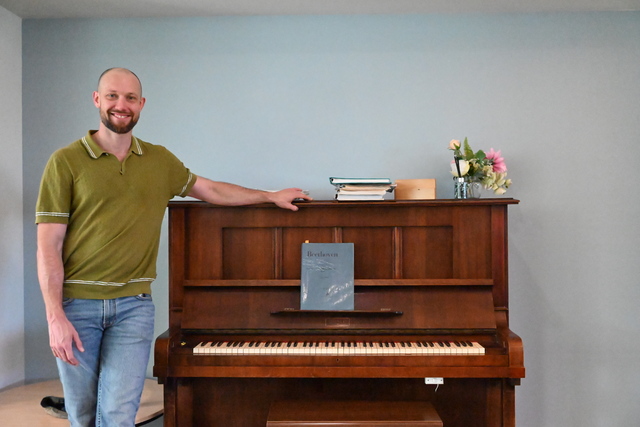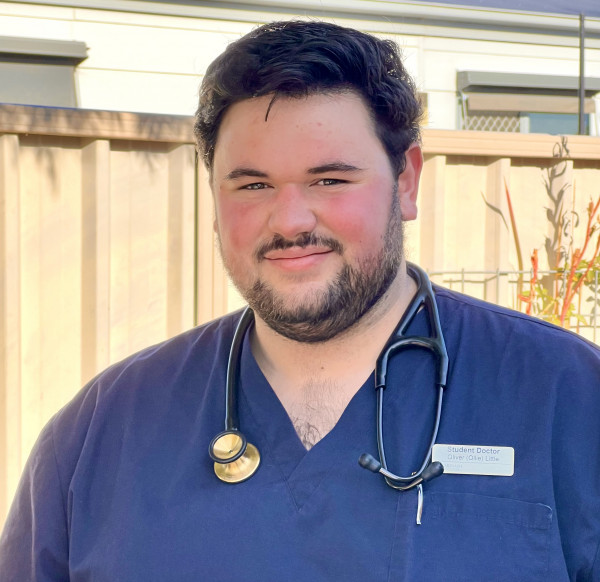
INTRIGUED by big computer systems and an appetite for decision-making on his feet, Ollie Little always seemed destined for a career in aviation.
But add in the curiosity of the human body, and the medical student was always going to land a career in medicine, scoring a coveted student position at Monash University in Melbourne.
The Castlemaine-born Mr Little, who went onto boarding school in Maryborough, is one of eight students in Swan Hill completing general practice placement.
“As a kid, I wanted to be a pilot, but at high school I was really into biology, really enjoyed doing things with my hands, talking to people, making decisions and thinking on my feet,” Mr Little said.
“That came together so I thought about medicine.
“My aunty, who was a doctor, encouraged me to think about it, but before that I didn’t think I was really that smart enough.
“In Years 9 and 10, I put my foot down in school and focused on my science subjects and homework; the brain started to get better.”
After graduating from high school, Mr Little studied a Bachelor of Biomedical Science followed by a postgraduate in medicine.
“That was a three-year course which was pretty competitive, particularly at Monash,” he said. “There are about 500 students in biomedicine and about 70 places for medicine, so I had to keep my grades up.
“The other thing they offer is a pathway for rural students because about 30 per cent of medicine students must come from regional and rural areas.
“Based on that, I was lucky enough to be interviewed for medicine at Monash and got into the program.”
Aviation is still something in the wings for Mr Little, but soon realised being a commercial pilot wasn’t a career for him.
“I figured out being a commercial pilot was much more computer science and managing big systems,” he said.
“But, I’m more interested in a career engaged with people, talking to people and hearing their stories.”
Science fascinates Mr Little, so much so it was the only subject he claimed to be good at.
“In saying that, I didn’t want to be stuck in a lab all day looking down at a microscope or running experiments over test tubes,” he said.
“I’m more interested in the broader application of science and what affects us as humans. I particularly like biology and physiology, learning how things work … it’s amazing how the human body works.
“I can sit down and study that stuff for hours and not get tired of it.”
Being the “last port of call” for patients is what attracted Mr Little to rural medicine.
“No two patients are the same and if people get really sick, you’re the first port of call as a country doctor. I find that exciting and strongly believe it is valuable work that makes a huge difference to people’s lives and our communities,” he said.
“You don’t have big hospitals to refer patients to specialists, so you really have to know about everything and anything and make crucial decisions about everything you see.
“People look at medicine as very ‘sciency’, but behind it is human stories and the influences that has on how people deal with being unwell, even just the social and psychological health on basic high blood pressure.
“It has a massive impact – as much as a drug can change a health journey, the changes someone can make in their social health has a huge impact as well.”
Mr Little has an interest in general practice, with a passion in clinical care, intensive care and emergency medicine.
He said addressing the shortage of doctors in rural and regional health services wasn’t an “easy fix”, with any benefits from relocation incentives not being felt until five years from now because of the time it takes to train doctors and nurses.
Mr Little said while a new emergency department will equip the hospital with the latest and greatest, it was the people inside the four walls that make the world of difference.
“The important thing is the good people that are passionate about where they work, and I’ve found that to be the case in Swan Hill,” he said.
Swan Hill has been home to over 200 Monash medical students over the past decade. With the medical centre attached to Swan Hill District Health (SHDH), this placement provides Monash students with a comprehensive rural generalist experience.
“The opportunity to undertake this experience allows the medical students to broaden their skillset and thoroughly experience life as a country doctor,” SHDH executive director of medical services Dr Rex Prabhu said.
“It is different from traditional training, where specialists are usually around. In the country, the GP is the specialist in most fields including life threatening emergencies, many GPs have subspecialised in various procedural areas in order to provide vital services to their communities.”
So far, Mr Little has spent time performing home visits to maternal and child health, worked with a physiotherapist seeing outpatients, seen patients with the consultant in the GP clinic, spent time in theatre with a general surgical and dental team, assisted procedures in the emergency department and assisted in the excision clinic helping to remove skin cancers.
Mr Little is currently a student ambassador with the Rural Workforce Agency Victoria (RWAV) and plans to pursue a career as a country doctor and is particularly interested in general practice and critical care medicine.