MEMBER for Murray Plains Peter Walsh is on a race of his own to fight for the future of harness racing after the number of race meetings was halved at regional clubs to cut costs.
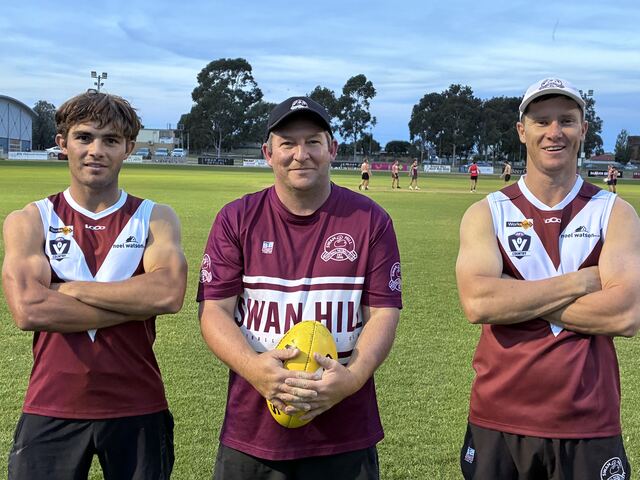
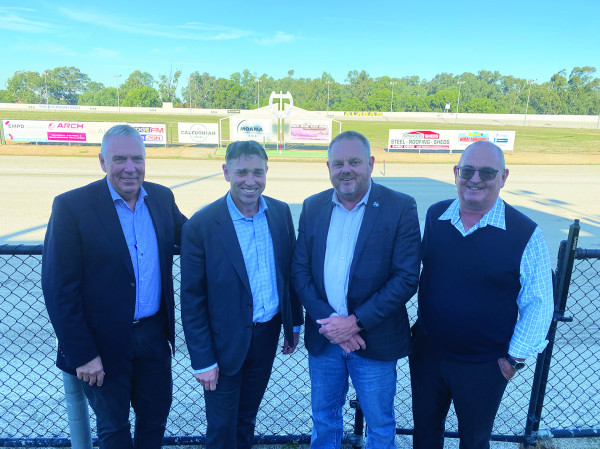
Walsh and Opposition spokesperson for racing Tim Bull recently met Swan Hill Trotting Club vice-president Gerry Moloney to discuss the challenges facing the industry.
He said key to the discussion was the importance and proud history of harness racing in regional economies.
“At one point there had been talk of stripping clubs such as Swan Hill back to the ridiculous scenario of just one meeting a year – and that’s not just ridiculous, it is an insult,” Walsh said.
“I think while most people would agree there does need to be some reform and change to put the industry in a more secure, long-term position, a slash-and-burn strategy is not a solution.
“It would be a disaster.”
Moloney said his club had been cut from 12 meetings this season to six from this month.
He said they accepted there was need for some change, but this was a “disaster”.
“Obviously we would prefer more meetings because the current approach strikes at the very fabric of the of the industry in regional Victoria,” Moloney said.
“It’s not just the meetings – it will have seriously negative impacts on trainers, breeders and support industries as well.
“I am a breeder, for example, and I reckon I will be halving the number of broodmares I have because of this outcome.”
Swan Hill and Echuca staged a challenge series recently, with the heats in Swan Hill and the final in Echuca, to focus attention on the industry.
Walsh said by meeting with Swan Hill, and other clubs in a similar situation, including Echuca, he had been able to get a much clearer picture of where they were and what they needed.
Mr Walsh said there had been losses at Harness Racing Victoria amounting to $10.8 million in the financial years 2022 and 2023 and HRV was “facing another huge loss in 2024”.
“It is the government’s responsibility to help fix yet another financial mess it has created.
“We need to find a balance between government funding and wider financing of the industry, along with the needs of harness racing’s participants and clubs.
“I have already made representations and advocated for our local clubs to be given the strongest possible calendars – with long-term guarantees so their industry can make plans for future investment and growth.”
Racing Minister Anthony Carbines declined to answer questions from The Guardian about the financial state of harness racing in Victoria and more specifically the stripping of race meetings.
“The harness racing industry in Victoria generates more than $613 million annually for the Victorian economy and helps sustain more than 4400 full-time-equivalent jobs – the majority of which are in regional Victoria,” a government spokesperson said.
“The long-term financial sustainability of harness racing in Victoria is important to the economy and to the overall health of the Victorian racing industry.
“We continue to support HRV through the Victorian Racing Industry Fund and Major Racing Events Fund.
“We are also backing regional racing infrastructure, including harness tracks, with the recent announcement of the Regional Customer Facilities program for Victoria’s regional racing clubs.”
The spokesperson said the government continued to work with HRV to put the industry on a “sustainable footing”, adding decisions regarding racing fixtures were a matter for HRV.
HRV said the new racing model for 2024-25 was designed to “improve participants’ welfare and cut costs while driving wagering”.
The sporting body said the model consolidated regular timeslots at venues with the greatest horse populations, facilities and wagering performance, while continuing racing at all 28 country clubs.
“A more consistent calendar helps punters engage with confidence by knowing that every night, from Tuesdays to Saturdays, they’ll be able to wager on competitive racing at familiar venues,” HRV chief executive Matt Isaacs said.
“By having regular race dates, clubs will be able to market their meetings, and racing more where participant numbers are greatest will reduce travel costs and improve the welfare of people and horses.
“These changes will also bring operational race-day savings as Harness Racing Victoria continues to prioritise reducing costs while maximising revenue through wagering.”
Victorian Trainers and Drivers Association president Anthony Butt welcomed the announcement.
“The bottom line is we have to try to increase turnover to survive and having the most races at tracks with full fields is crucial to that,” Butt said.
“We’re pleased no clubs are being closed down.
“Some will have less meetings, but the sport needs to have the most racing on the tracks where most of the horses are and people like to punt.
“Regular racing at tracks like Melton, Bendigo, Shepparton, Ballarat, Cranbourne and Kilmore gives trainers and drivers certainty about where and when racing will be on, and a lot of trainers live in those areas.
“Participants spend a lot of time on the road.
“Reducing that is better for their welfare and safety as well as cutting costs.
“Diesel is dear; upkeep of floats and time on the road is expensive.
“Trainers and drivers have to travel here, there and everywhere – we have to try to get away from that if we can.”