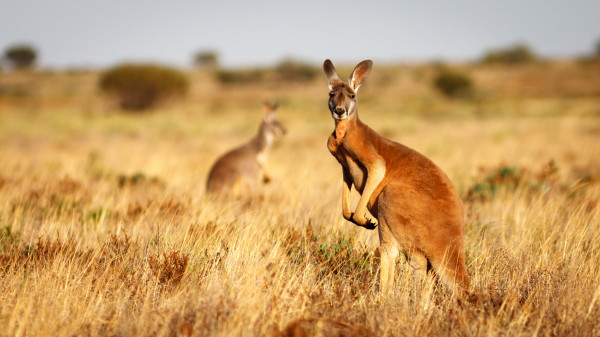
MANY farmers and wildlife advocates seem to be on the same page when it comes to managing kangaroos, favouring non-lethal methods of population control.
Victorian Farmers Federation’s environmental planning and climate change committee chair Gerald Leach, a grain and sheep farmer in north-west Victoria, said farmers had a preference for exclusion fencing rather than individuals shooting animals on their land.
“The VFF’s view is that private landholders shouldn’t be expected to provide a public service at their private expense,” Mr Leach said.
“Kangaroos mostly, but not only, affect farmers adjoining public land so there should be a management plan for those areas.”
Mr Leach said the issue of permits to control wildlife was a “vexed” one for farmers as the process was an expensive and inefficient way of managing the situation.
“Anecdotally, the permit may control 10 per cent of the roo population,” he said.
“So if you have a population of 400 you can cull 40, which brings you down to 360, of which you would be able to cull 36.
“So you can see what happens – you’re never on top of the problem.”
The two benefits of exclusion fencing for farmers are that it precludes kangaroos entering farmland and kangaroos maintain natural levels of breeding.
Mr Leach said the rate of kangaroo repopulation on farmland was “artificial breeding”.
Their fertility responds rapidly to the increased nutrition from the crops.
Exclusion fencing, which has been introduced effectively in places such as Murray-Sunset National Park, prevents both crop damage and destruction of conventional farming.
While the extent of the kangaroo issue varies across Victoria, in some parts it is not uncommon for 400 animals to invade a crop and Mr Leach said that for each kangaroo farmers lost roughly the capacity to keep one sheep.
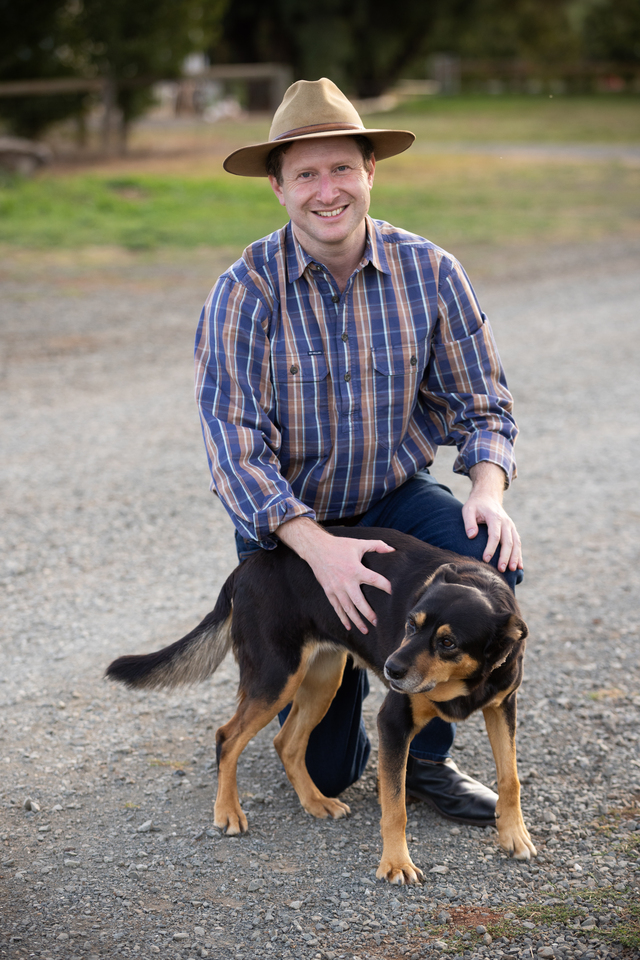
Simon Grigg, a farmer based west of Patchewollock, said the impact on farms could be significant, as could be the safety risks while driving.
“They wreck fences, graze a lot of pasture that otherwise sheep and cattle could eat, and the big red kangaroos also cause a lot of accidents,” he said.
Mr Grigg spoke from personal experience, having had a collision about 18 months ago that led to a $13,000 repair bill.
Anecdotally, numbers seem to be as high as they have ever been, despite claims from Think Tank for Kangaroos (THINKK) that official kangaroo numbers were inaccurate.
President of the Australian Wildlife Protection Council Peter Hylands pointed to the NSW Parliament’s inquiry into kangaroos and other macropods, which has identified population declines in some shooting zones of more than 90 per cent.
“It’s shocking and even more shocking that farmers and others still complain that there are too many,” Mr Hylands said.
THINKK manager and international project liaison with International Wildlife Coexistence Network Louise Boronyak said baseline kangaroo population surveys were neither adequate nor accurate.
She questioned the figures offered by the government on population numbers, calling them “biologically impossible”, given the increase in shooting for pet food programs, drought, extreme heat and destructive fire seasons.
While debate festers, farmers and animal advocates are on the same page when it comes to favouring non-lethal control methods.
Even commercial shooters have called for more auditing at the point of kill and for further training, including in the killing of joeys that are still reliant on mothers who have been killed.
Drivers can do their bit entering the peak period for collisions involving kangaroos to protect both the animals and everyone in the vehicle.
At this time of year, motorists needed to be on the alert for kangaroos, especially at dusk and dawn.
Kangaroos can be quite unpredictable and headlights can “blind” them, prompting a fight-or-flight response.
Swerving violently to avoid an animal on the road can result in a loss of vehicle control or serious collisions with oncoming traffic.
Actions taken to avoid hitting wildlife should be done safely, by steering straight and applying the brakes in a controlled manner.
Drivers who hit a kangaroo or see a recently dead animal on or by the road should drag it a safe distance from the road when safe to do so.
It’s is important to check whether the animal is female and has any young in its pouch.
People can call 8400 7300 for assistance for injured animals or their young.