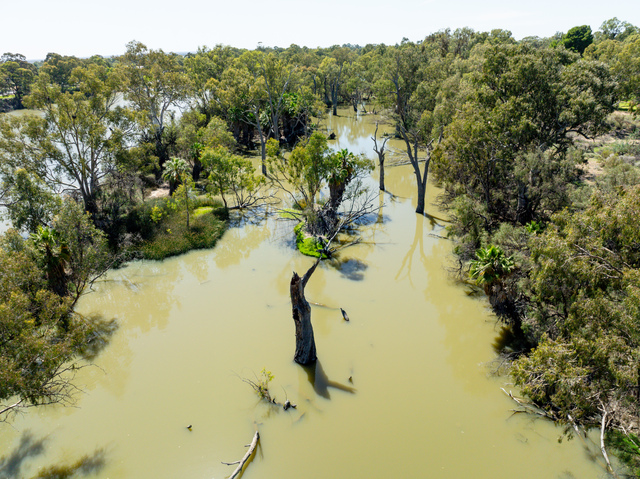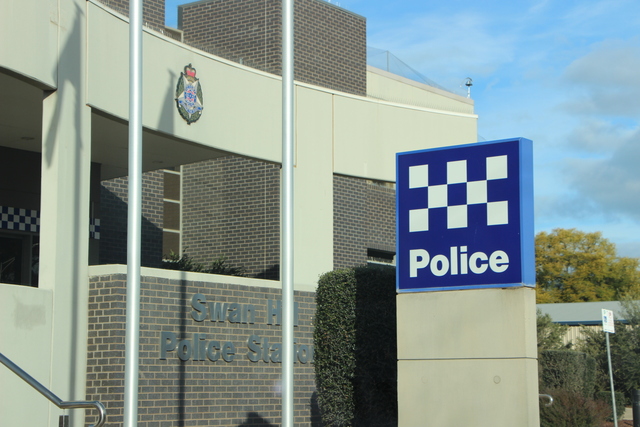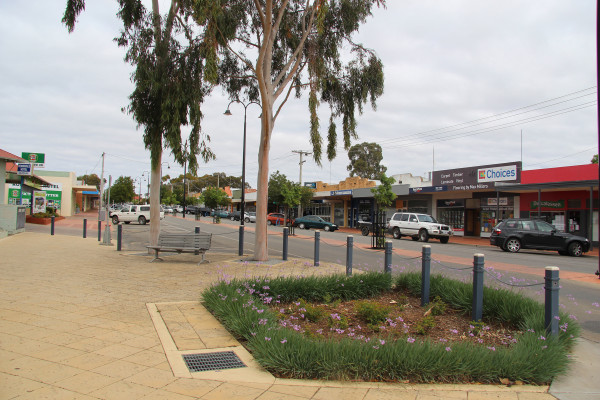
WHILE climate change could mean Swan Hill may feel like a remote desert town by the turn of the century, smaller towns in the region could be wiped out entirely.
Climate projections shown on the CSIRO’s online “Climate Analogues” tool, reported on in Monday’s Guardian, revealed Swan Hill could develop a climate similar to the western desert of Australia by 2090 in the worst case climate change scenario.
Under that scenario — a situation most climate scientists agree will happen if carbon emissions didn’t drop off significantly — the whole Murray Darling Basin region would heat up by approximately 4.2 degrees, while its rainfall would decrease by 12 percent.
The data builds on past CSIRO climate models used in research which ranked Quambatook, Manangatang, Robinvale and Nyah West in the top 20 Victorian towns most vulnerable to climate change.
Study author Andrew Beer, from the University of Adelaide, says the latest modelling reinforced the conclusions of his research — that climate change could make those towns nonexistent by as early as 2050.
“We were looking at the [12 percent] reduction in rainfall figure, which becomes critical in terms of stream-flow and also what happens upstream in terms of who else takes water out,” Mr Beer said.
“If you have a farming community and climatic conditions become less amenable to crop growth, then it does have a big impact.”
For more on this story, grab a copy of Wednesday’s Guardian (April 15).