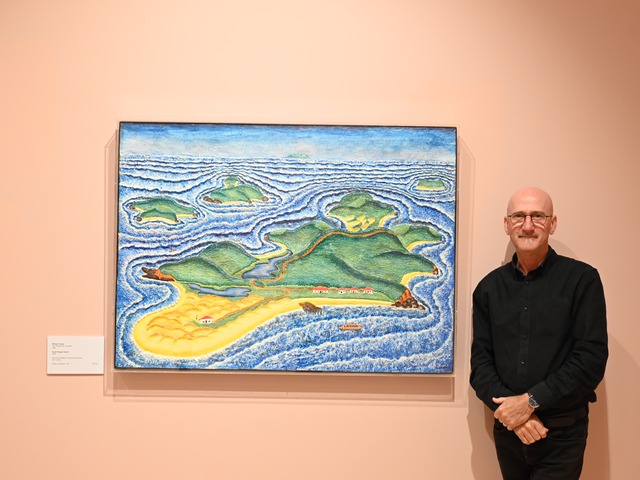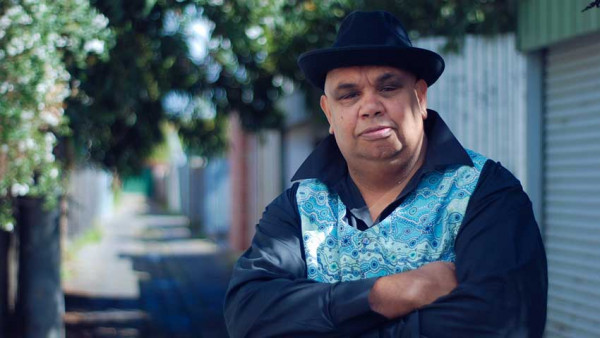

A SENSE of belonging is important to Kutcha Edwards, the Indigenous musician who
will take to the stage at Swan Hill’s Songlines concert tomorrow.
Born in
Balranald in 1965, Edwards has had a long career as a musician, performing both
internationally and locally.
That career began on one red letter day for the
songwriter, when he went to see Robert Cray in concert, a performance that had a
startling impact.
“I went to see Robert Cray in 1989 at Festival Hall and I
was blown away,” he said.
“I went home and wrote my very first song, called
Roll with the Rhythm, and it went from there.”
Edwards is primarily a singer
who later learnt to play the omnichord, an electronic version of an
autoharp.
Before he picked it up, however, Edwards would sing his songs to
fellow musicians, who would then devise their own accompaniment to his
compositions.
Edwards was born into the Mutti Mutti clan, the youngest of six
children, and at 18 months of age was taken from his parents along with his
siblings and placed in Orana Methodists’ Children’s Home in Burwood, in the
eastern suburbs of Melbourne.
“That area was a ‘dry’ area — there were no
pubs, no bottle-o’s, but the irony is, in that same area, there was a lot
hidden.”
Edwards identifies as one of the Stolen Generation and says music
has been the most effective healing power in his life, a way to deal with the
emotional damage caused by his upbringing.
“All you want is to love and be
loved, and when you’re institutionalised they’re not family,” he says.
“They
don’t say ‘we love you Kutcha’, they just lock the doors at night, feed you,
send you to school.”
“The issue of stolen generations was hidden — or the
assimilation to white society was hidden.
“Even as a young kid you’re not
informed, it’s only when you become an adult that you understand the policies
and politics of why you’re there.”
For more of this story, see Wednesday’s Guardian (September 18).