MEMBER for Murray Helen Dalton is heading to South Australia on a “fact-finding mission”, wanting to investigate some of the controversies surrounding the Murray-Darling Basin Plan.
Mrs Dalton, an independent MP in the NSW Parliament, said she would meet with stakeholders in Renmark and Goolwa this month to hear firsthand accounts about the impact of water buybacks.
The Water Amendment Bill 2023 amending the Water Act and the Basin Plan to be able to deliver the plan in full, including through buybacks, passed the Senate and now only needs to pass the House of Representatives.
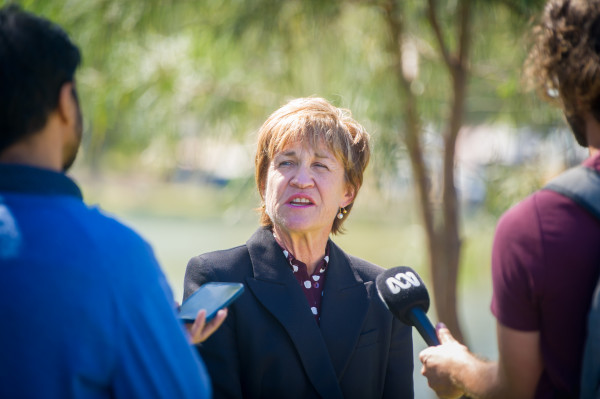
“No one is going to know what’s going on by sitting in an office tower in Sydney or Canberra,” Mrs Dalton said.
“You need to speak to the people directly affected, as well as experts who respect the science and who know what these lakes were like before humans started meddling with them.”
Mrs Dalton said she was also looking to assess if South Australia’s lower lakes, which is where the terminus of the Murray River is located, are naturally freshwater lakes, as opposed to estuary lakes which are meant to contain a mixture of fresh and salt water.
“I know many South Australian politicians like having freshwater lakes they can swim in … but that fresh water could be used to grow food and feed Australia as well as the rest of the world,” Mrs Dalton said.
“We need to assess the stories we have been told, because right now some claims about the Murray-Darling Basin, and those lakes, just don’t add up.”
An independent panel in 2020 examined hundreds of studies on the Lower Lakes, Coorong and Murray Mouth and consulted with almost 100 scientists and technical experts.
In its final report, the panel wrote that the weight of evidence pointed to the main body of the Lower Lakes being largely fresh prior to European settlement.
They wrote that there would be moderate tidal influence and incursion of seawater during periods of low Murray River inflow.
Evidence was gathered from palaeoecological records, water balance estimates, hydrological and hydrodynamic modelling, and traditional knowledge of the Ngarrindjeri people and anecdotal accounts of early explorers and colonists.
“Upstream development has reduced the river inflow by about half (about 6000 GL/year before the Basin Plan and about 7500 GL/year under the Basin Plan), resulting in more frequent incursion of seawater into the Lower Lakes,” the report said.
The panel was appointed on the recommendation of the Advisory Committee on Social, Economic and Environmental Sciences, a source of independent advice to the Murray-Darling Basin Authority.