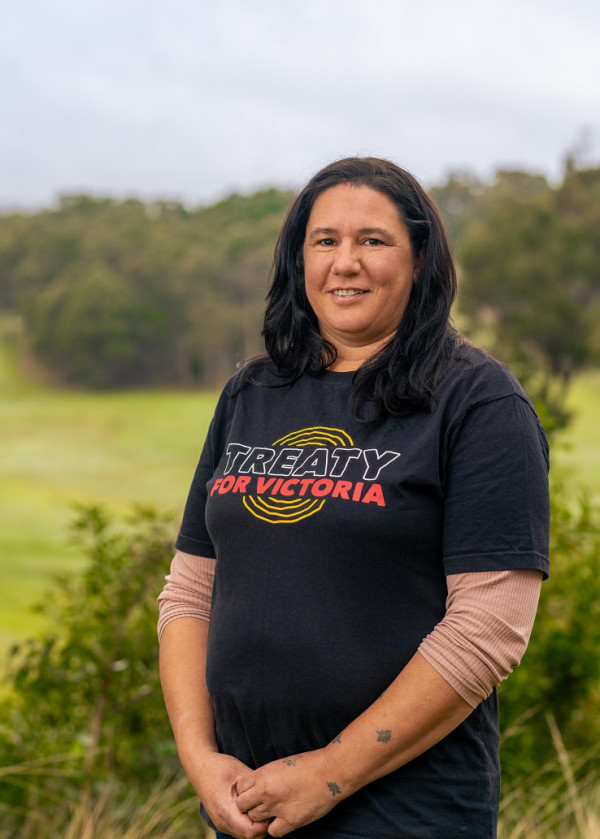
ELECTED to represent the hopes, needs and ideas of their communities as they work towards creating treaty, the new members of the First Peoples’ Assembly of Victoria are eager to start their term.
The results of the historic Treaty Elections were announced back in June, with the North West region of Victoria to be represented by Swan Hill local Jacinta Chaplin (Wadi Wadi and Wamba Wamba), Wamba Wamba and Mutthi Mutthi man Jason Kelly, and Echuca-born Rodney Carter (Dja Dja Wurrung).
“I am extremely honoured to be elected,” Mr Carter told The Guardian.
“For others to vote for you and think that you’ve got something to sort of contribute, I really appreciate that, so I hope not to let people down.”
Outgoing assembly co-chair, proud Nira illim bullock man of the Taungurung Nation Marcus Stewart, said the Treaty Elections were a turning point for the decolonisation of Victoria.
“This is self-determination in action,” Mr Stewart said.
“First Peoples in Victoria have spoken.
“These are the people who will represent us mob proudly and will get treaty done.
“It is a big honour, but also a big responsibility.”
The First Peoples’ Assembly of Victoria is an independent and democratically elected body which represents traditional owners of Country and Aboriginal and Torres Strait Islander peoples across Victoria.
The assembly and the government have agreed on a framework and process to enable traditional owners to enter treaty negotiations by the end of 2023.
The framework allows the assembly to negotiate a state-wide treaty, while also empowering the diverse traditional owner groups in Victoria to negotiate treaties in their area are reflective of their specific priorities.
“A treaty is just an agreement, but not ‘just’ as in not valuable, it’s a very significant agreement, and I think treaties can be empowering to people and they should be useful for both parties entering into that treaty,” Mr Carter said.
Mr Carter’s background includes technical trade and construction project management, as well as being a government state regulator.
He has now been the CEO for the Dja Dja Wurrung Group for the past nine years, and was a negotiator in its recognition settlement agreement.
He is hoping that by being a part of the assembly, he will be able to provide help for groups without representative organisations in the region, as well as using his skills and experience to negotiate treaty for all Victorians.
“It’s not all about Aboriginal and Torres Strait Islander people, who definitely want this (treaty) to happen – it’s something I think that the wider community has got to understand, and if treaties are going to happen, they are going to have to be supportive of them, so it is a much broader conversation around it, and I’m looking forward to that,” Mr Carter said.
Mr Stewart said he hoped all mob in Victoria would rally behind the new assembly members.
“Treaty is our chance to think big – nothing is off the table, so we need to push hard together,” he said.
“Treaty is our opportunity to ensure First Peoples will always have the freedom and power to make the decisions that affect our communities, our culture and our land.”