A MAN who twice raped a woman at a Swan Hill holiday park in 2022 has had his jail sentence cut after it was found to be “manifestly excessive”.
The appellant pleaded guilty in the County Court to two charges of rape, and sentenced to 11 years’ imprisonment, with a non-parole period of seven years and three months.
Judge of Appeal Stephen McLeish granted that appellant leave to appeal on the ground that the sentence imposed and the non-parole period were manifestly excessive in that they fail to take into account and/or give weight to a number of mitigating factors put on behalf of the appellant.
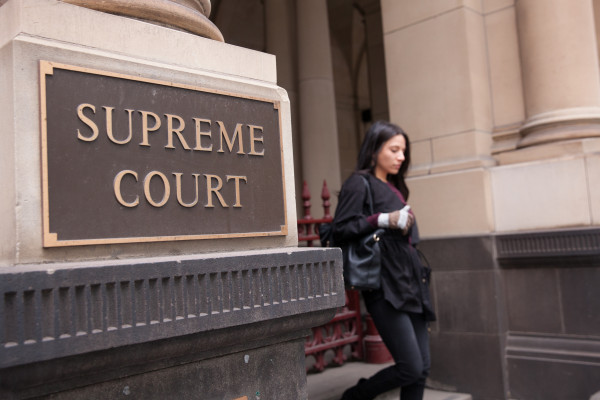
The appeal was heard in the Supreme Court of Victoria Court of Appeal, with judgement handed down by Justice Lesley Taylor and Justice Stephen Kaye on April 11.
At the time of the offending, the appellant, a citizen of Vanuatu, was 27 years of age.
In July 2022, he came to Australia on a temporary work visa as part of a labour hire arrangement. At the time of the offending, he worked on farms in the Swan Hill district, picking fruit.
The victim was 26 years of age at the time.
The appellant was interviewed by police and made “frank” admissions about his offending.
When asked, ‘Did you believe she wanted to have sex with you?’, he responded, ‘I don’t think so’.
When asked whether, at any point, he thought the victim wanted to have sex with him, the appellant responded in the negative.
The victim described how the appellant’s conduct had significantly impacted her life.
She felt humiliated and frightened, she was unable to work, and she was anxious about being around other people.
The judge characterised the offending by the appellant as being a “mid-level example” of the offence of rape, the appellant having acted in an opportunistic way, disinhibited by alcohol and cannabis.
In mitigation, the judge took into account the appellant’s pleas of guilty, which had “significant value”.
The judge also took into account that the appellant had no previous involvement with police, either in Australia or in Vanuatu, and he was to be sentenced as a person of previous good character.
During the appeal hearing, counsel for the appellant contended that the sentence failed to take into account, and give adequate weight to, the mitigating factors put on behalf of the appellant.
Counsel noted that, although the matter was originally listed for trial, a plea of guilty was always indicated.
It was further submitted that the appellant’s pleas of guilty were significant in the circumstances of the case, as the victim was intoxicated to a significant extent and her recall was only patchy.
In addition, the appellant made full and frank admissions in his interview.
Further, he has significant limitations in understanding English, and therefore he would have difficulties in prison, in particular in following directions and availing himself of courses and programs, which would support the grant of parole at the conclusion of his non-parole period.
Finally, it was noted that the appellant would face deportation at the conclusion of his sentence.
Taking those matters into account, it was submitted that the individual sentences, the total effective sentence, and the non–parole period, were each manifestly excessive.
In response, counsel for the respondent submitted that the two offences, to which the appellant pleaded guilty, were serious examples of the offence of rape, and that the appellant’s moral culpability for the offending was high.
Counsel submitted that there were a number of aggravating features to the offending. In particular, the appellant acted opportunistically, while the victim was incapacitated by alcohol and thus extremely vulnerable.
Counsel for the respondent further noted that the second rape was separated in time from the first rape, and was thus a separate offence.
Counsel submitted that the judge’s assessment of the offending as being in the middle range of objective seriousness was amply justified and was accepted by counsel for the appellant on the plea.
Counsel further submitted that, in the circumstances, the appellant’s moral culpability for the offending was high, as he was well aware of the victim’s intoxicated state.
In their written remarks, Justices Taylor and Kaye said the victim was “plainly vulnerable”, being severely intoxicated to the extent that the appellant had to physically assist her to get into her bedroom.
“The appellant was entrusted with the role of escorting the victim safely to her cabin, and his offending was a patent violation of that trust,” they said.
“In addition, the offending took place in the victim’s cabin, where she was entitled to feel safe.
“Each of those factors, taken together, justify the characterisation, by the judge, of the offending as being in the mid-range of offences of that kind.”
The justices said, on the other hand, the appellant did have available a number of important mitigating circumstances.
“First and foremost, from the outset, he made full and most frank admissions of his offending,” they said.
“Further, as the judge correctly noted, the appellant’s pleas of guilty had ‘significant value’.
“Further, at the time at which the appellant was sentenced, he spoke very little English.
“He was, and, it was foreseen by the judge, he would be, isolated in custody, with limited telephone contact with his family in Vanuatu, and limited opportunity to converse with fellow prisoners.
“Finally, the appellant has no previous convictions in Vanuatu (or in Australia), and he was sentenced on the basis that he was a man of otherwise good character.”
Justices Taylor and Kaye found the total effective sentence of 11 years’ imprisonment manifestly excessive.
The appellant was re-sentenced to eight years and six months’ with a non-parole period of six years.