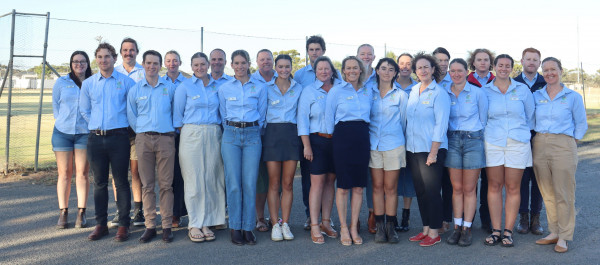
GROWERS from around the region packed last week’s Birchip Cropping Group members-only Trials Review Day last Friday.
A raft of experts delivered updates on the latest research and challenges, with speakers such as Dr Grant Holloway addressing variety selection and how growers can better adapt their management strategies to reduce reliance on chemical controls.
“Variety selection plays a huge role in reducing disease risk and limiting reliance on fungicides,” Dr Hollaway explained.
“Fungicide resistance is becoming a bigger issue, which means varieties will have to do more of the work. It’s important for farmers to assess their variety mix and talk to seed distributors about finding the right balance between yield potential and disease resistance.”
Dr Hollaway encourages farmers to be proactive in their decision making to safeguard crop health and farm profitability.
“Rather than making decisions based solely on last year’s trials, growers should consider multi-year research,” he said.
“Some seasons demand aggressive disease control, while in others, disease impact is minimal. The key is being responsive to the conditions each season brings.”
Dry conditions throughout much of the 2024 cropping season and a dry summer has seen a reduced ‘green bridge’, but Dr Hollaway recommended farmers don’t become complacent in their approach to disease management.
“History has shown that disease management needs to be flexible and match conditions in each season,” he said.
Fine-tuning farming systems to maximise profitability was also a theme, with Dale Boyd, Agriculture Victoria’s seasonal risk agronomist, providing an analysis of seasonal conditions, drawing from Victoria’s 15-year-old soil moisture probe network.
He examined how last year’s below average yields, late season rainfall in October and November and minimal rain over summer in some districts could shape decision making.
Outcomes of the GRDC-funded Hyperyielding Cereals research were discussed by CSIRO farming systems agronomist Dr Kenton Porker.
This research focused on optimising crop management tactics, such as time of sowing, and participants learnt more about meeting critical growth windows in cereals that set crops up for success without increasing risk during challenging seasons.
The management of summer weeds, and the influence that can have on changing farming systems, was a highlight in the program.
BCG’s Flaxleaf fleabane (Conyza bonariensis) research, led by research agronomist, Angus Butterfield, attracted strong local interest in 2024 and he presented the results of research currently underway.
Mark Congreve, senior consultant at iCan Rural, joined him in the line-up to share his experiences of 15 years of research into controlling the weed in NSW, highlighting the successful control measures he has observed.
For the machine-heads, Bailey Kilpatrick from SwarmFarm Robotics, wrapped up the day with an insight into how autonomous tractor technology is being adopted on farms across Australia.