PALM scheme payment requirements staying at 120 hours averaged over four weeks at July 1 will ensure local farmers maintain reliable workers for the harvest, says a grower.
The continuation of the averaged 120 hours allows for fluctuations in harvesting, which depends on weather and crop conditions, and ensures that while workers will receive pay for at least 30 hours a week, the overtime they may work in a busy week will top up workers’ pay in the weeks with fewer work hours available.
The proposed minimum 30 hours a week pay scheme, due to come into effect on July 1, would have excluded Chislett Farms from continuing with the PALM scheme, and managing director Susan Chislett told The Guardian that many other farmers were similarly concerned.
“The hours that they work is averaged over four weeks, so if they work 20 hours this week but 40 hours next week, it averages out to 30 hours over four weeks, and if they work 50 hours next week, they don’t get overtime for that 50 until they go over the 120 hours.
“When this idea was getting floated last year, we had discussions of not getting the islanders and getting other people – we didn’t know who, because the people aren’t there, to get the same 64 workers every day over a six-month period.
“It’s not often that we get listened to, but the end result was that if they stuck to their 30 hours per week the program was going to just fail.
“It’s a really good program that I hope the government has the sense to not make too many more changes to it, because as it is it works very well for both sides,” Mrs Chislett said.
Before joining the PALM Scheme eight years ago, Chislett Farms found that backpackers completing their required 88 hours of work during harvest did not share the drive and efficiency of the Pacific islanders they now employ, and there was little to no reliability or accountability.
“If you hire someone only needing six weeks of work to get their visa tick, it’s not much use as you spend the whole time training people,” Mrs Chislett said.
“You need to be strong and fit, motivated and reliable, and you need to be staying for more than a few months.”
PALM workers are employed through Madec, which completes the vetting, manages workers’ visas and health care, and supervises the quality of housing provided by employers, while farmers report the week’s work to Madec and pay the resulting invoice to them for distribution among the workers.
“If one of the guys we had was really bad at picking, Madec would move him along to another job, whereas with a backpacker you have to tell them to go and find someone else to do the job and train them up and it takes time.
“With the Samoans, there’s a crew there that already know what they’re doing, know their way around, how the system works, how to fill a bin up properly, how to pick the fruit properly, and can train up new workers,” she said.
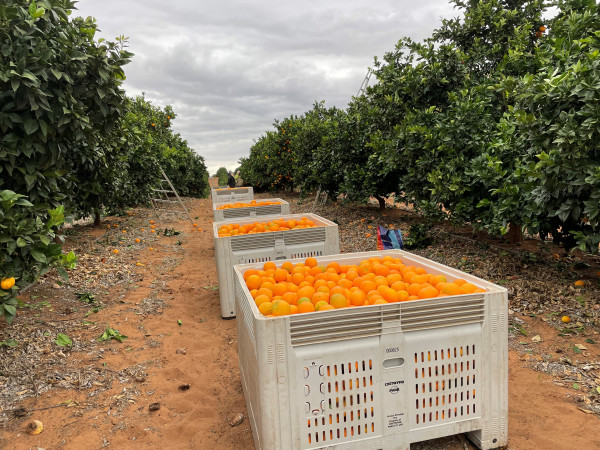
The 15,000 tonnes of fruit Chislett Farms picks each season requires careful hand-picking, as any damage to the peel reduces citrus to a waste or juice product. Trustworthy employees are critical to the farm’s productivity.
“There is a system for picking the fruit – if you leave the stalks on, which is lazy picking, that fruit falls into the picking bag, it hits another orange and makes a hole, you tip it into the bin and it hits three more fruit, the bin gets tipped out in the packing shed.
“All that fruit gets thrown out, it doesn’t have any value. It’s just going to go off because the damage is an entry point for decay,” Mrs Chislett said.