THE Swan Hill Community celebrated the life of a community giant this weekend, but for Jill Pattenden’s friends and family this is not goodbye.
Jill’s work and service throughout her life will inspire future generations in Swan Hill as visitors to Riverside Park read the memorial plaque and walk past the flame tree planted in her honour.
Attendees at Sunday’s thanksgiving service, and those watching virtually, heard of the tremendous impact the former teacher had in her working life and in retirement, which was more like a second career.
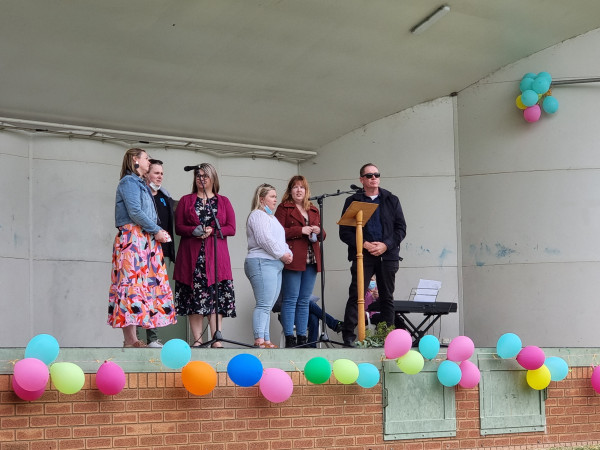
New Uniting Church ministers Mark and Carol Boyce led the celebration as Tony Waldron, Helen Gell, Samia Fox Rajei, Abida Elahi, Rohullah Hossaini, Jill’s nephew David Haines and niece Robyn Zumstein told the COVID-safe crowds about the inspiring woman who moved to Swan Hill in 1976.
Mr Haines said Jill was “everything you could ask for in an aunt”.
“She was considerate, adventurous and quite prepared to see an activity to the end,” he said.
“She didn’t advertise widely, favouring direct, hands-on involvement.
“Everyone she came in contact with will miss Jill because of these very individual connections she made.”
Jill died late in July, aged 85.
Mr Haines said his aunt had always been keen to assist the littlest members of the family, and told locals how when his mother Dorothy died Jill became another mother for him and his siblings.
Ms Zumstein said although Jill had no children, many in her family, as well as the Swan Hill community, related to her as a grandmother or mother.
She shared a moving poem from one of these “grandchildren” – great-niece Tenisha – and encouraged everyone to fill Jill’s shoes by advocating for refugees.
While “from little things, big things grow” was not Jill’s motto, friend Tony Waldron said it reflected “her wave of life that carried people with her”.
He told the audience of the significant contributions Jill made as an Aboriginal educator and teacher, and of the strong woman who became his good friend.
She was an adventurer who loved travel, but could often be found playing golf or doing The Age quiz.
She established a local Aboriginal Art Show for talented creators from the region and was behind the scenes at Swan Hill’s Harmony Day each year.
She also initiated monthly events to welcome refugees, which was reflected in her life celebration with a Muslim prayer sung in Arabic and a large Hazara attendance.
Mr Waldron spoke of her passion for her “Hazara boys” and became emotional as he recalled Palm Sunday marches down Swanston Street in Melbourne, where protestors would chant in support of refugees.
Mr Waldron then led the crowds in a chant of “Say it loud, say it clear, refugees are welcome here”.
“Service was what she was about,” Mr Waldron said.
“If you said to her it’s amazing what you do, she’d say it’s what you do.”
Ms Gell told of Jill’s teaching career, especially with the Aboriginal community, her Swan Hill Business and Professional Women membership and of her enormous contribution to the lives of her students.
She described a woman who “lived out her faith”, citing the example of Jill leaving money on her desk for a student who had previously stolen some money because he was going without food.
Abida Elahi called Jill an “inspiration” and Ms Fox Rajei said: “She will be sadly missed, she left her legacy of humanity and we will continue the great work that Jill established.”
The Swan Hill Theatre Group, for whom Jill was pianist, performed ABBA’s Thank You for the Music and the service heard one of Jill’s favourites Take Off Your Shoes.
Rohullah Hossaini, a landscape gardener for the Swan Hill Council, led the choice of tree for planting and organising the ceremony.
He said Jill – whom he called an “angel” – was the first person he met in Swan Hill, when he couldn’t find a job or speak much English. Jill helped with both.
“She’s still here,” Mr Hossaini said motioning towards his heart.
Locals from all walks of life came forward to dig the hole for the tree-planting, as a former student played the didgeridoo and native plants were placed to connect the tree with thousands of years of Indigenous history.