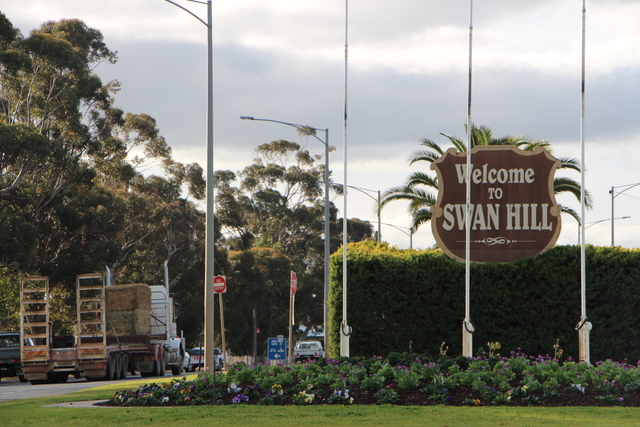
THE Swan Hill region had a couple of very special visitors named ‘Norm’ and ‘Daph’ come to town last week – and they certainly left a lasting impression on many local tennis supporters.
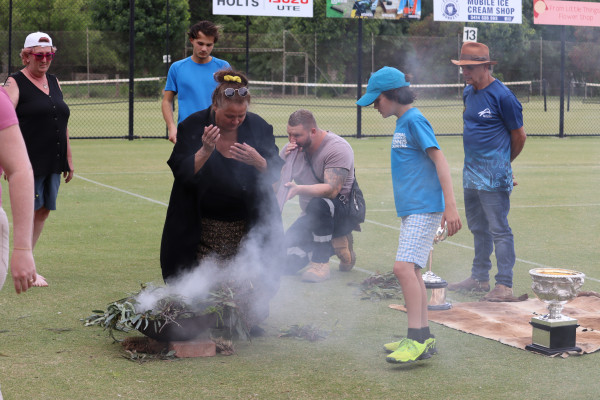
As part of the Australian Open on the Road initiative, both the Men’s and Women’s Trophies – the Norman Brookes Challenge Cup and the Daphne Akhurst Memorial Cup – stopped at the Swan Hill Lawn Tennis and Croquet Club to start the countdown towards the 2022 Australian Open.
The visit coincided with the Dungala Culture on Court program, which is a culture-led partnership between Anglicare Victoria, Tennis Victoria and Tennis Australia, which works with Indigenous youths to re-connect with their culture.
Swan Hill was one of twenty Victorian towns that will host the AO on the Road tour, with the tour having already passed through Echuca, Koondrook and Murrabit.
The tour will continue until Monday January 17 and will conclude at Melbourne Park for the opening day of next year’s Australian Open.
Youngsters and tennis lovers alike were able to hold and get their photo taken with the famous silverware, before they are presented to next year’s Australian Open champions.
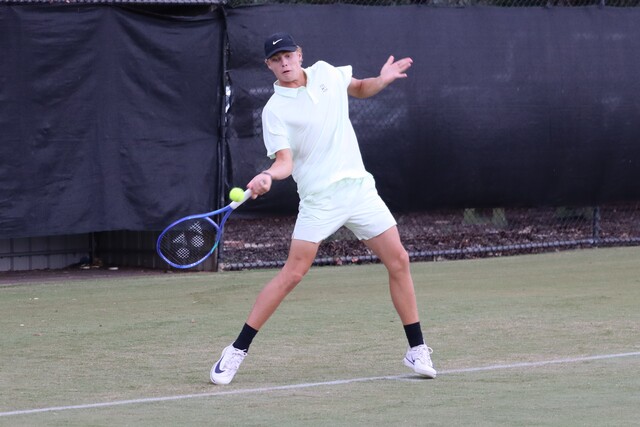
The event began with a Welcome to Country and smoking ceremony, before adults and children alike enjoyed a hit of tennis as part of the Dungala Culture on Court program.
Peter Bertoncini, the club development officer for Country North West Tennis Victoria, spoke with The Guardian about the importance of the new initiative and what it aims to achieve.
“It’s a really great partnership between Anglicare Victoria and Tennis Victoria, with both parties working together with indigenous youth and trying to get them to connect and re-connect with their Indigenous culture and their Indigenous communities,” Bertoncini said.
“We have people like Uncle Ian Goolagong and Aunty Kelly Hunter here to teach about a number of their Dreamtime stories – and not just the Indigenous youth, but also the non-Indigenous people – so we can all get a greater understanding of their story, their traditions and their beliefs.
“It’s about getting to know each other better and it’s really great that we can do that, using tennis as a vehicle to try and help achieve a better society.”
Beginning in Echuca, the Dungala program journeyed along the Murray River, stopping in Gunbower, Koondrook and Pental Island, before finishing in Swan Hill.
As well as involving tennis, the four-day program also included camping, water sports and numerous cultural activities.
“We’ve got a number of Indigenous youths that have travelled with us throughout the whole tour, but we’ve also reached out through Anglicare Victoria to the local mobs to try and get as many people here today to take part in a really great event that combines both culture and tennis all in one,” Bertoncini said.
“One of the things we were grappling with when we were planning the Dungala program was how we were going to go about bringing the two ideas of culture and tennis together?
“What it’s really about is that there’s life lessons that you learn along the way when you’re growing up and you learn a lot of those lessons through sport – including tennis.
“You learn honesty, with things like making your own line calls and you learn respect for others, like your opponent – things like that that probably don’t seem that significant when you’re on a tennis court, but they certainly do play a role, not only on the court, but in society as well.
“It’s also about bringing that culture together, along with a number of the Dreamtime stories and listening to a number of elders talk about culture and what it means to them – it’s really great that culture and tennis can sort of mix into one and I would hope that this program continues for a number of years to come.”