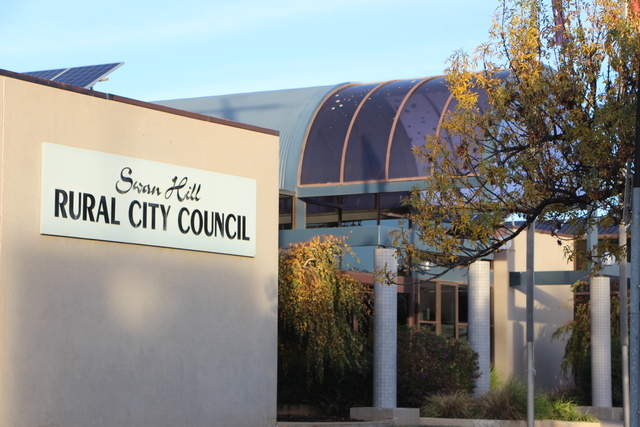
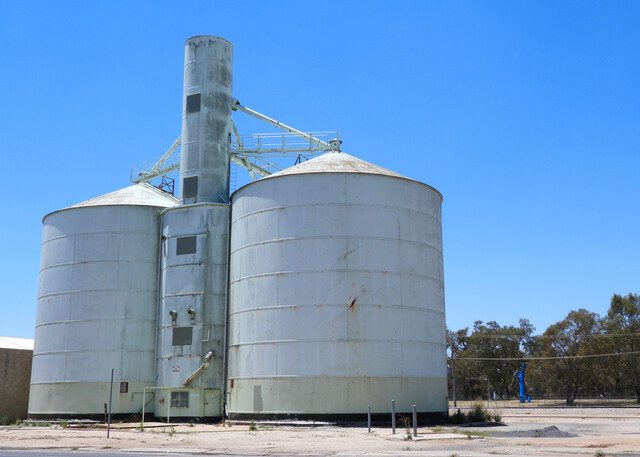
THE Swan Hill municipality deserves the infrastructure that matches its billions of dollars in agriculture and manufacturing output, according to Deputy Mayor Bill Moar.
“We deserve better health services, better infrastructure, better roads and better bridges,” he said at last week’s monthly council meeting.
Council noted the findings of the Infrastructure Australia Regional Strengths and Infrastructure Gaps Report, highlighting the key issues relevant to council and suggestions of a submission to Infrastructure Australia advocating for critical infrastructure that is required.
The key areas identified included availability, diversity and affordability of housing; Broadband and mobile coverage; water security; access to further education and skills training, and connectivity and capacity of public transport.
“The report, whilst identifying the infrastructure gaps, does not nominate any projects within any of the regions and discusses at a very high level each region’s strengths and the gaps in services and infrastructure,” director of planning and development Heather Green said.
“There is not a great deal of attention paid to the impacts of cross-border issues which has a significant impact within the municipality and region, however the report does highlight Albury-Wodonga as a successful model of communities working in partnership cross-border.”
The report talks at length about the opportunities for regions in the areas of health, manufacturing, agriculture, forestry and farming, education, aerospace, tourism
and transport.
These are issued familiar to Swan Hill Council, Ms Green said.
Key points relating to the Loddon Mallee Regional Development Australia include the uneven population growth across the region, significant climate impacts, skills shortages across the region, priority for road and rail infrastructure, telecommunications, connectivity improvements around public transport required and the poor Mallee freight network.
Ms Green said council should highlight projects considered as priorities, including the Swan Hill bridge and hospital, riverfront developments in Robinvale and Swan Hill, increased solar and renewable energy opportunities, housing capacity to build the required workforce, upgrade of the road network for increased freight movement, enhanced telecommunications and support for tertiary education.
Cr Moar said the “gap report told us what we already knew”.
“But what is good is it confirmed what we have been saying for quite some time about all the infrastructure issues that need to be addressed within our municipality,” he said.
“It also gives us a chance now to present our case and argue our case, which we have done in the past, and that is that we produce $1.6 billion in agriculture output, plus our manufacturing.
“We have a $6 billion value chain produced right here, so we need the infrastructure and deserve the infrastructure that goes with that.
“We are punching well above our weight for our little 25,000 people … we deserve this infrastructure to keep pumping out this huge value chain that benefits the whole of Australia and contributes to the standard of living for every Victorian and Australian.
“Something like 7 per cent of Victoria’s agriculture farmgate output comes from this little municipality, this tiny patch in the universe, that’s an awesome output.”
Cr Moar said the bridge built in 1896 needed replacing and the hospital rebuilt in its entirety so people didn’t have to travel 400km for healthcare.
Cr Nicole McKay said a “dearth” of small health services in the past 20 years had a day-to-day impact on the lives of rural people and their long-term outcomes.
“To that follows on training our professionals, our healthcare and trades, given our incredible shortage of professionals,” she said.
“I think I would like to see a tertiary trades facilities in our region and increase the services able to provide.”
Cr Les McPhee said it was disappointing state and federal governments referred to regional Australia as the main cities.
“They call Bendigo, Mildura, Shepparton and Geelong regional, but they need to start getting rural into their mind and that rural plays an important part of the economy,” he said.
“The thing highlighted was the significance of cross-border issues because we are the only city of our size with no other city comparable on the other side, so issues where we have NSW people, and we love them in Murray Downs, coming into our city and using our facilities, but we get nothing from them in terms of rates and taxes.”