THERE are fears the Robinvale township will miss out on vital government funding after this week’s updated Australian Bureau of Statistics population data failed to acknowledge the town’s true resident numbers, according to Robinvale-based Swan Hill Mayor Jade Benham.
The ABS increased the official Robinvale population by 652 to 3740 – about half the number estimated in August 2019 by consulting firm Geografia, which put the town population at between 7000 and 8800.
Cr Benham said the results were “disappointing” both for council and the Robinvale community.
“The results published today by the ABS have let the people of Robinvale down,” Cr Benham said.
“The results simply don’t represent the numbers residing in Robinvale and, as a result, future funding will not adequately support the community as a whole.
“We will, along with other service providers in the area, continue to advocate for the Robinvale community with our data at any chance we get.”
Cr Benham acknowledged there were undocumented residents for a reason.
“There are a lot of people who won’t like giving their information to governments,” she told The Guardian.
“I just wish there was a silver bullet where we could rectify that so we can count everyone the right way.
Cr Benham, “like a deflated balloon”, said it was also a matter of public health and safety to have an accurate head count.
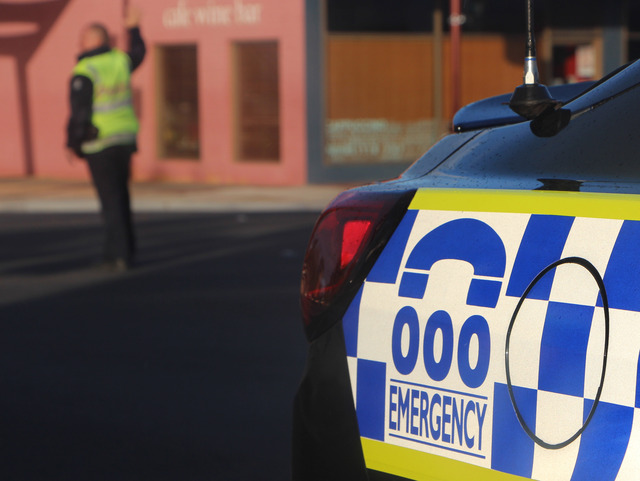
“When you think how under-resourced the police are … we still don’t have a 24-hour police station, which blows my mind.
“The ambulance system is so far under-resourced. If we have got our one ambulance off the road or taking a patient to Mildura or Swan Hill and there is an emergency in Robinvale, they have to wait one-and-a-half hours for an ambulance.”
Cr Benham said agencies and organisations had left the township in recent years.
“We’ve had banks, Mallee Family Care, TAFE, MADEC, Haven; Home Safe, all these services pulling out of Robinvale at a rate of knots because of an alleged decrease in population,” she said.
Cr Benham said the timing of the census in August 2021 – during a lockdown and a quiet period for seasonal workers – may have contributed to the “disappointing” results.
Cr Benham said Robinvale-based community groups and agencies such as Network House, the Our Place partnership and others, along with Swan Hill Rural City Council services, had put in a tremendous effort at census time to try to encourage people who would not normally complete the ABS survey in an effort to best categorise the town’s population.
“The response from the ABS has always been that we will keep using our statistics,” she said.
“I can’t say what council’s next move will be, but at the next council meeting this month, I would anticipate a report to come to council illustrating the most important bits of data and advocate with those to government and agencies.
“I was waiting at 10am all tense and hyped up and thinking we could win, but when in fact we lost by a couple of points, which hurts more.
“I felt like a deflated balloon.”
The ABS 2021 Census data indicated a slight growth for the Swan Hill municipality since the 2016 census of 819 residents, including the additional 652 people attributed to Robinvale.
Cr Benham said the council used, and would continue to use, the Geografia findings to encourage the Federal Government to review the ABS data-collection system to achieve a more accurate and inclusive census in future counts, which are conducted every five years.
The 2019 Geografia finding said there were towns across rural Australia that had “hidden populations”, including Robe in South Australia and Robinvale.
“These are places where the official population count – the estimated resident population (ERP) – is typically much lower than the actual population,” the report said.
“ERP is not intended as a measure of the actual population at any point in time, it is just the ‘official’ population used for infrastructure and service planning and funding.
“The actual population can be quite different to the ERP and, also it can fluctuate, especially for places that are seasonal agriculture or tourism towns like Robinvale or Dinner Plain up in the Victorian ski fields.
“This creates a problem for the local council.”
The finding said that if the real population was significantly higher than the ERP, then a council would provide services and facilities to a community much larger than it had the resources to service.
Taking water consumption data as a benchmark, Geografia used bank transaction data from Spendmapp to identify the number of cardholders making multiple and regular transactions at grocery stores and supermarkets.
Excluding official residents, and adjusting for non-cardholder dependents, Geografia calculated the true year-round population to be between 7200 to 7700 residents and up to 8800 during harvest.
“It all clearly shows that Robinvale has a significantly higher service population than the ERP,” the report said.