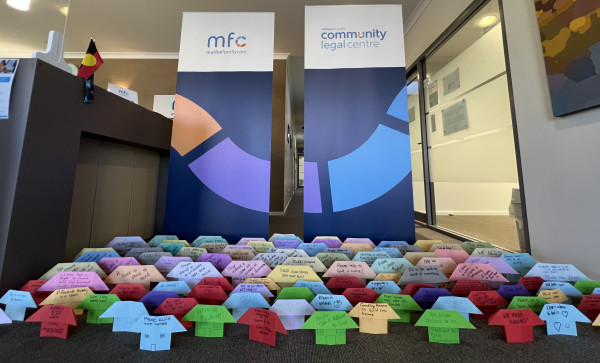
THE homelessness crisis in the Mallee will be taken to state politicians – with help from the art of origami.
Mallee Family Care are taking part in the Houses at Parliament campaign, which aims to fold 6000 origami houses.
The houses will be taken to State Parliament to be presented on August 2, before Homelessness Week begins on August 6.
Mallee Family Care chief executive Teresa Jayet said the campaign was about bringing awareness to the scale of Victoria’s homelessness.
“Those who work in the sector know the critical importance of ensuring that we constantly advocate and lobby for social housing and affordable housing,” she said.
“When we do advocacy campaigns like this, it spreads the message far wider.
“This initiative is about doing something a little bit different.”
Ms Jayet said Victoria’s social housing issue and homelessness crisis were having a wide impact.
“We are looking across the range of ages here, including the growing number of females aged between 50 and 60 who are experiencing homelessness,” she said.
“We also have an extraordinary number of adolescents who are homeless. This issue can really affect anyone.”
This year’s Homelessness Week theme is “It’s time to end homelessness”.
The 6000 folded paper homes represent the campaign’s request for State Government funding for at least 6000 social houses a year.
Calling for a national plan to end homelessness is also part the campaign.
Ms Jayet said that while more affordable housing was a good first step, there still needed to be more future support.
“We know that in the Mallee we have a crisis for affordable and social housing, but we also need help in other areas,” she said.
“Part of the conversation needs to be about the demand for affordable housing and also providing supports for those individuals within the housing once they are housed.
“Unless you have stable accommodation everything else can pretty much fall by the wayside.
“You can’t think about stable employment, you can’t talk about relationships and healthy partnership, and your mental and physical health are also impacted.
“These have a real ripple effect on the other areas of the human services sector as well.
“We are talking about people’s everyday needs that help them get by in life.
“If people aren’t feeling secure in their housing or have no housing, then for the long term the government is going to have a problem with supporting these people.”