A DECADE after it opened in Swan Hill, the Flexible Learning Options (FLO) program is a model of alternative education, and has helped hundreds of young people into the workforce or further study.
What started with a group of teenagers and a co-ordinator in one room, has evolved and grown into a well-equipped campus near the southern entry to Swan Hill.
How it got there is a testament to the persistence of local organisations and agencies determined to stop so many of the region’s young people from slipping through the education system’s cracks.
They were becoming increasingly concerned about the number of 15 to 19-year-olds in the Swan Hill region who were neither studying nor working – Australian Bureau of Statistics data shows there were 190 in that situation in 2011.
And Department of Education figures showed students in Swan Hill at the time were much less likely to achieve Year 12 than their peers elsewhere in regional Victoria and metropolitan Melbourne.
The movement began with discussions involving Murray Mallee Local Learning and Employment Network (MMLLEN), Swan Hill College and MacKillop College about the issue of children disengaging from mainstream education.
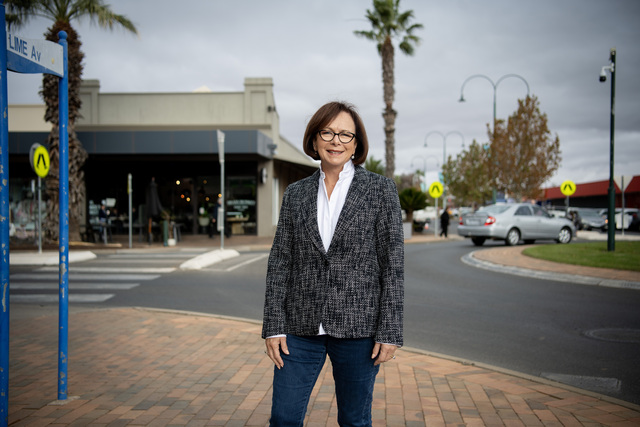
MMLLEN executive officer Deborah Quin, who was on the MMLLEN board at the time, said a forum in partnership with the Swan Hill Rural City Council was held at the Town Hall to discuss setting up a FLO program.
More than 50 representatives from schools, welfare organisations, Victoria Police, employment agencies and SuniTAFE attended.
“There was a lot of support for having this sort of model that could wrap around students, provide a smaller environment, for kids that don’t necessarily fit into the mainstream schooling,” she recalled.
“Fortunately, the Department of Education and Training came up with the Youth Partnerships Initiative. So this fitted in really well to put in an application for a project local site.”
The application was successful, and the FLO program began as a campus of Swan Hill College in a donated room on the first floor of the former Employment Works building in Beveridge Street.
“It started off very small in 2012, but obviously has gone from strength to strength since then,” Ms Quin said.
“It really was looking at providing improved support for students looking at pathways, bringing in the accredited trainers and employment agencies in that space as well, so they could get mental health support, Job Active support, any support that each individual student needed to make sure they attained a Year 12 equivalent or got a pathway into employment.”
Initially, a pilot to develop and test alternative methods of schooling, a feasibility study recommended it be continued.
In 2012, the Victorian Government closed the Koorie Pathways school, Payika College, and FLO relocated to the former Swan Hill Technical School site in 2013.
“That really opened up the scope now that we’ve got 40-odd kids there and it brought in teaching staff, support staff that has allowed us to grow to where we are today,” Ms Quin said.
“Our campus is the envy of other flexible learning option programs because a lot of FLOs operate out of a room in a school, as FLO in schools. There are some like us that operate off campus. But I think part of the success of our program has been the fact that we’ve got amazing facilities and had amazing support from the Swan Hill College and the Department of Education and Training.”
Ms Quin said the department had now recognised FLOs were part of the education system, not just a one-off, and was funding them appropriately.
There was capacity to grow the Swan Hill program, but Ms Quin said it was important to maintain the current standards and values.
“It’s not for everybody,” she said.
“It’s there for those students that need it, who really want to succeed in their education or employment pathway. There’s only a percentage of students that need that alternative learning, but it’s important for our community, that it’s there.
“Otherwise they drop out, they disengage from education. And then it’s harder to get those students back into education or into a TAFE course, because they don’t have the literacy and numeracy they need.”
Ms Quin said FLO was a “good news story” that highlighted how communities could solve local issues by working together and in partnerships.