When you think about it, education underlies every aspect of modern society. We are acquiring knowledge, skills, experience, beliefs and behaviours from the moment we are born.
Our education starts in the home, with family and friends helping us develop the fundamentals for living a comfortable and independent life. And from here, our informal training only continues throughout life, from primary school to secondary school, tertiary education, and beyond, in all the many academic and professional contexts where there are lessons to be learned.
The revelation that education is everywhere, is really what drives millions of Australians to consider a professional pathway in the education sector for themselves. Truth be told, there are a diverse range of jobs available in the education sector today, from early childhood educators to tertiary lecturers and course coordinators.
If you’re interested in exploring job opportunities in the education sector, read on for an outline of where a career in education may take you.
Early childhood education
Formal early childhood education (ECE), commonly known as preschool or kindergarten, begins at age three or four, depending on the state or territory. There are a variety of jobs within the ECE industry, including supporting roles as cooks and cleaners, and managerial roles as centre directors and managers. The two main positions are that of early childhood educator and early childhood teacher, or a kindergarten teacher.
To be a kindergarten teacher, a Bachelor degree (or higher) in ECE is required. Educators require an Early Childhood Education and Care Diploma or Certificate III in Early Childhood Education and Care. These are undertaken at a university and/or vocational education setting, and require practical placements in an ECE environment.
The teaching role involves using the Early Years Learning Framework to plan a program of learning that is implemented by the teacher and supporting educators. The learning program must provide opportunities for children to discover, develop and create through structured and unstructured activities.
Primary and secondary education
School staff are primarily teachers, supported by education assistants (learner support), principals, and administrators. Settings include government and non-government schools, special schools, hospitals, consultant roles, and government departments.
Teachers
Teachers must have a university degree in primary and/or secondary education, and must also be registered with the governing accreditation board. The relevant qualification can be obtained at a graduate or postgraduate level, for example, a Bachelor of Education (Primary) or a Master of Teaching (Secondary). If you would like to work in a specialist school you may require additional training in inclusive education practices, trauma-informed teaching, or neurodiverse learner needs, to name but a few.
Primary teachers are responsible for developing and implementing a program of learning across all the disciplines, using the relevant curriculum as a guide. As a primary school teacher, you would be expected to work at any year level, teaching children from 5 to 12 years of age.
Secondary teachers specialise in two or more disciplines, and generally teach a range of classes from ages 13 to 18. Like their primary counterparts, secondary teachers create course and lesson plans that follow the curriculum to enable students to achieve their high school leaving certificate.
To become a school principal, a minimum of two years teaching experience is required, though more is highly recommended. Teachers seeking leadership opportunities can also apply for leading teacher, learning specialist, and assistant principal roles.
Education assistant (EA)
The main role of an education assistant is to support an individual child, or a small group, with their learning, and collaborate with the classroom teacher in developing lessons for the target students.
EA staff are not teachers so a degree is not necessary for the role. Instead, a Certificate III (or higher) in an education support course is generally required.
Allied health services
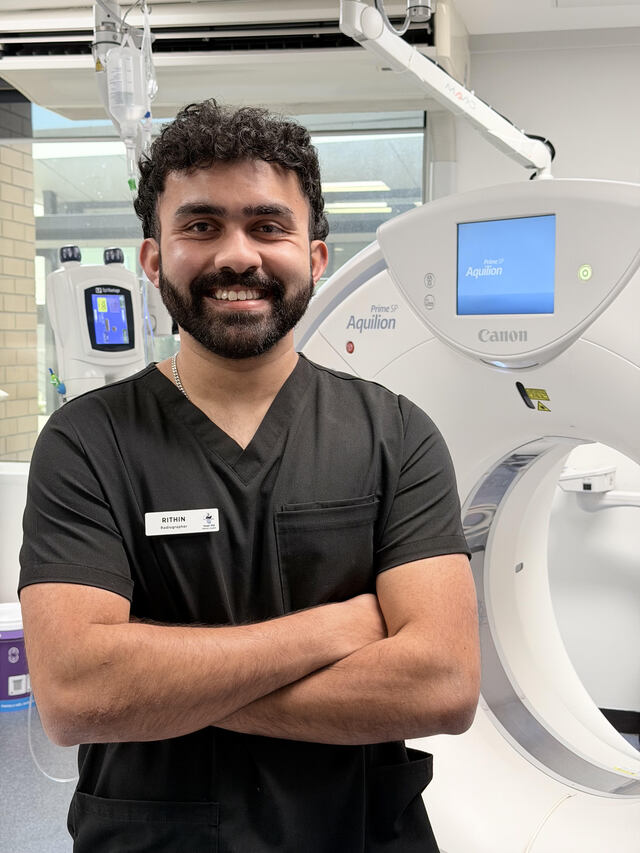
Another field with plenty of diversity, allied health services are a vital asset to both primary and secondary schools across the country. The main allied health professionals that work in educational settings are occupational therapists, speech therapists, psychologists and physiotherapists. All allied health professionals require a university degree in their relevant field.
Whilst allied health services predominantly operate through private practice, state and territory education departments do generally employ speech therapists, social workers and psychologists to service a region of schools, at a primary and secondary level.
Vocational and university education
For those wanting to undertake further study or training after leaving school they have the option of vocational education and training (VET) or university. There are hundreds of career opportunities in the higher education field, including in government, finance, administration, marketing, mentoring, disability inclusion, childcare, lab assistance, and tutoring. The career most people envision when considering the higher education workforce is teaching and professorship.
VET
VET courses are skill-based, designed to prepare individuals for work in a particular industry. This includes trades, childcare, agriculture and business. To work as a VET teacher or trainer you need a high level of experience and skill in a particular industry, and a Certificate IV in Training and Assessment as a minimum.
University
When studying at university, students attend lectures related to their chosen area. Lecturers are akin to teachers in that they create a unit of work, teach it, develop tutorial sessions and assess students against the established criteria. Technically, a lecturer does not have to have a PhD, but universities are increasingly stipulating it as a requirement.
~
The education industry is one of the largest sectors of employment in Australia with over one million employees. Yet even more employees are needed as Australia’s education sector grows. Particularly, there’s an elevated need for more early childhood educators and both primary and secondary school teachers.
So if education is the area for you, there are jobs waiting just around the corner. Now is an excellent time to study education, attain your qualifications, and get started in one of Australia’s fastest growing sectors.