LOCAL artist Suzanne Connelly-Klidomitis’ work has been prominently featured in the Swan Hill Regional Art Gallery over the years.
To celebrate NAIDOC Week, the gallery is again displaying her work – as well as other works from First Nations artists – from its permanent collection.
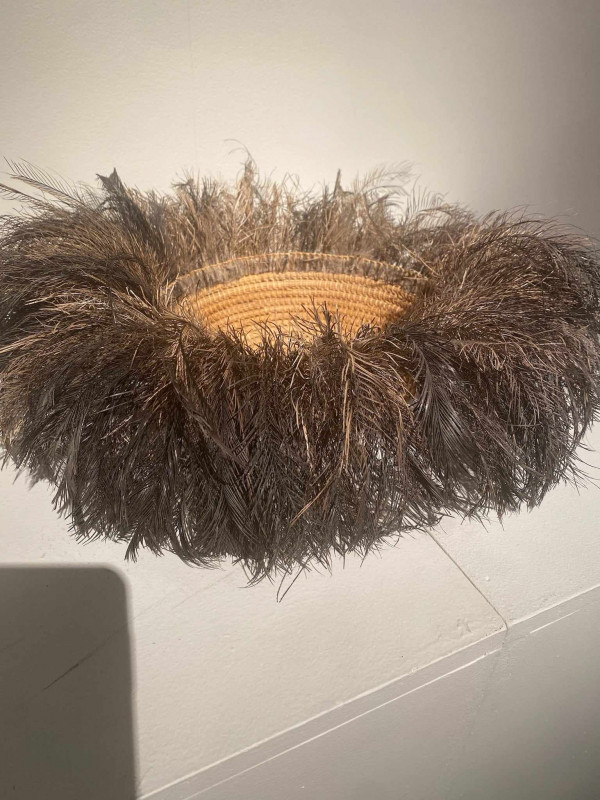
Ms Connelly-Klidomitis, a Wiradjurri woman, has made art through ceramics and weaving to explore her connection to Country and her ancestors.
She said the local mallee landscape and the Murray River were key inspirations for her work, much of which was made with bush material such as grass, bark and mud from the land around her.
Ms Connelly-Klidomitis said her family’s tradition of making art had influenced what she did today.
“When I was growing up my family was always making art so it was always around me,” she said.
“We would go out with our mother and father out on the bush and also along the river where we’d collect the roots of the river gums so our parents could make boomerangs, spears and shields, and we’d paint them and help them make it.”
Ms Connelly-Klidomitis said she hoped people left with a little bit more knowledge about local First Nations traditions and cultures after seeing her work.
“I make a lot of my artwork in the hope that people will talk about how I made it and that I can also talk about our traditions and culture,” she said.
“But I also want to talk about the land and how our materials in the bush are dwindling.”
Ms Connelly-Klidomitis weaves using native basket grass which she collects from Lake Boga herself.
“When I go to get basket grass now, it’s either been plowed up or mowed or run over by cars, so I’ve got to paddle through further and further to get the grass,” she said.
“I want to let council know that the things they’re doing can destroy our resources to continue our tradition and our culture.”
Ms Connelly-Klidomitis said she encouraged the wider community to support local First Nations artists by visiting the gallery to see their works.
“I think it’s great that we have some Aboriginal work in the permanent collection at the gallery,” Ms Connelly-Klidomitis said.
“But I hope we can have more local First Nations artists in the gallery’s permanent collection because we want our future generations to be able to walk into the gallery and have a look at what we left behind.”