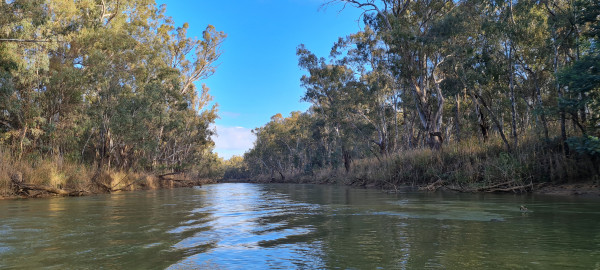
THE Murray-Darling Basin Authority (MDBA) is investigating ways to remove a “sand slug” that continues to reduce the volume of water getting through the Barmah–Millewa reach of the Murray River – known as the Choke.
The MDBA said the natural constraint accumulating in the river was the result of historic mining practices rather than poor water management.
An earlier report commissioned by the MDBA estimated more than three million tonnes of sand had settled in the Barmah Choke, the river’s narrowest stretch, reducing its capacity by 20 per cent over the past 40 years.
Nearby landholders have long claimed the Choke’s capacity issues are due to bank erosion caused by the river running high.
MDBA river management director Dr Ben Dyer said the sand had steadily filled the deep pools, covered up snags and continued to reduce the volume of water getting through the Choke.
“We have spent a good part of the year on the first stage of this investigation, which has revealed that the sediment accumulating on the riverbed is building up no matter what the flow of water,” Dr Dyer said.
“In other words, it is not being flushed out the other end.”
Dr Dyer said looking ahead, the sand was expected to further damage the river ecology through the two RAMSAR-listed National Parks.
“It will impact on cultural sites, reduce access to recreational areas, reduce the water that can pass through without breaking the banks, and it will increase the risk of a delivery shortfall for downstream water users,” he said.
“A key concern is that, as the bed of the river fills with sand, the river responds by trying to get wider.
“We see this in the accelerated bank erosion and subsequent breakout of water into the forest.
“Breakouts can result in the forest receiving water at times when it would otherwise be dry, which harms the natural ecology.
“This unseasonal watering also means an increased loss of this precious resource from the Murray River system.”
Dr Dyer said doing nothing wasn’t an option and would be “inconsistent with the values that the community has identified for this amazing reach of river”.
He said the century-old problem couldn’t be “reversed overnight” and needed a “multi-pronged” approach.
Basin governments agreed last month to a plan to manage the sand, which included potential targeted removal of sand, works to manage water that escaped from the river through the Barmah–Millewa Forest, and use of irrigation infrastructure to transfer water around the reach at peak water delivery times.
In the short term, the MDBA has partnered with New South Wales and Victoria to prevent and manage unseasonal watering while developing options for sediment removal.
“Removing large amounts of sand from such an important environment poses a significant challenge,” Dr Dyer said.
“We will need to consider how to remove the sand from the riverbed, where will it be moved to, and whether it has commercial value.
“And whether we do this in an environmentally, culturally and socially acceptable way.”
MDBA river management executive director Andrew Reynolds previously said it was thought the sediment came from mines, that is processed through river channels to filter gold.
“We know it’s not sourced locally,” he said.
“It’s very different to the material in the banks in the river, so it’s not eroding from the banks into the bed, it’s coming from somewhere else.
“It’s filled some of the holes in the riverbed as much as four metres deep.
“That makes the river that little bit shallower, reduces the amount of water we can see downstream, and it’s why we’re seeing a reduction in the capacity of the river.”
Wakool River Association chairman John Lolicato said the answer was to restrict development downstream of the choke, which would require irrigation.
“Developers and others can’t continue demanding more water downstream, it’s collapsing the system and collapsing societies,” he said.
“If you want to develop, it has to be upstream.”