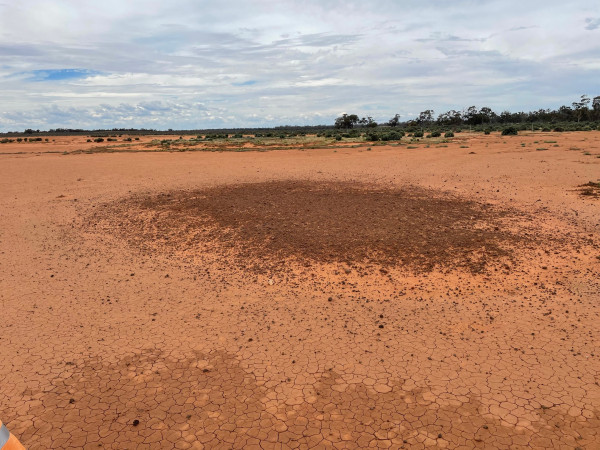
A PROPERTY just north of Balranald is currently the site of a cultural heritage project after Indigenous hearths were found by the landholder.
The project is being completed as part of the Western Local Land Services Pathways to Country Program, which seeks to grow the connection between Indigenous people and landholders in the region by finding and protecting cultural sites of significance and creating opportunities to share cultural knowledge and stories.
“We’ve basically set up this project, which is within the entire western region, and it just enables people to get in contact with the traditional owners and work together to protect it,” Western Local Land Service’s Charles Benson said.
The hearth sites would have traditionally been used by Indigenous people as heat retainers to cook for, on and gather around. Around a kilometre of fencing was placed around the site to protect the hearths, with further works planned later on in the year.
“The importance of the project for the Balranald area is we just have a working example of the Mutthi Mutthi people’s artefacts and places being protected for the next generation,” Mr Benson said.
“It gives those people good cultural examples for their future story telling for their next generations, and it also sets the pace for landholders and community to work together to do this.”
Working closely on the project with Mr Benson is John Winch, a Mutthi Mutthi traditional owner from the Balranald area.
“They [cultural sites] are all significant to us, from a small stone artefact, to something as significant as Mungo man and Mungo woman,” Mr Winch said.
Mr Benson believes the program is really starting to gain some momentum, and hopes more landholders will come forward to protect heritage sites on their properties.
“Initial response was slow, but the program every year continues to pick up, and I think it’s just a big thing of gaining trust between landholders and community, and that’s certainly building as people put their foot forward and have positive outcomes with projects,” Mr Benson said.
“I would certainly encourage people to come forward if they are thinking about it and at least just start the conversation.”
A big concern of both Mr Benson and Mr Winch is the misconception that landholders may have around coming forward with cultural heritage sites on their land.
“We’re really there to dispel the entire myth of people can lose control of their land and all of that sort of thing, it’s really not about that,” Mr Benson said.
“It’s about the least invasive way that that Aboriginal Cultural Heritage can be protected.”
Mr Winch believes old legislation and examples of extreme cases could be to blame for these misconceptions.
“Under the old Acts, the penalties for destroying Aboriginal sites were very high, and I think that that in itself has done a lot of damage to the protection of cultural heritage management in this country,” Mr Winch said.
“That has scared the hell out of farmers and it’s not the case at all.”
If you have a site of significance or would like to get involved in the Pathways to Country program, contact the Western Local Land Services.