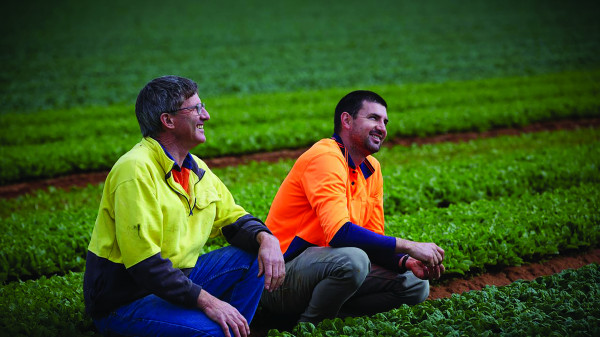
A finalist in the Weekly Times/Coles Australian horticulturalist of the year, Redgold Farms set itself apart from the field with its brave decision to turn their enterprise into a carbon-neutral operationIF you’re thinking carbon neutral and looking at a blueprint for success, you could do a lot worse than be a carbon copy of Redgold.
But don’t be fooled.
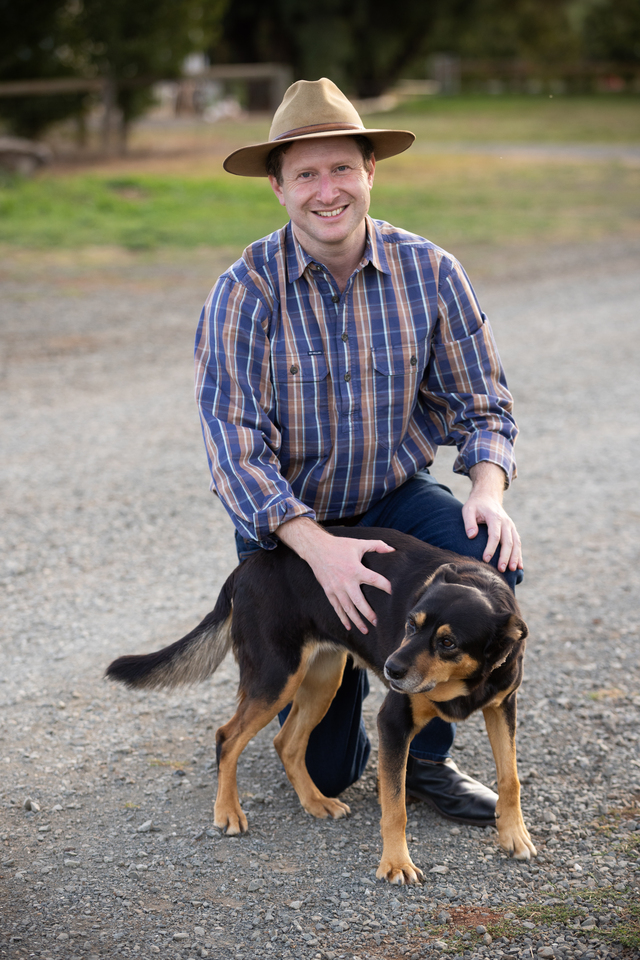
Owner Andrew Young says the multigenerational Wemen-based horticultural enterprise, close to the Murray, is “not a lifestyle farm”.
“It is,” he insists, “a business, and it is bloody hard work.”
Which the family potentially made even harder when they decided to do a full carbon inventory of their operation because, in many ways, they recognised the environmental impact certain components of their day-to-day work was having.
But what the extended family did find by the time they had completed their assessment absolutely surprised them – and they are now one of several successful Australian farming enterprises which are leading the way on initiatives to reduce and offset carbon emissions.
As politicians debate the finer details of Australia’s path towards net zero, agricultural businesses across the nation are showing farmers are not only on the front lines of adapting to climate change; they are also leading the way to a low-carbon economy.
For Redgold, one of the major challenges was the property’s location.
Andrew Young’s parents bought the Wemen farm, 100km from Mildura and 40km from Robinvale – in the heart of almond-growing country – because they couldn’t afford to buy land closer to a town, he says.
The hot, dry climate has the advantage of being able to produce salad greens in winter, while farms further south are always forced to struggle with cooler and wetter conditions.
But then there was the tyranny of distance – 500km from Melbourne markets, 960km from Sydney and 1600km from Brisbane – means long and carbon-intensive freight hours to deliver their products to market.
The Youngs thought offsetting the emissions from freight would be their biggest challenge, but they soon found they had other, more carbon-intensive practices to account for.
Andrew was initially “sceptical” when he and son Carl decided to do a full carbon inventory of the farm.
“I thought it might just prove that we’re buggered,” he says.
The company, which employs 45 people at the peak of its season, competes with other salad companies across Australia for contracts with the big supermarkets.
So while reducing and offsetting its emissions, the business had the added challenge of staying competitive and profitable against producers that weren’t taking any steps towards carbon neutrality, Andrew says.
And the first big surprise from their research revealed that instead of all those truck kilometres, some of their biggest emissions were already embodied in farm inputs they purchased – right down to the seeds they used.
Another was that offsetting the company’s emissions would cost just 0.5 per cent of its turnover at current carbon prices – about the same as the annual vegetable levy.
For every $1 million of turnover, the inventory revealed the farm produced 259 tonnes of carbon emissions, with electricity the biggest emitter at 19 per cent.
The family had already planted Mallee scrub across the property in an effort to revegetate, and after assessing their options – and the numbers they couldn’t alter as they were produced off-farm – Carl decided they couldn’t produce carbon offsets at a large enough scale for it to be financially viable.
Instead, they decided to turn to the carbon market to purchase offsets.
The carbon market is a fast-growing industry, with demand for offsets outpacing supply and revenue that could reach $24 billion by 2030, according to the Carbon Market Institute.
After a lengthy process, on October 13 last year, the business was officially certified carbon neutral by the Federal Government’s Climate Active program.
Andrew says Redgold’s motivation to become certified as climate active for its operations was also influenced by the family’s belief there was potential to break down the perceived barriers between farming and a low carbon economy.
He said given the political contradictions and contentious counter-claims surrounding action aggressiveness, they hoped they could help to persuade the farmer based political support that climate action is a positive change and not something to hesitate at, rather something that needs embracing sooner than later.
“Redgold is certified under the federal government’s Climate Active certification scheme as Climate Active for its Operations,” Andrew added.
“We achieved this with the help of Pangolin Associates, which works on calculating and verifying our greenhouse gas footprint,” he said.
“The greenhouse gas footprint of our business operations includes all inputs that go into running it.
“These range from fertiliser and fuel inputs to seed purchasing, freight and employee travel to and from work – even office stationery.
“Which we offset emissions by purchasing approved Australian Carbon Credit Units.
“These certified units are generated by projects which either remove carbon dioxide from the atmosphere or prevent the release of emissions.
“And we chose to be certified under the government-based certification scheme as we wanted to ensure the integrity of the system is unquestionable, we wanted to ward off potential claims we are taking part in greenwashing or taking advantage in a lack of rigor.”
Andrew now shares his story to encourage more farmers to consider tracking and offsetting their emissions.
“This problem is a global problem and (farmers are) a part of it,” he says.
– with Genevieve Barlow