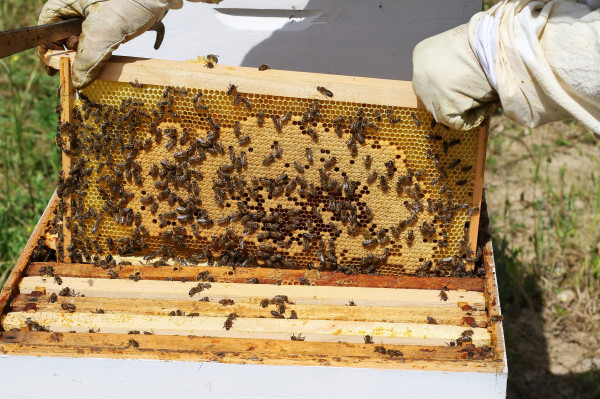
HOPE is in sight that the local almond pollination season will kick off on time after the NSW Government announced a plan to allow beehives in the state to be moved.
Under the plan, commercial beekeepers will be able to apply for permits from Wednesday to move their hives inside NSW, so long as they are outside a 50km radius of sites where varroa mite has been detected.
But the Victorian Government has banned all NSW-based bees from entering the state, which could still result in a shortfall of 80,000 hives for the pollination of Victorian almond orchards.
Almond Board of Australia chief executive Tim Jackson said while he welcomed the NSW permit system, more solutions were needed to meet shortfalls at Victorian-based orchards.
Mr Jackson has pushed for the creation of a biosecurity bubble to facilitate pollination in Victorian parts of Sunraysia using NSW-based beehives.
The proposal would create bubbles for remote orchards along the Murray River and would allow these sites to be exclusively serviced by NSW beehives, which are situated outside emergency zones.
Mr Jackson said he understood the concerns of some beekeepers about exposing their hives to potential carriers of varroa mite.
“We understand there is reluctance from beekeepers outside NSW to put their hives in the same orchards as NSW hives, so creating a designated orchards exclusively stocked with NSW beehives seems like the most sensible solution,” Mr Jackson said.
“We acknowledge that these plans could be shot down in a day – and rightly so – if more varroa detections are found further afield.
“But, based on all the beehive surveillance data that is emerging, the NSW Government appears confident that building a zoned movement process, with a number of safeguards, similar to what it has used in other biosecurity outbreaks like equine influenza in 2007-08, is achievable.”
The Almond Board was placing its hopes in planned meetings with Victorian Government officials on Monday to introduce the biosecurity bubble in the next 10 days before almond pollination season starts.
Varroa mite is a serious threat to the bee population. There are 39 sites in NSW where the tiny reddish-brown parasites, which weaken and kill honey bee colonies, have been detected.
Sunraysia almond producers require between 150,000 and 200,000 hives to pollinate crops in August.
The crops have been valued at more than $500 million.
The NSW Government plan to allow NSW-based hives to move will be predicated on beekeepers showing that they have performed an alcohol wash of 10 per cent of their hives (if the total is above 640), or a minimum 64 hives, and produce results showing they are free from the parasite.
State Government officials would then test for the virus when hives arrived at their destinations.