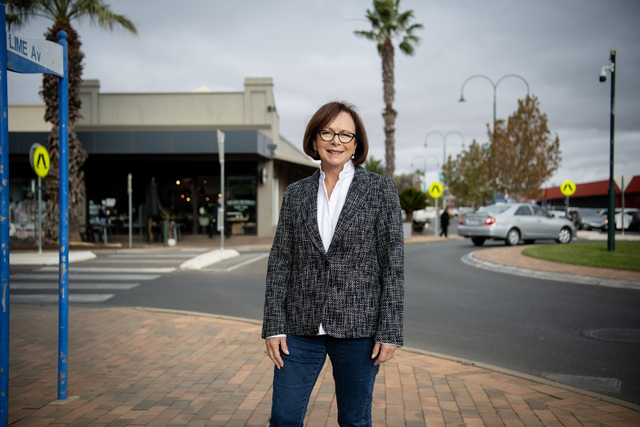
MEMBER for Mildura Ali Cupper will meet with Federal Minister for Regional Development, Local Government and Territories, Kristy McBain this week to discuss the Federal Government’s key role in regional rate reform.
Ms Cupper said she was delighted that the Federal Government was willing to meet with her to discuss rates “which are a major cost of living pressure for rural and regional Australians, particularly in our electorate”.
Ms Cupper said she will talk to the minister about the key planks of the RateGate policy proposal which includes increasing Financial Assistance Grants, allowing the states to direct more federal money to councils that need it most, and ultimately an Equalisation Funding System.
“But in addition to the mechanisms that would ease the burden for all categories of ratepayers, I will be raising with the minister the unique situation of farmers, whose property wealth and income are often the most out of sync,” she said.
“I have recently learned that solar and wind farm operators are given flexibility in how their rates are calculated.
“The Payment in Lieu of Rates option for solar farms introduces what is effectively an income component to the calculation, so that half the bill is determined by the capital improved value of the land, and the other half is based on how much power is sent to the grid.
“I think similar flexibility should be extended to traditional farmers. It would be a potential game-changer, especially in times of drought.
“The value of farmland is less elastic than farm income and when rainfall is low or non-existent, farmers are required to pay large sums of money that they don’t have.
“There has been reluctance to introduce an income component to farming rates, in part because a skilled accountant could make a farmer’s income look like zero every year, regardless of yield.
“However, by using rainfall as the metric, rather than income, you have an objective yardstick.
“If farmers paid less, councils would receive less, and this would create a revenue gap for services, but that’s where the Federal Government would come in.
“The shortfall could be funded direct to rural and regional councils as part of federal drought resilience and climate change adaptation packages, helping small rural communities to remain viable into the future.”