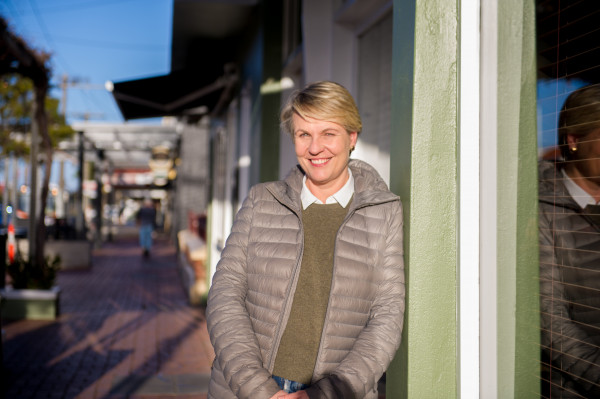
FEDERAL Water Minister Tanya Plibersek says meeting water recovery targets before the June 2024 deadline of the Murray-Darling Basin Plan may be difficult, but any change to the deadline will depend on states and territories outlining how they will deliver on their obligations.
Ms Plibersek, who spoke in Canberra following the meeting of state and territory water ministers last week, said she had received agreement on achieving the plan in full but recognised the timeframes remained challenging.
“I am pushing for 2024 implementation, but I am acknowledging that it’s hard to get there,” Ms Plibersek said.
She said she was not taking her “foot off the accelerator just yet” and had asked basin officials to present a clear plan for how they would deliver the basin plan objectives at the next meeting of ministers in February 2023.
“What’s not up for negotiation is our full delivery of the Murray-Darling Basin Plan.
“The reasons we developed the plan 10 years ago are even more acute now.”
The plan set the 2024 deadline for states and territories to recover a total of 2750 gigalitres in water for the environment.
The target, which some environmental groups have argued only maintained basic ecological functions, has resulted in about 2100GL being recovered.
Another 605GL is due to be recovered through infrastructure projects.
Victoria and NSW, responsible for the majority of these projects, have pushed for an extension to the deadline.
Victorian Water Minister Harriet Shing said the state had done the “heavy lifting” to meet basin plan obligations and was “working with urgency to deliver” the remaining projects by 2024.
According to the government, it had completed 826GL of its 1075GL share of water recovery and the remainder of its commitment would be offset by the Victorian Murray Floodplain Restoration Project.
The environmental effects statements for the first two of the nine restoration projects was released last week. The projects aim to deliver environmental water to 14,000 hectares of floodplain.
NSW Water Minister Kevin Anderson said basin water ministers had agreed that greater flexibility was needed to deliver the outcomes intended under the plan.
“Ministers supported my recommendation that a clear plan will need to be developed with specific actions that will provide flexibility for delivering projects and dealing with shortfall towards basin plan targets,” Mr Anderson said.
He said this would achieve basin plan outcomes while protecting communities from negative social and economic impacts.
Ms Plibersek said delivering the 450GL to South Australia remained a “challenge”, but she remained hopeful there would be “spirit of co-operation” between ministers to meet the commitment, made in 2018.
A communique about the meeting released by the Murray-Darling Basin Authority stated that the Commonwealth would work with basin states and communities to “bridge the remaining gap in water recovery, including through strategic purchase”.
Ms Plibersek said while she would not make threats by talking about buybacks, strategic voluntary buybacks could be “very beneficial”.
Conservation Council of SA chief executive Craig Wilkins said he applauded SA Water Minister Susan Close for her withdrawal of support for “the controversial 2018 socioeconomic test”, which made it harder for states to deliver water through infrastructure projects.
Jacqui Mumford, the chief executive of Nature Conservation Council of NSW, said it was time to drop “fanciful engineering projects” and “buy back actual water for rivers”.
The chief of not-for-profit group Environment Victoria, Jono La Nauze, said it was “concerning” Ms Plibersek had left the door open to further delays.